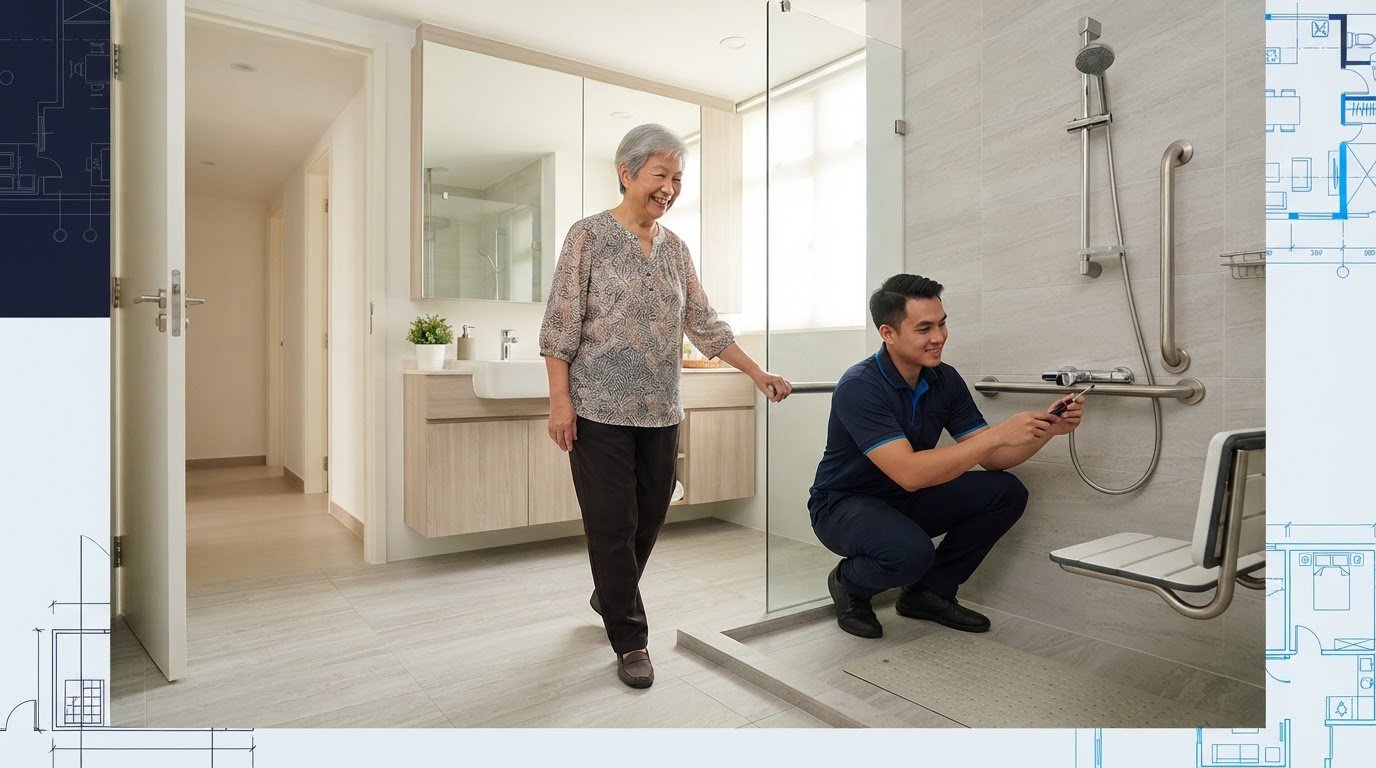
Eligible elderly home safety modifications in Singapore can receive up to 95% subsidy through EASE, with the homeowner’s co-payment based on flat type. For HDB flats, co-payments range from 5% for 1- to 3-room flats to 12.5% for executive flats. Home modifications are practical changes, such as ramps and grab bars, that make everyday movement safer.
It’s natural to focus on individual fittings, but preventing falls also means considering how someone moves through the home. This guide explains what EASE covers, how its subsidy and co-payment work, and which costs may apply. It also outlines practical safety changes for the bathroom, bedroom, living room and kitchen, helping you identify where modifications may be useful and plan next steps.
Key Takeaways
- Learn which household and property details matter when considering EASE support.
- Spot everyday fall hazards and choose practical changes that make moving around the home safer.
- Use room-by-room ideas to improve safety in living areas, bedrooms, bathrooms and kitchens.
- Understand how the type of modification affects out-of-pocket costs before planning the work.
1. EASE subsidies and co-payments
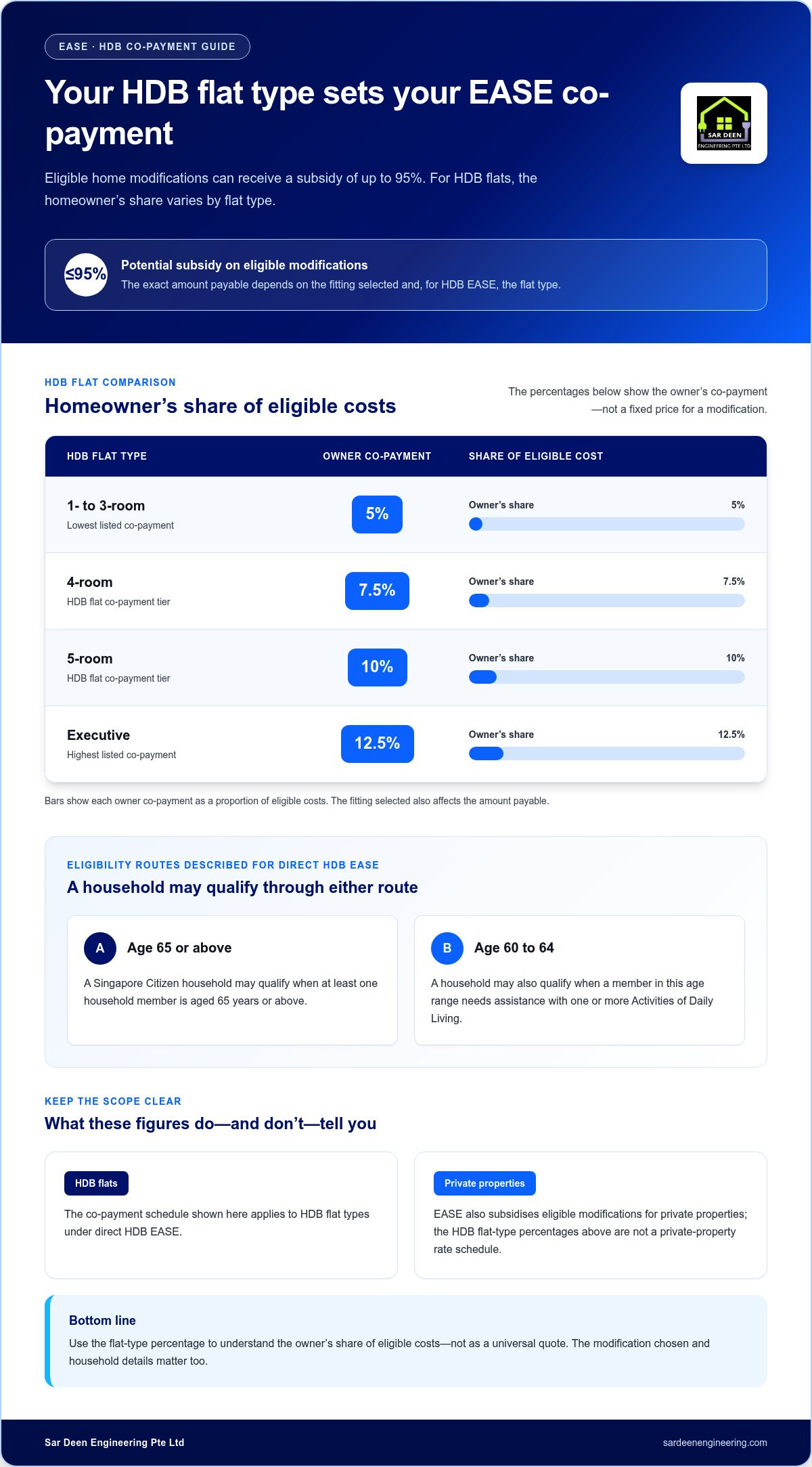
Singapore’s Enhancement for Active Seniors (EASE) programme subsidises eligible home modifications for HDB flats and private properties. The subsidy can cover up to 95% of eligible modification costs. The homeowner’s share depends on the flat type for HDB EASE, so the same fitting can have different co-payments across households.
For direct HDB EASE, a Singapore Citizen household may qualify if at least one member is aged 65 years or above. A household may also qualify when a member is aged 60 to 64 years and needs assistance with one or more Activities of Daily Living. Start by identifying which eligibility route applies. Then note the HDB flat type, because it determines the co-payment rate.
For HDB flats, co-payments are 5% for 1- to 3-room flats, 7.5% for 4-room flats, 10% for 5-room flats, and 12.5% for executive flats. These percentages show the owner’s share of eligible costs. They are not a single price for every home modification. The fitting selected and the flat type both affect the amount payable.
Use these figures to understand how flat type changes the owner’s share, not as a universal quote for every fitting. EASE concerns planned home adaptations. For an emergency ambulance in Singapore, call 995, according to the Singapore Civil Defence Force. Keeping emergency response separate from home modification planning helps households act appropriately in urgent situations.
2. Home modifications and fall prevention
Home modifications change a living space to reduce hazards and support safer daily movement. A grab bar beside a toilet, for example, offers a stable support point during transfers. Fall prevention also includes removing everyday obstacles, not just installing fittings. Start by watching how the older person moves through each room and noting where balance, visibility, or access becomes difficult.
Assess the home one route at a time, such as the path from the bedroom to the bathroom or kitchen. Remove loose rugs and wires from walking paths, where they could catch a foot or walking aid. Use fluorescent tape to make step edges easier to see in low light. Choose non-slip shoes instead of slippers, and keep frequently used routes clear.
How do you choose a reliable contractor for elderly home modifications in Singapore? Look for someone who explains the work, links each change to an identified hazard, and agrees on the scope before starting. A clear plan should specify where each fitting will go and how it will support the resident’s daily routine.
Grab bars and ramps should suit the person’s mobility needs and the home’s layout. Before installation, identify where support is needed, how the resident will approach it, and whether the ramp provides a practical route. An occupational therapist or healthcare professional can help assess hazards and recommend suitable modifications.
Consider the limits of each change. A grab bar cannot eliminate every fall risk, and a poorly placed fitting may not provide the intended support. A ramp also needs a clear approach and usable landing space. Review proposed changes with the older person, since mobility, balance and familiar routines affect how each modification works. Standardised assessment and implementation protocols help keep the plan focused on the resident’s needs.
3. Living-room, bedroom, bathroom and kitchen safety
In the living room, clear routes between seating, doors and frequently used items. Clean spills promptly so wet patches don’t become slipping hazards. Wall-contrasting switches mounted approximately 100 cm above the floor can improve access for wheelchair users. Keep switches easy to see against the wall, especially near commonly used routes. A room-by-room plan for elderly home safety modifications Singapore residents can adapt should begin with these everyday paths.
At night, place lights along the route between the bed and bathroom so the path is easier to see before someone gets up. In the kitchen, move everyday utensils and food to lower shelves. A stool may help with occasional items on high shelves, but avoid relying on it for regular tasks. The elderly home safety modifications Singapore households choose should reflect how the resident uses each space.
Bathrooms need attention to wet floors and movement during bathing. Use a non-slip mat or a non-slip floor treatment near the toilet. A shower chair and portable shower head can support seated bathing and easier washing. For accessible toilet planning, BCA Code 2019, Chapter 5, is referenced for layout, fixtures and grab-bar geometry.
HDB flats and private homes can both benefit from changes tailored to the resident’s routines and the home’s layout. EASE provides subsidised modifications for eligible HDB and private property owners, while the most useful changes depend on the hazards present. For HDB homes, consider eligible fittings; for private homes, assess access routes and bathroom layout individually.
Singapore’s EASE programme was enhanced from 1 April 2024 to include additional senior-friendly fittings, including up to two bidet sprays. This may be relevant when planning bathroom changes. Walk through each room with the resident and identify where support, clearer visibility or easier reach would help. A switch that’s easy to locate, a clear bed-to-bathroom route and lower kitchen storage address different daily needs, so plan around the person’s actual routine.
4. Elderly Home Modification Costs in Singapore
For Singapore HDB residents, EASE estimates provide useful reference points for selected items. These figures apply to specific EASE items, not every product or installation option. Compare the item and package type before using an estimate to plan your household budget.
Ramp costs vary by type. These are separate options, so don’t treat one as a substitute price for the other. The access route and ramp design help determine which option suits the home.
Anti-slip flooring costs depend on the area being treated, the existing floor condition and the work involved. Treating a small bathroom area differs from changing flooring across a larger space. Before planning, identify the exact floor section, any damaged or uneven surfaces, and whether the work involves treatment or replacement. These details help define the scope and resulting quote. The figures above do not provide a price for anti-slip work.
Separate subsidised EASE estimates from any work outside those items. For work priced through a quote, the cost depends on the case and is given after a quote request; area, surface condition, materials, and scope influence the amount. Keep a simple list of priorities, such as grab bars, a ramp, or a bathroom floor treatment. Then compare each proposed item with the household’s mobility needs and available budget. For related home maintenance, discuss the work you need as a separate project from EASE modifications.
Sar Deen Engineering Pte Ltd: Condo painting
Sar Deen Engineering Pte Ltd can help with home maintenance that is separate from your safety modifications. If a room needs refreshing, its condo painting service can address the walls without confusing decorative work with accessibility adaptations. For bathroom upkeep, toilet bowl installation and replacement, epoxy grouting, and water heater installation can address separate repair or replacement needs.
Use these services for those specific jobs, rather than for EASE fittings such as grab bars or ramps. Keep the safety plan focused on the older resident’s mobility needs, and arrange related maintenance as a separate task. This keeps the purpose of each job clear.
Contact Sar Deen Engineering Pte Ltd or visit sardeenengineering.com to discuss a relevant home maintenance project.
Make the next home-safety step practical
A useful plan should fit the older person’s daily routine, not just the home’s floor plan. Notice which routes they use most, where they pause and which everyday tasks feel difficult. These observations can guide adjustments as needs or routines change. Involve the person so the changes fit the way they live at home.
For elderly home safety modifications in Singapore, treat the plan as something to revisit rather than a one-off checklist. After the changes are complete, walk through the home together and see whether they feel practical during everyday activities. Record any maintenance work separately from safety adaptations so each task has a clear purpose.
If you have a related home maintenance project, contact Sar Deen Engineering Pte Ltd to discuss it. A clear next step can help you keep the home aligned with the resident’s needs. Take it one practical change at a time.
Frequently Asked Questions
What Are Home Modifications?
Home modifications change a home’s features or layout to make everyday activities safer or easier. Examples include improving doorway access, adding support beside a transfer point, or changing how essential items are stored. Choose modifications based on the person’s actual routine. A change is most useful when it addresses a specific difficulty, such as reaching a switch or moving between rooms.
What home safety modifications help prevent falls for elderly people in Singapore?
Clear walking routes, stable support points and better visibility can help reduce hazards at home. Move frequently used belongings within easy reach, keep floors clear of loose items, and make transitions between rooms easier to see. Trace the route the person takes to complete a daily task, then address the obstacle that interrupts their movement.
Are there Singapore government grants or subsidies for elderly home modifications?
Singapore’s EASE programme provides subsidies for eligible home modifications for HDB flats and private properties. The subsidy can cover up to 95% of eligible costs, with HDB co-payment rates varying by flat type. Before planning work, separate EASE-eligible items from other home improvements. This helps households understand which planned changes may fall under the programme and which require separate budgeting.
What is the Enhancement for Active Seniors (EASE) programme and who is eligible?
The Enhancement for Active Seniors (EASE) programme subsidises eligible home modifications to support safer movement at home. For direct HDB EASE, a Singapore Citizen household may qualify if a member is aged 65 or older. A household may also qualify if a member aged 60 to 64 needs help with one or more Activities of Daily Living. Eligibility depends on the household circumstances.
How do I apply for EASE improvements through HDB in Singapore?
Begin by identifying the household’s eligibility route, flat type and required modifications. Direct HDB EASE applications apply to qualifying Singapore Citizen households, including those that meet the age and daily-living criteria. Organise the requested changes by room and note the mobility issue each one addresses. This makes it easier to describe the household’s needs when completing the HDB application.
How can I make a bathroom safer for an elderly person in Singapore?
Make the bathroom easier to use by considering both movement and essential tasks. Keep toiletries within comfortable reach, provide a stable place to sit if standing while bathing is difficult, and keep the route to the toilet clear. A portable shower head can make washing easier while seated. Choose changes that suit the person’s balance, mobility and usual bathing routine.