Epoxy grouting
You spend weeks picking the perfect sage green for your feature wall, but within months, the paint starts bubbling near the ceiling. It’s a frustratingly common sight in our tropical climate. High humidity and poor ventilation often turn a fresh home refresh into a moldy headache. Dealing with interior wall painting Singapore requires more than just a brush and a bucket of paint. It requires a strategy that accounts for our unique environment and the latest 2026 standards.
We agree that keeping your home looking new shouldn’t be a source of stress. You want a vibrant finish that resists moisture in your kitchen and prevents mold in the corners. This guide helps you master the essentials of choosing the right moisture-resistant paints and achieving a professional-grade finish. We’ll show you how to protect your investment while keeping your family safe and comfortable.
We’ll cover the mandatory 2026 formaldehyde-free paint requirements and the latest HDB notification rules. You’ll also learn the key differences between HDB and condo painting needs and how to decide between a DIY weekend or hiring a professional team. Sar Deen Engineering Pte Ltd is here to help you navigate these choices for a successful home refresh.
Key Takeaways
- Understand how Singapore’s high humidity impacts your walls and how to prevent common issues like bubbling or peeling.
- Navigate the 2026 formaldehyde-free regulations while choosing the best moisture-resistant paints for HDB and condo units.
- Master the art of professional preparation, from protecting your furniture to using the right sealers for aging walls.
- Avoid costly mistakes such as over-thinning your paint, ensuring your interior wall painting Singapore project results in a durable finish.
- Determine when a simple DIY refresh is enough and when hiring a professional is necessary to protect your home’s structural integrity.
Understanding Interior Wall Painting in Singapore’s Tropical Climate
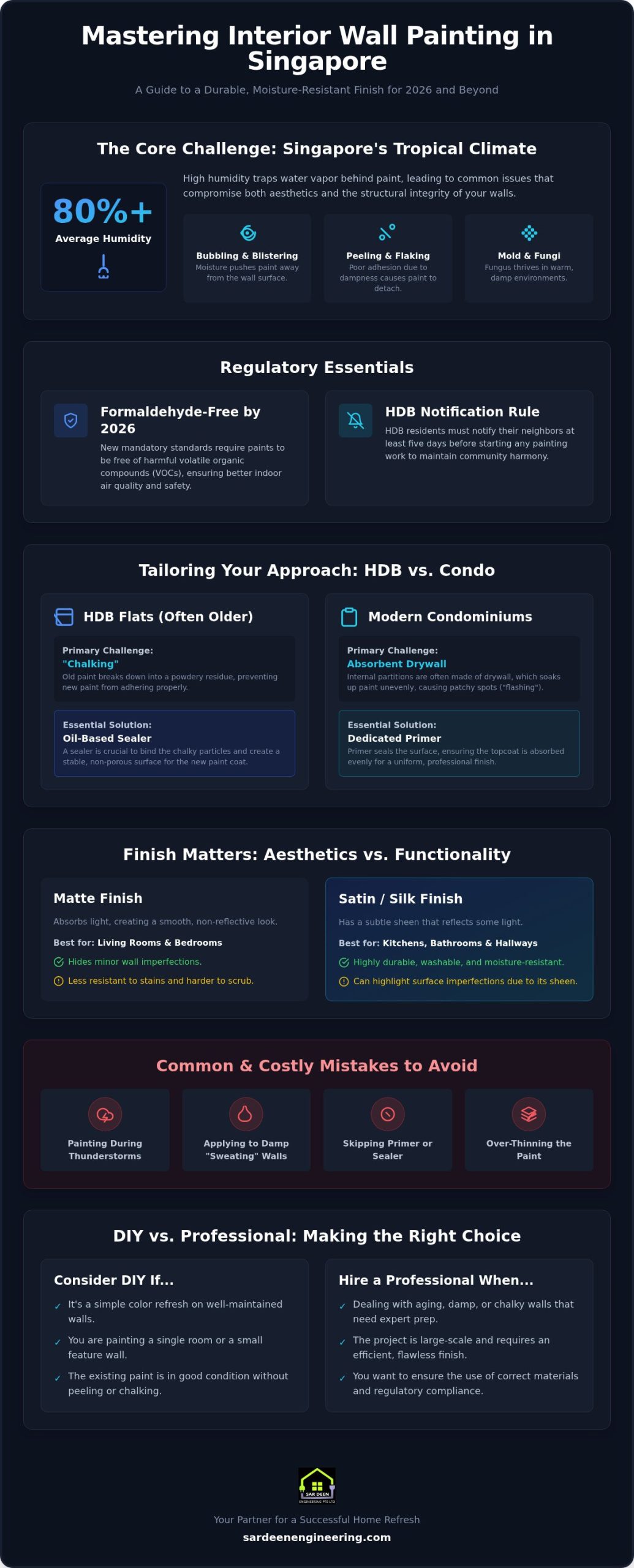
Singapore’s weather is a constant challenge for homeowners. Our relative humidity often stays above 80%, which creates a hostile environment for standard paint. When you invest in interior wall painting Singapore, you aren’t just buying a color. You’re buying a protective barrier. High moisture levels often lead to bubbling or peeling because water vapor gets trapped behind the paint film. This isn’t just an eyesore; it’s a sign of wall degradation that can weaken the plaster over time.
Achieving a professional look starts with understanding paint composition and how it interacts with porous concrete surfaces. For 2026, many residents are choosing deep, saturated tones like “Blue Planet.” These rich pigments look stunning but require high-quality undercoats to prevent the humid air from dulling the finish or causing unsightly patches. A beautiful surface is useless if the structure underneath is damp. We focus on the structural health of the wall first. This ensures the aesthetic finish lasts for years instead of months.
Managing Humidity and Moisture
Timing is everything. You should never start a painting project during a heavy thunderstorm. The sudden spike in humidity prevents the paint from bonding correctly. We recommend letting walls dry for at least 24 to 48 hours after a deep clean. Look for “sweating” walls, which appear as a fine mist or damp patches on the surface. Applying paint over these spots is a recipe for immediate failure. If the wall feels cool and damp to the touch, it isn’t ready for a coat. Proper ventilation is key. Open all windows and use fans to move the air, especially in windowless bathrooms or kitchens.
The Importance of Anti-Mould Properties
Singapore’s heat and moisture are a playground for fungi. Mold often grows in corners or behind furniture where airflow is limited. Standard acrylic paints don’t always offer enough protection. You need specialized moisture-guard paints formulated with antimicrobial agents. These products create a hard, non-porous surface that prevents spores from taking root. At Sar Deen Engineering Pte Ltd, we prioritize these functional finishes to ensure your home stays healthy. Differentiating between standard acrylic and moisture-guard options is vital for wet areas like kitchens. Choosing the right paint for interior wall painting Singapore means looking beyond the color swatch and checking the technical moisture-resistance specs.
Choosing the Best Paint Types for HDB and Condo Walls
Selecting the right paint involves more than picking a shade from a catalog. In Singapore, the structural differences between housing types dictate your material choices. A modern condo unit often has different requirements than a thirty-year-old HDB flat. Understanding these nuances ensures your interior wall painting Singapore project looks professional and lasts for years. We focus on matching the specific chemistry of the paint to the condition of your walls.
HDB vs. Condo Painting Requirements
Older HDB flats frequently suffer from “chalking.” If you rub your hand against the wall and see a white powder, the existing paint has broken down. Applying a new coat directly over this powder is a mistake. The new layer won’t bond. You must use a high-quality sealer or primer first. This sealer acts as a glue, binding the chalky particles to create a stable surface. For older HDB interiors, an oil-based sealer is often the most reliable choice to penetrate the old layers.
Condo units present a different challenge. Many modern developments use drywall partitions instead of solid concrete for internal rooms. These surfaces are smoother but highly absorbent. They require a dedicated primer to prevent the paint from soaking in unevenly, which causes “flashing” or patchy spots. While you don’t need a renovation permit for painting, remember that HDB regulations require you to notify your neighbors five days in advance. Our team at Sar Deen Engineering Pte Ltd can help you manage these details during your Condo painting or HDB refresh.
Finish and Functionality
The finish you choose affects both the look and the durability of the room. Matte finishes are the most popular for living areas and bedrooms. They absorb light, which helps hide minor wall imperfections and uneven plaster. However, matte surfaces are harder to scrub. For high-traffic zones like hallways and kitchens, we recommend washable silk or satin finishes. These allow you to wipe away stains and scuffs without removing the paint itself.
Don’t ignore the ceiling, especially in bathrooms. We suggest using glossy or semi-gloss finishes for these high-moisture areas. The sheen helps repel steam and prevents water from soaking into the substrate. This is a critical step in preventing the mold growth common in Singapore’s humid climate. Since January 1, 2026, all interior paints must be formaldehyde-free. This regulation ensures that your interior wall painting Singapore is safe for your family and pets. Choosing these low-VOC and odourless options means you can move back into your rooms much sooner after the job is done.
Step-by-Step Guide to a Professional Finish
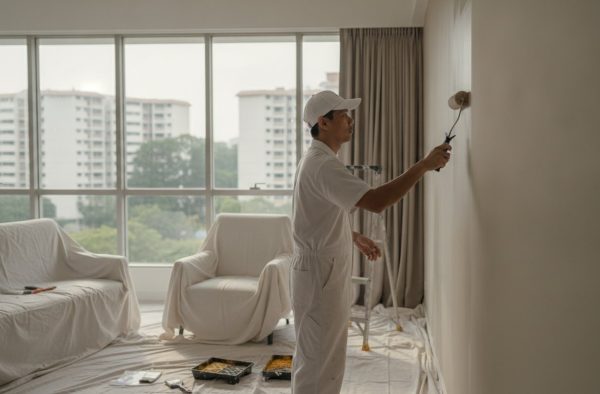
Achieving a flawless result in interior wall painting Singapore is 70% preparation. Most DIY mistakes happen because homeowners rush into the color application without setting the stage. You must protect your space first. Move all furniture to the center of the room and cover everything with heavy-duty plastic sheets. Use painter’s tape along the skirting boards and ceiling edges to ensure clean lines. This prevents messy splatters that are difficult to clean later, especially on expensive flooring or built-in carpentry.
Surface Preparation and Repair
Walls in Singapore homes often develop hairline cracks due to building settlement or thermal expansion. You shouldn’t just paint over these gaps. Scrape away any loose or flaking paint with a putty knife first. Fill holes and cracks with a high-quality wall putty. Once it dries, sand the area with 120-grit sandpaper until it’s flush with the rest of the wall. This creates a smooth canvas for the paint to grip. At Sar Deen Engineering Pte Ltd, we treat these repairs as a standard part of our service because a smooth wall is the foundation of a professional finish.
The Painting Process
Start with a sealer. As we discussed in the previous sections, this is a non-negotiable step for bonding and moisture protection in our climate. Once the sealer is dry, begin “cutting in.” Use a 2-inch brush to paint a border around the edges, corners, and electrical sockets. This creates a buffer zone for your roller. It’s the secret to those crisp, sharp edges you see in professional jobs. Don’t skip this; a roller alone cannot reach into the tightest corners.
When you’re ready to roll, use the “W” or “M” pattern. This technique distributes the paint evenly across the surface without leaving thick ridges. Don’t press too hard on the roller. Let the tool do the work. In our tropical environment, drying times are critical. Wait at least 2 to 4 hours between coats. If the air is particularly heavy or it’s raining outside, give it a bit longer. Follow these steps for an even application:
- Apply the first coat: Focus on getting full coverage across the wall without worrying about perfect opacity yet.
- Check for drips: Keep a brush handy to smooth out any runs or thick spots immediately.
- The final coat: Use long, light vertical strokes from top to bottom. This eliminates roller marks and creates a streak-free appearance.
Consistency is key. Finishing one wall completely before moving to the next ensures the “wet edge” remains. This prevents visible seams where the paint overlaps, giving your interior wall painting Singapore project a truly professional look.
Avoiding Common Painting Mistakes in High-Humidity Environments
Humidity changes the rules of the game. When you tackle interior wall painting Singapore, small errors in technique lead to big problems later. One of the most common traps is over-thinning paint with water. Homeowners often do this to make the paint spread further or flow easier. This is a mistake. It destroys the paint’s opacity and weakens its durability. In our tropical climate, thinned paint is more likely to peel because it lacks the necessary resin density to bond with the wall. Stick to the manufacturer’s instructions on the tin.
Always start with the ceiling. It’s a simple rule that many forget. Gravity ensures that tiny splatters will land on your walls while you work. If you’ve already painted the walls, you’ll spend hours fixing those spots. Painting the ceiling first allows you to cover any accidental drips on the walls during the next stage. Another common oversight is using the wrong roller nap. For the smooth concrete walls found in most HDB flats, a short-nap roller (about 5mm to 10mm) is best. Using a long-nap roller designed for textured surfaces will leave an “orange peel” texture that looks messy and unprofessional.
Technical Errors to Watch For
Clean your walls after sanding. This step is tedious but vital. If you leave fine dust on the surface, the paint will stick to the dust instead of the wall. This leads to “alligatoring,” where the paint cracks and slides off in sheets. Use a damp microfiber cloth to wipe every inch before the first coat. We also see many people using cheap masking tape. Low-quality tape often has too much adhesive, which can peel off the existing paint when you remove it. Invest in professional-grade painter’s tape to protect your finish. Finally, don’t mix different brands of paint and sealer. Each brand uses a unique chemical formula. Mixing them can cause a reaction that prevents the paint from drying or causes it to discolor over time.
Environmental Oversights
Poor ventilation is a silent project-killer. In windowless rooms, moisture stays trapped, which can double the drying time. If you apply a second coat while the first is still tacky, you’ll pull the paint right off the wall. Use industrial fans to keep air moving. You should also watch for efflorescence. These are white, powdery salt deposits that appear on concrete walls. They indicate that moisture is pushing through the wall from the outside. Painting over these salts will cause the paint to bubble within weeks. You must treat the source of the moisture first. If you want to ensure these mistakes are avoided from the start, consider our professional Wall Painting Services for a stress-free experience. Our team at Sar Deen Engineering Pte Ltd identifies these hidden issues before the first drop of paint touches your wall.
Professional Wall Painting Services vs. DIY: Making the Right Choice
Deciding between a DIY weekend and hiring a professional depends on more than just your budget. While painting your own room feels like a fun project, it often becomes a structural risk if you miss underlying wall issues. A professional eye identifies deep-seated problems like hairline cracks or moisture seepage before they become expensive repairs. Choosing interior wall painting Singapore services ensures that your home refresh is handled with technical precision and the right materials for our climate.
A cost-benefit analysis usually favors the professional route for larger projects. Labor typically accounts for about 85% of professional painting costs because of the intensive prep work required. A professional team can complete a typical 3-room HDB flat in just 2 to 3 days. For a DIYer, this same task could stretch over two weeks of evenings and weekends. When you factor in the cost of high-quality rollers, brushes, drop cloths, and 2026-compliant formaldehyde-free paint, the savings of a DIY approach often diminish compared to the value of your time.
Why Hire Sar Deen Engineering Pte Ltd?
We pride ourselves on being a dependable local partner for both HDB and condo painting. Our team approaches every job with quiet confidence and a focus on reliability. We don’t just paint walls; we provide a comprehensive maintenance solution. Because we are a local engineering firm, we handle the small repairs that often surface during a paint job. If we find a loose door handle or a cracked power socket while moving your furniture, we can fix it on the spot. This all-in-one approach saves you the hassle of hiring multiple contractors for minor home fixes.
Transitioning from Need to Completion
We simplify the entire process to respect your time and peace of mind. Our workflow moves quickly from the initial quote to the final walkthrough with minimal disruption to your daily routine. We take care of every detail, from professional furniture protection to the final cleanup. You transition from a state of need to a state of completion without the stress of managing the technical details yourself. Refresh your home with Sar Deen Engineering Pte Ltd’s wall painting services today. Our commitment to prompt, honest service ensures your interior wall painting Singapore project results in a durable, beautiful finish that lasts for years.
Ready for Your 2026 Home Refresh?
A fresh coat of paint does more than just update your decor. It’s a vital shield against Singapore’s intense humidity. By focusing on moisture-resistant materials and proper surface preparation, you ensure your home stays vibrant and mold-free. Every interior wall painting Singapore project should now prioritize the 2026 formaldehyde-free standards to keep your indoor air quality safe and healthy.
Choosing a professional partner means you don’t have to worry about the technical details or the mess. Sar Deen Engineering Pte Ltd provides Singapore-based engineering expertise with a focus on reliable and prompt residential maintenance. We offer comprehensive HDB and condo painting solutions that include fixing wall cracks and protecting your furniture with care. We’re here to handle the hard work so you can enjoy the results. Book your professional interior wall painting service with Sar Deen Engineering today. Let’s work together to make your home look its absolute best for the years ahead.
Frequently Asked Questions
How long does it take to paint a 4-room HDB flat in Singapore?
A professional team typically takes 3 to 4 days to paint a 4-room HDB flat. This timeline includes surface preparation, applying the sealer, and two coats of paint. Larger units or homes with significant wall damage may require an extra day for repairs. Our team at Sar Deen Engineering Pte Ltd works efficiently to minimize disruption to your household while ensuring the interior wall painting Singapore project meets high quality standards.
Is it necessary to use a sealer before painting interior walls?
Using a sealer is highly recommended, especially for older HDB flats with chalky walls. The sealer acts as a bonding agent that helps the new paint stick to the surface. In Singapore’s humid climate, skipping this step often leads to peeling or bubbling within months. A good sealer also provides an extra layer of moisture protection, which is essential for maintaining the structural health of your interior walls.
Which paint brand is best for Singapore’s humid weather?
Most reputable brands like Nippon Paint or Dulux offer specialized formulas for our tropical climate. You should look for “anti-mould” and “easy-wash” properties on the label. These paints are specifically designed to resist fungal growth in high-humidity areas like kitchens and bathrooms. Since January 2026, all interior paints sold locally must be formaldehyde-free, so ensure your chosen brand complies with these updated safety regulations.
Can I stay in my house while it is being painted?
Yes, you can stay in your home during the process. Modern paints are much safer than they used to be. The 2026 regulations require all interior paints to be formaldehyde-free and low-VOC, which means there are fewer harmful fumes. We recommend staying in a different room while the painters work and keeping the windows open to maximize ventilation. This helps the paint dry faster and ensures a comfortable environment for your family.
How often should I repaint my condo interior?
We recommend repainting your condo interior every 5 to 7 years. However, high-traffic areas like hallways or humid zones like the kitchen might need a refresh sooner. If you notice signs of fading, yellowing, or minor peeling, it’s time for a new coat. Regular maintenance prevents deep-seated mold issues and keeps your home looking modern. A professional interior wall painting Singapore service can help identify if your walls need a full repaint or just a touch-up.
What is the best way to remove mold from walls before painting?
You must kill the mold spores completely before applying any new paint. Use a mixture of one part bleach to three parts water, or a specialized anti-fungal solution. Scrub the affected areas thoroughly and allow the wall to dry for at least 24 hours. If you paint over active mold, it will simply grow back through the new layer. Our comprehensive maintenance service includes identifying the source of moisture to prevent mold from returning.
Do I need to move my furniture before the painters arrive?
You should move smaller items and fragile decorations, but our team handles the heavy lifting. We typically move large furniture to the center of the room and cover everything with protective plastic sheets. This prevents paint splatters on your belongings and gives the painters enough space to work. If you have specific built-in carpentry, we use professional-grade tape to protect the edges. We aim to make the transition from preparation to completion as smooth as possible.
What are low-VOC paints and why are they important for Singapore homes?
Low-VOC paints contain fewer Volatile Organic Compounds, which are chemicals that release gas into the air. These are important for Singapore homes because they improve indoor air quality and reduce the “new paint” smell. Using these products is safer for children, pets, and individuals with respiratory issues. As of 2026, these eco-friendly options are the standard for all residential projects, ensuring your home refresh is both beautiful and healthy.