Blocked Drain Clearing Singapore: Safe Steps to Unclog a Drain
What if the safest first move for a blocked drain isn’t reaching for a stronger cleaner? Water backing up around a sink or floor trap is frustrating, and it can be hard to tell whether a plunger, hot water, or a drain product is appropriate. For blocked drain clearing Singapore, start by identifying which fixture is affected, whether water is still draining, and whether the symptoms are spreading.
It’s sensible to want a quick fix, but repeated attempts or harsh chemicals may damage pipes or make a blockage harder to manage. This guide explains how to distinguish a minor clog from a more urgent problem, and takes you through cautious steps to try at home. You’ll also learn when to stop, especially if several drains are affected, the blockage returns, or unpleasant odours appear. If household checks don’t resolve the problem, Sar Deen Engineering Pte Ltd provides residential choked-drainage and pipe-clearing support in Singapore.
Key Takeaways
- Check whether water drains slowly or stops, and look for gurgling, odours, or pooling near a floor trap.
- Start cautiously: stop using the affected fixture, clear visible debris safely, then observe the drain.
- Use a plunger only for an accessible, local blockage. Apply controlled pressure and stop if the problem persists.
- For blocked drain clearing Singapore, learn which warning signs mean it’s time to stop DIY attempts and arrange professional support.
- Reduce common buildup with sink strainers, regular hair removal, and proper grease disposal. Watch for symptoms that return.
Blocked Drain Clearing Singapore: Spot the Early Warning Signs
A blocked drain restricts wastewater flow. With a partial blockage, water drains slowly. With a complete blockage, water may stop moving and back up. Pay attention to a change from the fixture’s usual drainage rather than waiting for the water to stop altogether. Gurgling, a persistent unpleasant odour, or water pooling near a floor trap can also signal a problem.
First, check where the symptoms occur. If one sink or floor trap is affected while nearby fixtures drain normally, the blockage may be local, such as near that outlet or in its connected pipe. If several fixtures show problems at the same time, use greater caution. When sinks, showers, or floor traps back up together, the cause may lie in a shared part of the drainage system. That pattern needs more careful attention than one isolated slow drain.
Which Singapore household drains commonly get blocked?
Bathroom floor traps and shower drains often collect hair and soap residue around the outlet or farther along the pipe. Kitchen sinks are more exposed to food scraps and grease. Washbasin outlets may slow when residue gathers around the plug or outlet. These fixtures are found in both HDB flats and condominiums, but the fixture type alone doesn’t identify the cause. For a general overview of types of drains and their functions, see Wikipedia.
Match the symptom to the fixture, then check whether other outlets are affected. A single slow kitchen sink is different from water rising in a bathroom floor trap while the shower is running. Note what happens and where. This simple comparison helps you describe the problem clearly before deciding what to do next.
When does a slow drain become urgent?
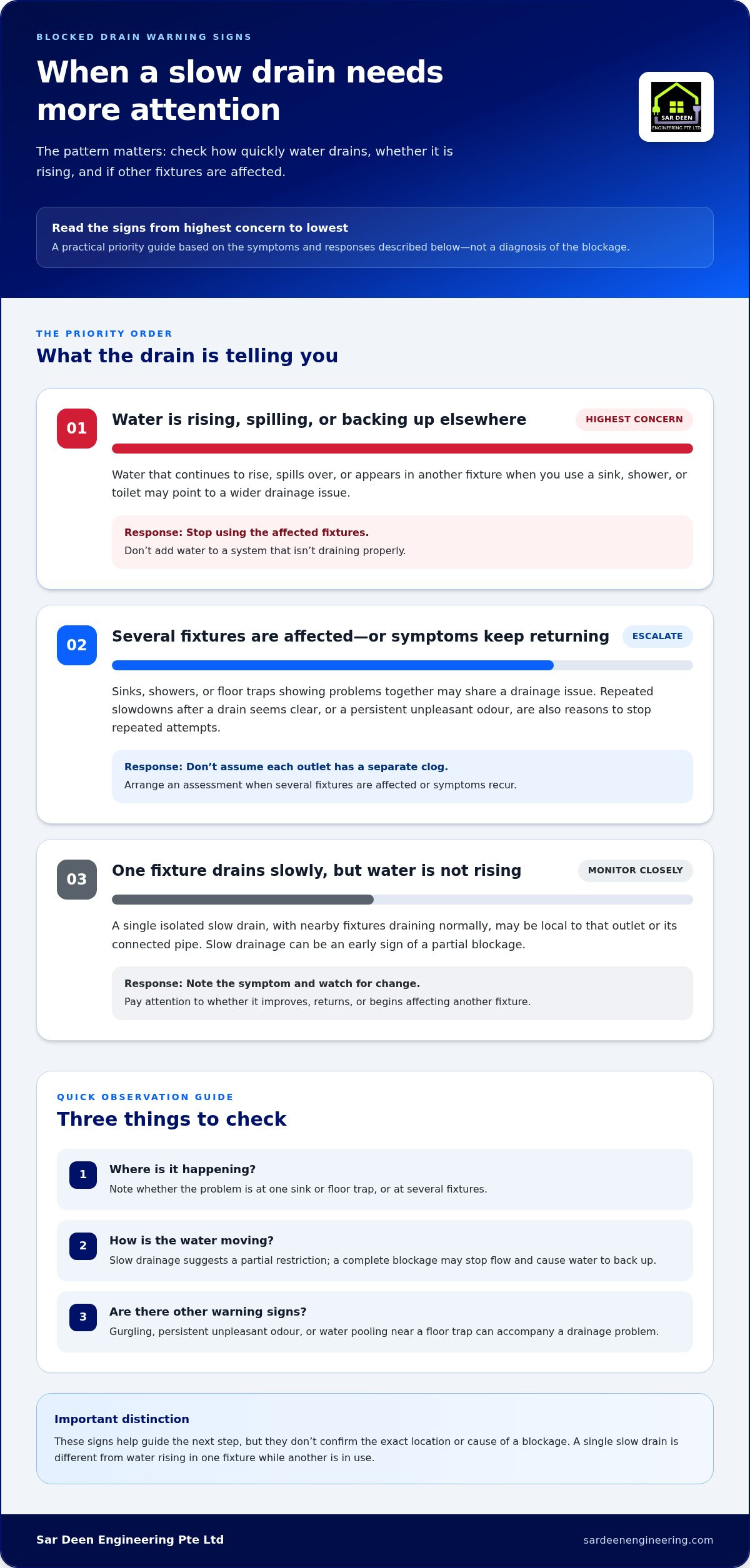
An isolated drain that empties slowly, without rising water or other affected fixtures, is a reason to monitor it closely. The situation is more urgent if water continues to rise, spills over, or appears in another fixture when you use a sink, shower, or toilet. Wastewater backing up elsewhere may point to a wider drainage issue, rather than debris at one outlet.
If water is spreading or continues to rise, stop using the affected fixtures. Don’t add water to a system that isn’t draining properly. Persistent odour, repeated slowdowns after a drain seems clear, or several affected fixtures are also reasons to stop repeated attempts and arrange an assessment.
- One fixture, slow but draining: Note the symptom and watch whether it improves or returns.
- Water rising, overflowing, or backing up elsewhere: Stop using affected fixtures and address the issue promptly.
- Several fixtures or recurring symptoms: Don’t assume each outlet has a separate clog. Consider professional blocked drain clearing Singapore support to assess the drainage problem.
These signs don’t confirm the exact location or cause of a blockage. They help you decide whether a cautious household check is reasonable or whether it’s time to stop and arrange choked-drainage and pipe-clearing support.
What Causes a Blocked Drain and Where Is the Choke?
A local clog is material caught near a drain opening, inside a trap, or in the pipe connected to that fixture. You may see debris around a floor trap or basin outlet, but not every blockage is within reach. Soap residue, grease, and small scraps can collect gradually, narrowing the passage until water drains noticeably more slowly.
The material depends on what enters the drain and where it gathers. Use the table as a guide to possible causes, not as a diagnosis. The same symptom can have different causes, and visible debris at an opening doesn’t rule out buildup farther along the pipe.
| Fixture | Possible material | Where it may collect |
|---|---|---|
| Bathroom floor trap or shower drain | Hair, soap residue, small debris | At the grate, trap, or connected pipe |
| Kitchen sink | Cooking grease, food particles, scraps | Near the outlet or farther along the sink pipe |
| Washbasin | Hair, soap residue, small debris | Around the plug, outlet, or connected pipe |
Common causes in bathroom and kitchen drains
Bathroom drains can collect hair and soap residue as water carries them toward the floor trap or shower outlet. In kitchens, grease and food particles can cling to pipe surfaces or gather near the sink outlet. Scrape food scraps into the bin rather than rinsing them down the sink. Keep wipes, sanitary products, and other solid waste out of household drains, even if they seem small enough to flush or wash away.
These materials don’t always cause an immediate choke. Buildup can develop gradually, so a drain that starts slowing after months of normal use may still have a local obstruction. A small amount of visible debris may also sit above a larger accumulation that you can’t see.
How symptoms can help locate the problem
If one fixture is slow and other nearby drains behave normally, the restriction may be close to that outlet or its connected pipe. If several drains show symptoms together, the issue may extend beyond one fixture. Note which outlets are affected and whether the problem appears during ordinary use. This pattern helps describe the issue, but it can’t confirm the choke’s location.
Gurgling or an unpleasant odour can accompany drainage buildup, including material farther along the line. Neither sound nor smell alone proves a specific pipe fault. A blockage that keeps returning may point to deeper buildup or another issue beyond the debris you can see. Don’t assume that removing visible material has resolved the cause if the same symptoms soon return.
When safe household checks don’t resolve a recurring blockage, Sar Deen Engineering Pte Ltd provides residential choked-drainage and pipe-clearing support in Singapore. Learn more about choked-drainage and pipe-clearing support as a practical next step.
How to Clear a Blocked Drain Safely: Low-Risk Steps First
For a minor blockage at an accessible outlet, begin with the least forceful steps. Don’t keep adding water to test a drain that’s already backing up. A slow, isolated fixture may be suitable for a cautious household check, but stop if water rises, a leak appears, or your first safe attempt makes no difference.
A simple first-response sequence for a minor blockage
Follow these steps in order. They’re intended for a local obstruction you can approach safely, not a deep or recurring choke.
- Stop using the affected fixture. Pause the tap, shower, or other water source connected to the slow drain. This makes it easier to see whether water is still rising or spreading.
- Remove visible debris carefully. Put on gloves and lift loose hair or scraps from around the drain opening. Don’t push debris farther inside, reach into a drain you can’t see clearly, or dismantle unfamiliar pipework.
- Use a suitable plunger only if the blockage is accessible. A plunger may help with a local clog if it fits the outlet and forms a good seal. Use steady, controlled movements. Stop if the fixture is leaking, water is backing up elsewhere, or the blockage doesn’t shift.
- Reassess the drainage. If the immediate area is clear and it’s safe to do so, use a small amount of water to see whether it drains normally. Stop if the water level rises, a leak appears, or flow remains restricted.
Don’t pour boiling water indiscriminately into a drain. Fixture and pipe materials vary, and high heat may be unsuitable. Don’t dismantle pipework unless you know how to handle it safely and can reassemble it correctly.
Should you use chemical drain cleaners?
Check the product label and the instructions for your fixture or pipes before using a drain cleaner. Suitability depends on those directions. Never mix drain products, and don’t add another cleaner after an unsuccessful attempt. Combining products can expose you to harmful reactions, while adding more chemicals won’t establish where a blockage is or whether it has cleared.
If you’ve already used a chemical product, tell anyone handling or clearing the drain what it was, if known, and when you applied it. Don’t plunge into a drain containing standing chemical solution, since it may splash. Follow the label’s safety instructions and stop if you’re unsure how to proceed.
If water backs up, a leak appears, or a careful attempt makes no difference, don’t continue with more force or products. Sar Deen Engineering Pte Ltd provides residential choked-drainage and pipe-clearing support in Singapore when safe household checks haven’t resolved the problem. For blocked drain clearing Singapore, arrange choked-drainage and pipe-clearing support as the next practical step.
When to Stop DIY Drain Clearing and Get Professional Help
A safe first attempt should help you decide what to do next, not turn into a cycle of stronger measures. Stop if the blockage doesn’t shift, returns soon after, or comes with signs that water may be backing up beyond one drain. Don’t keep plunging or add another chemical cleaner after an unsuccessful attempt. Repeated force and extra products won’t show you where the problem is and may make it harder to handle safely.
Red flags that call for prompt attention
Prioritise overflow, wastewater returning through another outlet, and visible leakage. Stop using affected fixtures if water is rising or spreading. Several drains affected at once, or a blockage that repeatedly returns, calls for professional assessment because the issue may extend beyond a single outlet. Keep children, pets, and others away from wastewater, and avoid direct contact with it.
- Overflow or rising water: Stop water use in the affected fixtures and keep clear of spreading water.
- Wastewater backing up elsewhere: Don’t run water into other affected outlets to test them.
- Visible leakage: Avoid further DIY attempts and note where the water is appearing.
- Recurring blockage or persistent odour: Record when symptoms return and which fixtures are involved.
These signs don’t identify the exact cause, but they’re a clear reason to stop experimenting. For more on recognising a pipe blockage and the next steps, read this blocked-pipe clearing guide.
Who should be informed in a shared building?
If several fixtures are affected or a shared drain may be involved, record each affected outlet, the symptoms, and when they began. In a condominium or other shared building, notify the building management or MCST so they’re aware of the possible common-drain concern. Avoid assuming who is responsible for the issue or its cost before it’s assessed.
For broader upkeep, use a home maintenance checklist to keep routine observations organised. Clear notes can help distinguish a one-off slow drain from a pattern that needs attention.
When household checks haven’t resolved the choke, Sar Deen Engineering Pte Ltd provides residential choked-drainage and pipe-clearing services in Singapore. If you need blocked drain clearing Singapore, arrange choked-drainage and pipe-clearing support rather than continuing with repeated DIY attempts.
Prevent Repeat Blockages and Arrange Drain Clearing in Singapore
Once water is flowing again, small habits can limit how much debris enters household drains. They won’t prevent every blockage, especially if the cause is farther along the pipe, so keep an eye on how each fixture drains after cleaning. Note if slow flow, gurgling, or odour returns, and whether the same drain or several fixtures are involved.
Everyday habits that help keep drains clear
Use this simple checklist as part of regular household upkeep:
- Catch sink debris. Place a strainer over the kitchen sink outlet where suitable. Empty collected food scraps into the bin before rinsing the strainer or sink.
- Remove hair from bathroom drains. Clear hair from the shower outlet or floor-trap cover regularly, before rinsing the area. Don’t push the debris down the drain.
- Dispose of grease properly. Let cooking grease cool, then discard it without pouring it into the sink. Wipe greasy residue from cookware before washing it.
- Keep solid waste out of drains and toilets. Put wipes and sanitary products in a bin, not down a toilet or household drain.
After cleaning a drain, observe it during normal use. Is water draining as it usually does? Does the same symptom return later, or do other fixtures begin to slow too? Write down what you notice and when. This record can help show whether the issue is isolated or recurring, without assuming that good habits alone will prevent every choke.
What to expect when arranging drain-clearing help
If safe household checks haven’t resolved the blockage, Sar Deen Engineering provides residential choked-drainage and pipe-clearing support in Singapore. A clear description helps explain the problem. Note the affected fixture, the symptoms, how long they’ve been happening, and any steps you’ve already tried.
Also mention whether more than one fixture is affected and whether you’ve used a drain product. If you used a chemical cleaner, share its name if known and when it was applied. These details give useful context for discussing the problem. You don’t need to diagnose the cause yourself.
Keep a simple household maintenance record alongside other routine checks. A Singapore handyman services guide can help put drain concerns in the context of broader home repairs and upkeep.
For blocked drain clearing Singapore, arrange residential choked-drainage and pipe-clearing support with Sar Deen Engineering when a blockage persists or returns. Arrange help with a blocked drain as a practical next step.
Take the Next Step With Confidence
You don’t need to identify the exact cause before deciding what to do. Recognise when a household attempt has reached its limit, and avoid turning a small concern into a bigger one through repeated force or guesswork. If the drain remains troublesome or the symptoms return, note what you’ve observed and arrange suitable help.
Professional blocked drain clearing Singapore support can help you move beyond cautious household checks when a blockage persists. Sar Deen Engineering provides residential choked-drainage and pipe-clearing services. Arrange help with a blocked drain to take the next step towards getting your home’s drainage back on track.
Frequently Asked Questions
Can I clear a blocked drain with a plunger?
Yes, a plunger may help with a minor blockage near an accessible drain opening. Choose one that fits the outlet so it can form a seal, then use controlled strokes rather than excessive force. Stop if water rises, a leak appears, or the blockage remains. If a chemical cleaner is in the drain, don’t plunge unless the product label specifically explains how to do so safely.
Is it safe to pour boiling water down a blocked drain?
Not necessarily. Boiling water may be unsuitable for some pipe materials, seals, or fixtures, and it may not clear the obstruction. Don’t use it as a default fix. Check the fixture instructions and any product label before adding liquids. If water is already standing or backing up, adding more can worsen the overflow. Pause and assess the situation instead of repeatedly flushing the drain.
What should I do if several drains are blocked at once?
Stop using the affected sinks, showers, or toilets, and note exactly which ones are slow or backing up. For example, record whether a toilet backs up when a nearby basin or shower is used. That pattern can help explain the issue, but it doesn’t prove where the blockage is. Avoid flushing toilets or running appliances connected to affected drainage. In a shared building, notify management if common drainage may be involved.
Can chemical drain cleaners damage pipes?
They can be unsuitable for some pipe materials or fixtures, so follow the product label and relevant fixture instructions. Never mix drain cleaners or combine them with other household chemicals. If one application hasn’t worked, don’t add a different product. Keep the packaging or note the product name, and tell anyone assisting with the drain what was used. Residue may remain even if the cleaner didn’t clear the blockage.
Why does my drain keep getting blocked after I clear it?
A recurring choke can mean the obstruction wasn’t fully removed, debris continues entering the pipe, or the cause lies beyond the visible opening. Notice whether it returns after a particular activity, such as washing dishes, or whether the same fixture slows regardless of use. Keep a brief record of the date, affected drain, and symptoms. If the problem continues, arrange an assessment rather than repeating the same clearing attempt.
Can a blocked drain cause water to leak into another room or unit?
A blockage can lead to water backing up or overflowing, but it can’t confirm why water appears elsewhere. Stop using the affected fixture and keep people away from wastewater. If water reaches another room or unit, inform building management and describe where it appeared. Keep clear of wet electrical equipment and don’t touch switches or appliances standing in water. Seek professional help if water continues to spread.
How can I prevent kitchen and bathroom drains from blocking?
Use suitable strainers, empty them into the bin before rinsing, and remove hair from bathroom drain openings during routine cleaning. Scrape food from plates before washing, and let grease cool before disposing of it separately. Put wipes and sanitary products in a bin, not a toilet. These habits limit common debris, but can’t prevent every pipe issue. Note any recurring slow drainage or odour so you can respond early.