Pipe Clearing Service Singapore: A Practical Guide to Blocked Pipes
You turn on the tap, and the water rises instead of draining. A slow sink, a floor trap that stays full, or wastewater backing up can quickly disrupt your home. If you’re unsure whether it’s a minor clog or a deeper blockage, a pipe clearing service Singapore residents can rely on can help address the problem.
Before reaching for a tool or cleaning product, note where drainage has slowed, whether more than one fixture is affected, and whether unpleasant smells or wastewater backup are developing. Using the wrong tool or too much force can make a blockage worse.
This guide covers common warning signs, ways to narrow down the affected area, and safe steps to take before arranging professional clearing. Sar Deen Engineering provides residential choked drainage and pipe-clearing services across Singapore.
Key Takeaways
- Slow drainage, gurgling, recurring odours, or water returning through a nearby drain can signal a blockage.
- Note which fixtures are affected. This helps describe the issue, but doesn’t confirm where the blockage is.
- Choose a clearing method based on what’s visible and accessible. Using a tool incorrectly can damage pipes or fittings.
- Pause water use in affected areas, check only visible spaces, and record what you notice without dismantling pipework.
- If safe first steps don’t resolve the problem, a pipe clearing service Singapore homeowners can use can help assess and clear the blockage.
How to Recognise a Blocked Pipe Before It Disrupts Your Home
Slow drainage can have several causes. Buildup close to a drain opening may slow water, but a restriction farther along the pipe can cause similar symptoms. One sluggish sink doesn’t automatically mean the pipe has failed. Check whether the change is persistent and whether other fixtures show the same signs.
A choked pipe is a pipe where a blockage restricts the normal flow of water or wastewater. Common clues include water draining more slowly than usual, gurgling as it flows away, recurring unpleasant odours, or water returning through a nearby drain. A single sign can’t confirm the cause or show exactly where the obstruction is.
Pay attention to the pattern. Does the water level rise before it drops? Does an odour return after cleaning? Does gurgling happen only when one fixture drains, or do other drains react at the same time? These observations help you explain the issue clearly if you arrange professional clearing.
Which signs suggest a local drain blockage?
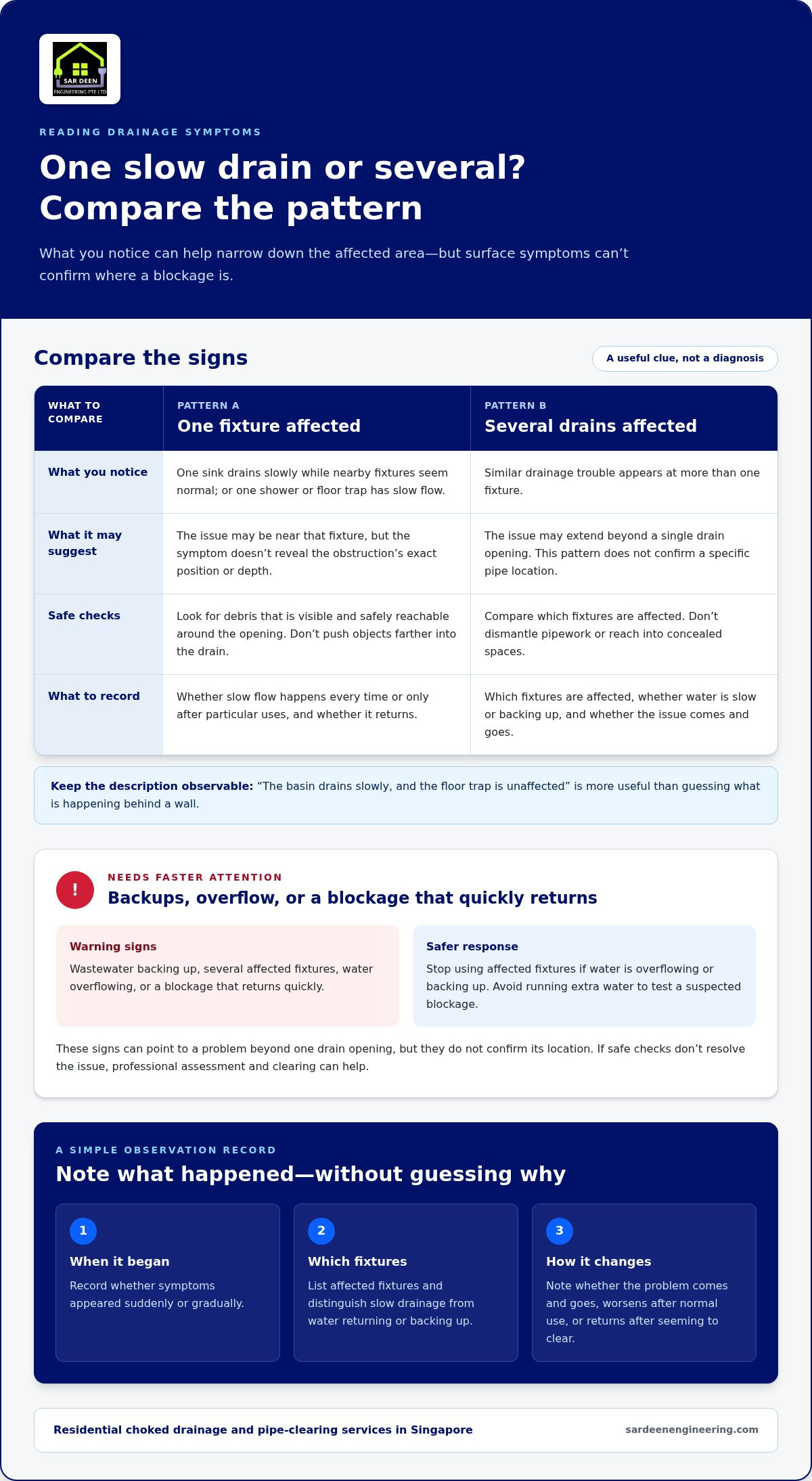
If one sink drains slowly while nearby fixtures seem normal, the issue may be close to that sink. A slow shower or floor trap can similarly help narrow down which area to watch. However, a visible symptom doesn’t reveal the obstruction’s exact position or depth. Note whether slow flow, gurgling, or odours return during normal use.
Drain-cleaning options work in different ways. For background on types of drain cleaners, including chemical and mechanical options, see Wikipedia’s overview. A product or tool that works for one drain may not suit another. Focus first on what you can observe rather than forcing a result.
When does a blockage need faster attention?
Take wastewater backing up, several affected fixtures, or a blockage that quickly returns seriously. These signs can point to a problem beyond one drain opening, though they don’t confirm its location. If water is overflowing or backing up, stop using the affected fixtures to limit further spillover. A pipe clearing service Singapore homeowners use is a practical next step when the issue persists or safe initial actions don’t resolve it.
Keep your notes simple: which fixture is affected, what you noticed, and whether the problem recurs during normal use. This makes it easier to describe the situation during a service assessment. For other routine checks around the home, use this home maintenance checklist alongside your observations.
How to Narrow Down Where a Pipe or Drain Is Blocked
Compare fixtures rather than guessing where the obstruction is. If one sink drains slowly but the shower and floor trap seem normal, the symptom appears limited to that fixture. If several drains show similar trouble, the issue may extend beyond one drain opening. These patterns help describe the problem, but they can’t confirm the location.
Keep your checks simple and non-invasive. Look for debris that’s readily visible around the drain opening, but don’t remove pipework or reach into concealed spaces. Pipes may run behind walls or connect to shared drainage paths, so surface symptoms alone can’t show exactly what’s happening inside.
What can one affected fixture tell you?
A problem limited to one sink or floor trap may point to a local drainage issue, such as a restriction near that fixture. Note whether water drains slowly every time or only after particular uses. Remove only visible debris that you can safely reach, and don’t push objects farther into the drain. If the symptom continues, the obstruction may be beyond reach and need professional assessment and clearing.
What if several drains are slow at once?
Similar symptoms at more than one fixture may suggest a blockage beyond a single drain opening. This pattern is useful information, not proof of a specific shared-pipe location. Avoid drawing conclusions about concealed pipework without an assessment. If water is returning or backing up, limit use of the affected fixtures while you note what’s happening.
A short record makes it easier to explain the issue and how it has changed. Include:
- When the symptoms first appeared, and whether they began suddenly or gradually.
- Which fixtures are affected, distinguishing slow drainage from water returning or backing up.
- Whether the problem comes and goes, worsens after normal use, or returns after seeming to clear.
Describe what you observed, not what you think is behind the wall. For example, “the basin drains slowly, and the floor trap is unaffected” is more useful than naming a pipe location you can’t see. Don’t deliberately run extra water to test a suspected blockage, especially if water is already backing up.
If symptoms affect several fixtures, keep returning, or don’t improve with safe checks, professional pipe clearing can help assess the drainage and address the blockage. Sar Deen Engineering provides residential choked drainage and pipe-clearing services in Singapore. Learn more about pipe clearing support.
Pipe Clearing Methods: What They Do and When They May Help
The right response depends on more than how slowly water drains. A visible obstruction near an opening is different from a recurring blockage deeper in the system. The blockage location and the pipe’s condition influence which clearing method is appropriate. A tool that suits an accessible drain may be ineffective or risky if pushed into concealed pipework.
Use this comparison to understand the differences, not as a diagnosis. Clearing removes or shifts an obstruction. Inspection helps assess what may be happening inside a pipe. They are related steps, but they are not the same task.
| Approach | Likely use | Access needed | Risk if used incorrectly |
|---|---|---|---|
| Manual removal | Visible debris at an accessible drain opening | Direct access to the opening | Reaching too far may push debris in or cause injury |
| Suitable drain tools | A limited blockage that can be reached from the drain opening | An opening suited to the tool | Forcing or using the wrong tool may damage pipework or fittings |
| Professional clearing | Persistent, recurring, or less accessible blockages | Assessment of the affected drainage | An unsuitable approach may worsen damage or fail to clear the cause |
What can simple drain tools address?
Simple tools may help with a limited obstruction that’s reachable through an accessible drain opening. They can’t be relied on to clear a deeper pipe. Removing visible debris is also different from clearing material farther inside the system. Stop if a tool meets resistance, and don’t force it into concealed or fragile pipework.
Choose caution over pressure. If the drain remains slow after visible debris is removed, repeated attempts with a tool may not address the cause. The blockage could be beyond reach, or the pipe may need assessment before further clearing.
When might professional equipment or inspection be needed?
A blockage that returns or seems deeper than the opening may need a more thorough assessment. CCTV inspection is one possible way to view a pipe’s interior when appropriate. It’s an inspection method, not a clearing method, and isn’t necessary for every choke. Findings can help guide the next step.
A pipe clearing service Singapore residents use can help when safe, limited efforts haven’t resolved the problem. The suitable approach depends on the symptoms and the condition of the drainage. Professional clearing addresses the blockage without relying on guesswork or force. Don’t attempt unfamiliar equipment or keep escalating DIY efforts if the obstruction persists.
What to Do Safely Before Arranging Pipe Clearing
A few careful checks can help you understand the blockage without turning a small drainage problem into a bigger one. Stick to areas you can see and reach safely. Don’t dismantle pipes, reach into concealed spaces, or keep testing a drain if water is already backing up.
Use this simple sequence:
- 1. Pause affected water use. Avoid using fixtures that are draining poorly. If water is overflowing or backing up, stop using them to limit further spillover.
- 2. Inspect visible areas. Look around the drain opening and nearby surfaces for accessible debris, standing water, or signs of leakage. Don’t remove pipework or probe deep into the drain.
- 3. Document the symptoms. Note which fixtures are affected, when the problem began, and whether it returns after normal use. A clear description helps explain what you’ve observed.
- 4. Decide whether to escalate. Stop DIY attempts if water backs up, a leak appears, or the blockage keeps returning. These signs call for a more cautious next step.
Which first steps are reasonable at home?
Remove only debris that’s visible and safely reachable at the drain opening. If you use a suitable household tool, follow its directions and stop if you meet strong resistance. Don’t force it farther into the pipe. Keep children away from standing wastewater and cleaning products, and wash your hands after handling items near the drain.
These checks are for observing the situation, not reaching a hidden obstruction. If the drain remains blocked after accessible debris is cleared, leave deeper work to an appropriate clearing assessment.
Which actions can make the problem worse?
Never pour mixed cleaning chemicals into a drain, and don’t combine products or use an unknown mixture. Avoid taking apart concealed pipework or pushing tools into the drainage system by force. These steps can create additional risks or damage fittings and pipes, especially when you can’t see what the tool or product is reaching.
Don’t keep running water to test a drain that’s backing up or overflowing. Stop if you notice leakage, repeated blockage, or wastewater returning. A pipe clearing service Singapore residents can use is a sensible next step when simple, non-invasive checks don’t resolve the issue.
If the blockage persists, arrange professional pipe clearing with Sar Deen Engineering. The company provides residential choked drainage and pipe-clearing support to help address the problem and restore normal drainage.
What to Expect from a Pipe Clearing Service in Singapore
You don’t need to identify the cause before arranging professional pipe clearing. Your observations help explain the problem, while an assessment helps determine an appropriate next step. A typical service journey involves describing the symptoms, assessing the affected drainage, choosing a suitable clearing approach, and checking whether drainage has improved.
The work depends on what’s found. A single slow fixture may call for a different response from recurring symptoms across several drains. The aim is to address the blockage and restore normal drainage, without assuming the same approach suits every home.
How to prepare for a residential pipe-clearing visit
A little preparation makes it easier to discuss the issue clearly. Keep the area around affected sinks, floor traps, and other visible drainage points safely accessible. Don’t dismantle fittings or try to expose concealed pipework. Share what you’ve noticed, even if you’re unsure what it means.
These details are useful:
- Which fixtures are affected, and when symptoms began.
- Whether the blockage has happened before or returned after seeming to clear.
- Any clearing attempts already made, including cleaning products used.
- Visible leakage, standing water, overflow, or wastewater backing up.
Be clear about products used, especially if you’ve put a drain cleaner into the pipe. This information helps avoid uncertainty during the assessment. If water is overflowing or backing up, stop using the affected fixtures and mention that when describing the problem.
When professional pipe clearing is the sensible next step
Arrange service support if drainage remains poor after safe, limited checks, if the blockage returns, or if several fixtures are affected. These patterns don’t confirm the cause, but they can indicate that further attempts at home may not resolve the issue. The appropriate work depends on the symptoms and assessment, so don’t assume in advance that a particular method or repair is needed.
During the service journey, explain what you’ve observed and allow the affected drainage to be assessed. After clearing, check whether water drains more normally. If symptoms continue or return, describe that clearly rather than treating a temporary change as a confirmed fix.
For broader home repair planning, the handyman services guide can help you think through other household maintenance needs. Sar Deen Engineering provides residential choked drainage and pipe-clearing services in Singapore. If the blockage is recurring, affects several fixtures, or remains unresolved, contact Sar Deen Engineering for pipe clearing support.
Choose a Clear Next Step for Your Home
A drainage problem doesn’t have to leave you guessing. Use what you’ve observed to make a calm, informed decision, and avoid actions that could add damage or disruption. If the issue continues, professional support is a practical next step when careful first efforts haven’t restored normal drainage.
Sar Deen Engineering provides residential choked drainage and pipe clearing across Singapore. Be ready to share which fixtures are affected, what you’ve noticed, and whether the problem has happened before. These details help explain the situation clearly.
Get help with a persistent pipe blockage from Sar Deen Engineering.
Frequently Asked Questions
How do I know if a pipe is blocked or just draining slowly?
A drain that takes longer than usual to empty may have a partial blockage, but one slow drain doesn’t confirm a serious pipe problem. Notice whether the delay happens repeatedly during normal use or only once. Compare it with other fixtures nearby. If water drains more slowly over time, makes unusual sounds, or leaves an odour, note the pattern rather than relying on a single observation.
Can I clear a blocked pipe myself without damaging it?
You can try limited, non-invasive steps if the obstruction is visible at an accessible drain opening. Remove only debris you can reach safely, or use a suitable household tool exactly as directed. Don’t push hard, reach into concealed pipework, or dismantle fittings. Stop if the tool meets strong resistance or the blockage remains. Repeated force can damage pipes or move debris farther into the drainage system.
Is it safe to use chemical drain cleaner in a blocked pipe?
It depends on the product and the pipe, so don’t assume a chemical cleaner is safe for every blockage. Read and follow its label, and never combine drain products or mix them with other cleaning chemicals. If you’ve already used a product, don’t add another and tell the person assessing the drain what you used. Persistent clogs may need a different approach than chemical treatment.
What should I do if several drains in my home are blocked?
Stop using affected fixtures if water is backing up, and avoid adding more water to the drainage system. Record which drains are slow and whether their symptoms began around the same time. Several affected fixtures can suggest the issue extends beyond one drain opening, but the pattern alone can’t identify the location. If the problem persists, professional assessment can help determine an appropriate next step.
Why does the same drain keep getting blocked?
A recurring blockage may mean some material remains in the pipe or that debris is building up again with everyday use. Hair and soap residue can collect near bathroom drains, while grease, oil, food waste, or coffee grounds may contribute to kitchen sink clogs. A strainer can catch some debris before it enters the drain. If the same fixture keeps choking, avoid repeatedly forcing tools into it.
When should I arrange a professional pipe clearing service?
Arrange professional help if safe, simple steps don’t resolve the blockage, if it returns quickly, or if several fixtures are affected. Stop using a fixture if wastewater backs up or water overflows. Sar Deen Engineering provides residential choked drainage and pipe-clearing services. A pipe clearing service Singapore homeowners use can assess the symptoms and determine a suitable approach, rather than relying on repeated guesswork at home.
Can a blocked pipe cause water to back up through another drain?
Yes, water can return through another drain if a blockage restricts the route wastewater would normally take. This may happen at a nearby opening, but it doesn’t prove where the obstruction is or which pipes are connected. Stop using affected fixtures if water backs up, and keep people away from standing wastewater. Note which drain water appeared in and what was being used just before it happened.