Home Maintenance Checklist Singapore: A Practical 2026 Guide
What if a few minutes of checking each week could help you spot a home repair issue early? In Singapore, humidity and heavy rain can make damp patches, worn grout and slow drainage easy to miss. A repeatable home maintenance checklist Singapore households can use helps you notice changes and decide what needs attention.
It’s easy to put off a loose fitting or faint water stain when life is busy. The challenge is knowing what to check, how often to do it and when a visual check is no longer enough. You don’t need technical skills to notice changes, but electrical faults, persistent leaks and damaged tiles need careful handling.
This guide sets out a manageable schedule by frequency and household area, from bathrooms and kitchens to walls, floors and electrical fittings. You’ll learn which warning signs to record, which checks are safe to do yourself, and when to arrange repair help. Use it as a routine, not another long list of jobs to worry about.
Key Takeaways
- Use a monthly visual walkthrough to spot moisture, leaks and safety warning signs without dismantling fixtures or wiring.
- Follow a quarterly home maintenance checklist Singapore residents can use to review grout, tiles, paint, door hardware and commonly used fixtures.
- After heavy rain, check accessible areas for new stains, dampness, drainage changes and seepage around windows. Record any issue that returns.
- Sort findings into three next steps: monitor, schedule a repair or address promptly. Active leaks and damaged electrical fittings need prompt attention.
- Keep notes on recurring issues and completed maintenance so you can compare changes and plan repairs with more confidence.
Why a Home Maintenance Checklist Matters in Singapore
Home maintenance doesn’t mean tackling every repair at once. Short, regular checks make it easier to notice changes, record them and decide what needs attention. A home maintenance checklist Singapore residents can adapt to their space turns upkeep into a manageable routine, whether they live in an HDB flat, condominium or landed home.
Singapore’s humid conditions and heavy rainfall make it useful to keep an eye on moisture. Look for fresh stains on ceilings or walls, damp patches that persist, peeling paint and changes around windows after rain. These signs don’t reveal the cause by themselves, but noting where and when they appear helps you track what is changing. Public housing maintenance initiatives such as the Home Improvement Programme (HIP) also reflect the importance of addressing issues such as spalling concrete and ceiling leaks in HDB estates.
Keep checks visual and within safe reach. You can look for water around a toilet, loose door hardware or a damaged switch faceplate without taking anything apart. Don’t dismantle plumbing or electrical fittings, climb to unsafe areas, or attempt repairs that need specialist skills or equipment. If you spot an active leak, damaged electrical fitting or recurring problem, stop and arrange appropriate repair help.
What a Home Maintenance Checklist Helps You Catch Early
Small clues are easier to act on when you notice them early. Check for new stains, persistent dampness, loose handles, cracked or missing grout, and unusual smells near drains or enclosed areas. Record the date, location and what you observed. A dated note or photo can show whether a mark has spread or whether the same issue returns after rain, cleaning or regular use.
Preventive maintenance means checking your home regularly and responding to early warning signs before they become harder to manage. A single observation may be temporary; a repeated or worsening sign deserves closer attention.
How to Adapt the Checklist to Your Home
Start with three notes: your home type, the rooms you use most and any existing concerns. In a landed home, include accessible exterior-facing areas. In an HDB flat or condominium, you may want to track bathroom moisture, window edges and frequently used fixtures. Give priority to places where you’ve already noticed a change.
Keep observations inside your home separate from concerns in shared spaces. In an HDB block or condominium, record issues in common corridors or shared facilities separately, and follow building management guidance for reporting, access and inspections. Focus your personal checklist on areas you’re permitted to access. This makes it clearer which items you can monitor and which need to be raised with the relevant management team.
Monthly Home Maintenance Checks for Moisture, Leaks, and Safety
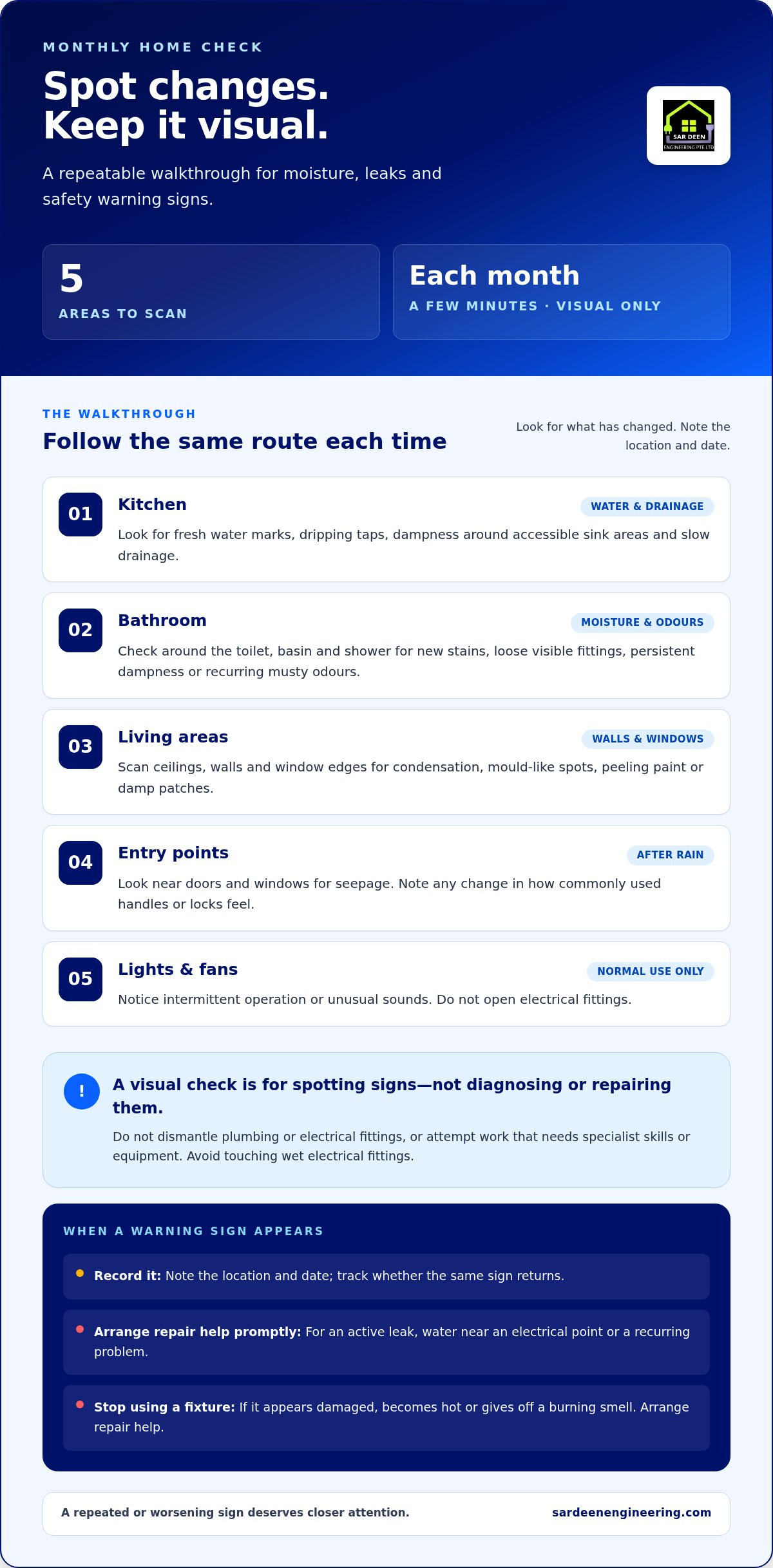
Set aside a few minutes each month for a visual walkthrough. Follow the same route each time so it’s easier to notice what has changed. This part of your home maintenance checklist Singapore routine is for spotting signs, not taking fixtures apart or diagnosing what’s behind a wall.
- Kitchen: Look for fresh water marks, dripping taps, dampness around accessible sink areas and slow drainage.
- Bathroom: Check around the toilet, basin and shower for new stains, loose visible fittings, persistent dampness or recurring musty odours.
- Living areas: Scan ceilings, walls and window edges for condensation, mould-like spots, peeling paint or damp patches.
- Entry points: Look near doors and windows for seepage after rain. Note any change in how commonly used handles or locks feel.
- Lights and fans: Use accessible switches and fans normally. Note intermittent operation or unusual sounds, without opening the fittings.
Bathroom and Kitchen Checks for Leaks and Drainage
Look for changes rather than trying to repair them during your walkthrough. A new mark beneath a sink, a tap that keeps dripping or a drain that has become slower is worth recording. Note when an odour appears and whether it returns. Don’t mix cleaning products or attempt to clear a blockage with hazardous chemical combinations.
Persistent leaks, an overflowing fixture or water near an electrical point need prompt attention. Avoid touching wet electrical fittings. A visual check can identify a warning sign, but it can’t confirm the cause or replace technical diagnosis and repair.
Room-by-Room Checks for Ventilation and Fixtures
In bedrooms and living areas, look around windows and external-facing walls for new dampness, condensation, peeling paint or mould-like spots. In the kitchen and bathroom, notice whether moisture lingers or musty smells return. Record the location and date so you can tell if the same area is affected again.
During normal use, note if a light or fan operates intermittently, makes an unusual sound, feels hot or shows visible damage. Don’t open electrical fittings. Stop using a fixture that appears damaged, becomes hot or gives off a burning smell, and arrange repair help.
In condominiums, distinguish issues inside your unit from concerns in shared spaces. The Building Maintenance and Strata Management Act provides the legal framework for strata-titled property management, so follow your building’s guidance for reporting shared-area concerns. If your checks reveal recurring drainage problems or a damaged switch, Sar Deen Engineering’s drainage and electrical repair services can help address the issue.
Quarterly Home Maintenance Checklist for Fixtures and Surfaces
A quarterly review is a useful reminder to check surfaces and fittings that may change gradually. Treat the timing as a practical prompt, not a fixed rule for every household. If an area shows a new or worsening problem, check it sooner. Keep the review visual, and note changes rather than pulling apart fixtures or attempting technical repairs.
| Check | Visible warning sign | Sensible next action |
|---|---|---|
| Grout and tile | Cracked or missing grout, loose tiles, or recurring dark or damp patches | Record the location and whether the sign returns. Arrange an assessment if it persists or worsens. |
| Painted walls and ceilings | Blistering, peeling, stains, or marks that appear after wet weather | Photograph and date the change. Look for a recurring pattern before planning a repair. |
| Accessible seals | Visible gaps, lifting edges, or signs of moisture around the area | Monitor the area and seek help if dampness persists. |
| Doors and hardware | Loose handles, sticking movement, visible damage, or a fitting that has shifted | Note whether the problem is getting worse. Arrange repair if the door or fitting is difficult or unsafe to use. |
| Commonly used fixtures | Changes in operation, unusual noise, or visible damage | Stop using a damaged fixture and arrange appropriate repair help. |
Inspect Tiles, Grout, and Painted Walls
Look closely at bathroom and kitchen grout, tile edges, and painted areas near windows or other places where moisture may show. A recurring dark patch or fresh stain deserves attention, but its appearance alone can’t confirm the cause. Don’t assume that applying a surface treatment will prevent every mould or moisture problem. If grout is deteriorating, see this Singapore epoxy grouting guide for more detail.
For paint, compare current marks with earlier photos. A stain that returns after wet weather or a patch that keeps expanding is more useful to track than a single isolated mark. Note the location and date so you can describe the change clearly if a repair is needed.
Check Doors, Fans, and Everyday Fittings
Open and close doors as you normally would, then note sticking, loose handles or visible movement in the hardware. Observe fans during normal operation. Unusual wobbling or noise is a reason to stop and arrange an assessment, not to dismantle the unit yourself. For installation questions, refer to the ceiling fan installation guide.
Use your home maintenance checklist Singapore notes to distinguish stable signs from changes that recur or worsen. Comparing observations helps you decide what to monitor and what needs attention.
Annual and After-Heavy-Rain Home Checks in Singapore
A yearly walkthrough helps you compare your home’s current condition with the notes and photos you’ve kept. Focus on visible changes and recurring faults. You’re looking for patterns to describe clearly, not attempting a technical inspection or repair.
What to Review Once a Year
- Review painted surfaces. Check walls and ceilings for stains, blistering, peeling or areas that have changed since earlier checks. For guidance on painting in condominiums, see the condo painting services guide.
- Compare grout and tiles. Look for deteriorating grout, cracks, loose tiles or signs that a previously noted patch has spread to a nearby surface.
- Check doors and hardware. Note handles that have loosened, doors that stick more than before or fittings with visible damage.
- Observe fans during normal use. Record unusual noise, wobbling or changes in operation. Don’t climb to reach a fan or take it apart.
- Review visible plumbing and your records. Look for signs of recurring moisture around accessible plumbing. Compare dates and photos to see whether an issue returned, changed or stayed stable.
Keep the record simple: note the date, location, what you observed and whether it has happened before. A photo taken from a safe, accessible position can help show how a stain or damaged surface has changed. These details make it easier to describe the issue when arranging repair help.
What to Check After Heavy Rain
Once conditions are safe, scan accessible areas inside your home. Check around windows, ceilings, walls and floor edges for fresh water marks, dampness or seepage. Notice changes in drainage, such as water taking longer to clear than usual. Record whether a damp area dries, remains, grows or returns after further rain.
New or recurring water ingress deserves timely assessment, especially if the affected area is spreading or remains damp. Don’t inspect roofs, ledges or other unsafe areas, and keep away from water near electrical fittings. A visual scan can document what you see, but it can’t confirm the source of water or the right repair.
Use this annual and post-rain routine to update the home maintenance checklist Singapore households can follow through the year. If your notes point to deteriorating paint, tiles, grout or a technical fault, arrange home maintenance support from Sar Deen Engineering.
Turn Your Singapore Home Maintenance Checklist Into an Action Plan
A checklist is most useful when each finding has a next step. After your walkthrough, sort observations into three groups: monitor, schedule repair and address promptly. This keeps minor cosmetic wear from distracting you from leaks or electrical damage that may need faster attention.
How to Prioritise Home Maintenance Findings
- Monitor: Keep an eye on a stable, minor mark or surface change that isn’t spreading. Record it and compare it during your next check.
- Schedule repair: Arrange an assessment for a recurring fault, deteriorating grout, a loose tile or a fitting that no longer works as expected.
- Address promptly: Don’t ignore an active leak, worsening dampness, water near an electrical point or a damaged electrical fitting. Stop using damaged electrical fixtures and avoid touching wet areas.
For each concern, note the location, date, visible symptoms and any recent change. A photo can show whether a stain has spread or a crack has widened. Don’t attempt repairs involving electrical wiring, concealed plumbing or unsafe access. Your home maintenance checklist Singapore residents can use is a record of what you observe, not a substitute for technical diagnosis.
When Professional Home Maintenance Help Makes Sense
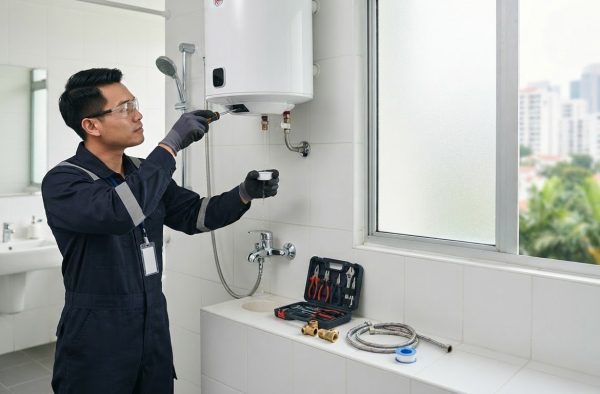
Arrange skilled help when a fault persists, returns or involves technical installation. A damaged toilet bowl may need replacement, while water heater installation and power socket repair require practical technical skills. For more information on electrical work, read this homeowner guide to electrical services in Singapore.
Recurring paint stains, worn grout, loose or cracked tiles, plumbing concerns and electrical faults can each need a different repair approach. Sar Deen Engineering provides residential maintenance services including painting, plumbing work, grouting, tile repair and electrical services. Share your observations and records to help describe the issue clearly.
Once you’ve sorted your findings, choose a next step for each item: keep monitoring, arrange a repair or address it promptly. For practical help with household maintenance concerns, explore home maintenance support.
Make Home Upkeep Easier to Stay on Top Of
A simple routine can make home maintenance feel more manageable. Use a home maintenance checklist Singapore residents can adapt to check for visible changes monthly, review surfaces and fixtures every few months, and look again after heavy rain. Keep brief notes and photos so you can spot recurring problems and explain them clearly when arranging repairs.
Sort each finding by its next step: monitor stable cosmetic wear, schedule attention for persistent faults, and act promptly on active leaks or damaged electrical fittings. Keep to safe visual checks and leave technical repairs to skilled help.
Sar Deen Engineering is a Singapore-based residential maintenance provider serving customers nationally. Its services include painting, grouting, tile repair, plumbing work and electrical installations for common household maintenance needs.
When your checklist points to a repair, contact Sar Deen Engineering for home maintenance support. Start with one check, keep a clear record and build a routine that helps you care for your home with confidence.
Frequently Asked Questions
How often should I use a home maintenance checklist in Singapore?
Do a brief visual walkthrough each month, then review surfaces, fixtures and recurring concerns every few months. Set aside time for a more thorough annual review, and scan for changes after especially heavy rain. Adjust the schedule to your home type, how often rooms and fixtures are used, and any building-management guidance for shared spaces. A few dated notes can help you spot changes without making upkeep a daily task.
What should I check monthly in my Singapore home?
Look for new leaks, water marks, damp patches, musty odours, slow drains, peeling paint, and loose or damaged fittings. Focus on bathrooms, kitchens, windows and fixtures you use often. Keep the check visual and safe. Don’t open electrical fittings or dismantle plumbing. Record the location and date of anything that persists or worsens. Comparing notes over time can help you choose a sensible next step.
What home maintenance issues are common in Singapore’s humid climate?
In Singapore’s humid climate, watch for persistent dampness, condensation, musty smells, and changes to paint or grout. Heavy rain can also make new water marks around windows and ceilings easier to notice. These signs don’t reveal the cause by themselves. Note where and when they appear, then check whether they return, spread or remain. Arrange an assessment if dampness or staining persists or gets worse.
What should I check after heavy rain at home?
From safe, accessible areas, look for fresh stains or dampness around windows, ceilings, walls and floor edges. Notice whether drainage behaves differently and whether wet areas dry or continue to grow. Avoid roofs, ledges and places with electrical hazards. Take dated photos from a safe position to document changes. Persistent or recurring water ingress deserves timely professional assessment, rather than repeated cosmetic covering that leaves the underlying issue unaddressed.
Can I do home maintenance checks myself, or do I need a handyman?
You can do many basic checks yourself by looking for leaks, stains, loose handles, cracked tiles or unusual fan sounds during normal use. Repairs are different. Don’t dismantle wiring, electrical fittings or concealed plumbing, and don’t work at unsafe heights. If a problem persists, worsens or requires installation skills, arrange professional help. Sar Deen Engineering Pte Ltd provides residential repair and installation services across Singapore.
When should I call for professional home repairs?
Arrange professional help for an active or recurring leak, worsening dampness, damaged electrical fittings, a persistently blocked drain, or a fixture that needs replacement or installation. Stop using equipment that shows damage, heat or a burning smell, and avoid touching wet electrical areas. Keep a brief record of symptoms, dates and photos. This makes it easier to explain what you observed and where the problem has changed.
How do I make a home maintenance checklist easy to follow?
Keep your home maintenance checklist Singapore routine short and group tasks by timing: monthly observations, checks every few months, an annual review and a scan after heavy rain. Add the date and a simple status: monitor, schedule repair or address promptly. Focus on visible changes rather than technical diagnosis. A manageable list that you revisit regularly is more useful than a long checklist that’s difficult to maintain.