Urgent Water Heater Replacement in Singapore: Guide
You turn on the shower and get cold water. Then you spot a leak or notice a burning smell near the heater. If you’re facing this at home, urgent water heater replacement Singapore may be on your mind, but put safety first before choosing a new unit.
Losing reliable hot water disrupts everyday routines, and a leak or electrical warning sign can make the situation more stressful. Not every fault means the whole heater must be replaced. However, a leaking storage tank or recurring problems may point towards replacement rather than another repair.
This guide covers warning signs that call for caution, how to weigh repair against replacement, and what to consider when choosing an instant or storage heater. You’ll also learn what to expect during a residential replacement, from describing the problem to testing the new unit. Sar Deen Engineering provides water heater installation and replacement in Singapore to help households restore a dependable hot-water setup.
Key Takeaways
- For urgent water heater replacement Singapore, follow a safety-first checklist before arranging installation.
- Use symptoms to understand when an assessment is needed and when replacement may be appropriate.
- Compare instant and storage heaters by considering your household’s hot-water needs, existing setup, and available space.
- Understand the main replacement stages, from describing the problem and assessing the setup to installation and testing.
- Have the heater type, symptoms, safe photos, and access details ready to make the process more straightforward.
Urgent Water Heater Replacement in Singapore: First Steps
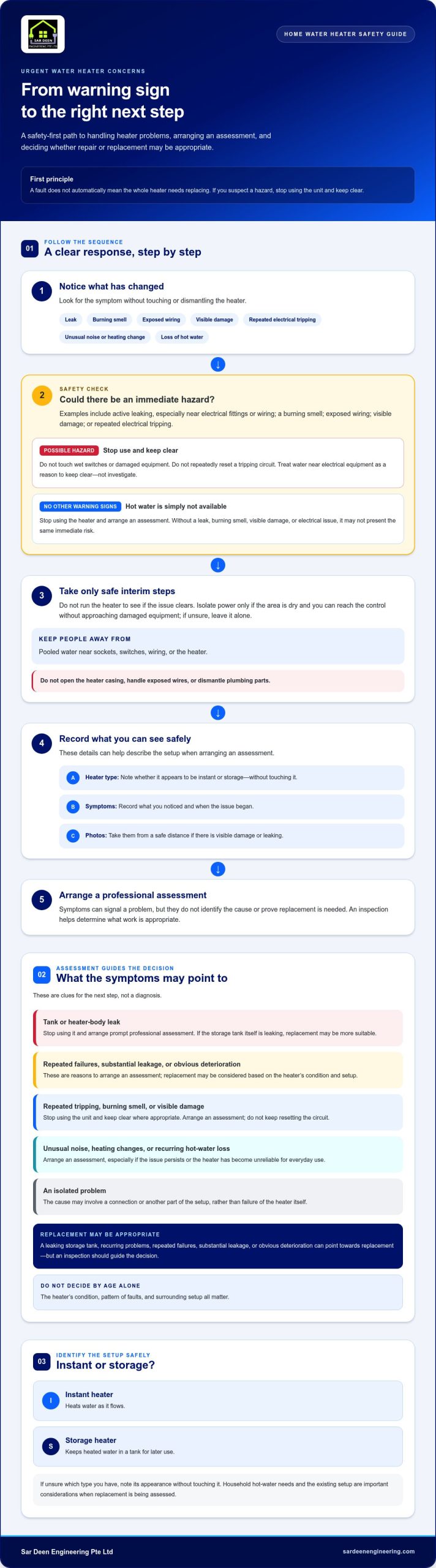
When a heater fails, first distinguish immediate safety concerns from a loss of hot water without other warning signs. If there’s no hot water but no leak, burning smell, visible damage, or electrical issue, stop using the heater and arrange an assessment. If you notice a possible hazard, keep clear and prioritise safety before considering urgent water heater replacement Singapore.
Which water heater symptoms need immediate caution?
Stop using the heater if it’s actively leaking, especially if water is reaching electrical fittings or wiring. Burning smells, exposed wiring, visible damage, or repeated electrical tripping also call for urgent caution. Don’t touch wet switches or damaged equipment, and don’t repeatedly reset a tripping circuit.
Unusual noises, changes in heating, or intermittent hot water can signal a problem, but they don’t identify the cause or prove replacement is needed. If a symptom seems unsafe, stop using the unit and arrange a professional assessment. A heater that simply isn’t producing hot water still needs attention, but without other warning signs it may not present the same immediate risk.
What should you do while arranging a replacement?
- 1. Stop using the heater. Don’t run it to see whether the problem goes away.
- 2. Isolate power only if it’s safe. Use a switch or control only if the area is dry and you can reach it without approaching damaged equipment. If you’re unsure, leave it alone.
- 3. Keep clear of wet electrical areas. Keep household members away from pooled water near sockets, switches, wiring, or the heater.
- 4. Record what you can see safely. Note the heater type, symptoms, and when the issue began. Take photos from a safe distance if there’s visible damage or leaking.
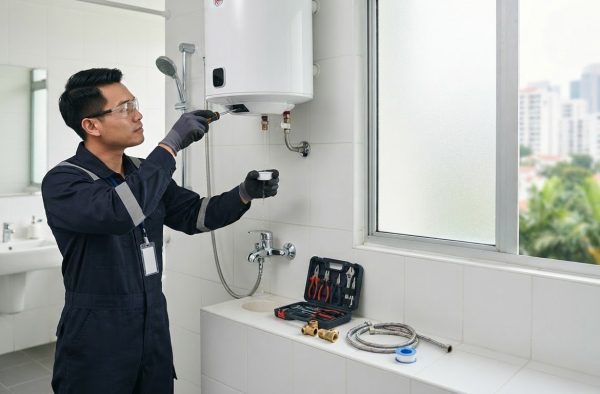
Water near electrical equipment is a reason to keep clear, not to investigate. Don’t open the heater casing, handle exposed wires, or dismantle plumbing parts. These actions can expose you to further risk and won’t reliably identify what work is needed.
If you’re unsure whether the unit is instant or storage, note its appearance without touching it. A storage water heater holds heated water in a tank, unlike an instant unit that heats water as it flows. Knowing the difference can help you describe your setup when arranging an assessment.
Repair or Replace a Water Heater? Make the Urgent Decision
A fault doesn’t automatically mean you need a new heater. The same symptom can have different causes, so an inspection is needed before deciding what work is appropriate. Use the guide below to understand what a symptom may indicate, not as a diagnosis.
| Symptom | What it may indicate | Next step |
|---|---|---|
| Water leaking from the tank or heater body | A problem with the unit or its connections | Stop using it and arrange prompt professional assessment. Replacement may be appropriate if the tank itself is leaking. |
| Repeated electrical tripping | A fault involving the heater or its electrical supply | Stop using the heater and arrange an assessment. Don’t keep resetting the circuit. |
| Burning smell or visible damage | A possible electrical or equipment safety issue | Keep clear and don’t use the unit. Treat this as urgent. |
| Unusual noises | A change in the heater’s operation | Arrange an assessment, especially if the noise persists or other symptoms appear. |
| Persistent or recurring loss of hot water | A heater fault or an issue elsewhere in the setup | Seek assessment before deciding whether replacement is needed. |
When does a heater problem point towards replacement?
Repeated failures, substantial leakage, or obvious deterioration are reasons to arrange a professional assessment. If a storage heater’s tank is leaking, replacement may be more suitable than addressing the symptom alone. Recurring loss of hot water also deserves attention, particularly if the heater has become unreliable for everyday use.
Age can be part of the decision, but it isn’t enough on its own. The heater’s condition, pattern of faults, and surrounding setup all matter. An inspection helps establish whether replacing the unit is the sensible next step.
When might a repair assessment be enough?
An isolated problem doesn’t always mean the heater itself has failed. The issue may involve a connection or another part of the setup. Avoid guessing at the cause or attempting DIY electrical or plumbing work. A professional assessment can clarify the situation and help determine whether installation or replacement is needed. Sar Deen Engineering provides residential water heater installation and replacement in Singapore.
If replacement is recommended, consider your household’s hot-water needs and existing setup before choosing a unit. Singapore’s NEA explains the Mandatory Energy Labelling Scheme, which can help you compare energy ratings. Once you’ve identified the need, Sar Deen’s water heater installation service is a practical next step.
Choose a Replacement Water Heater for Your Home in Singapore
When replacement is being considered, start with how your household uses hot water and what the existing installation can support. The right option should suit daily routines, available space, and site conditions, not just match the old unit. For urgent water heater replacement Singapore, having these details ready helps you make a practical choice without rushing into an unsuitable option.
An instant heater warms water as it flows, while a storage heater keeps heated water in a tank for later use. This difference affects how each type fits a household, but it doesn’t determine suitability on its own. Existing plumbing, mounting position, and electrical setup also matter.
How should household needs shape the replacement choice?
Start with a few everyday questions: How many people use hot water at home? Is it usually needed for one shower at a time, or do household members often need it around the same time? How many bathrooms need hot water? Your answers help describe the demand and routine the replacement should support.
These details guide the choice, but they don’t replace an installation assessment. A heater that seems suitable for your household may not fit the existing setup or available space. First consider how hot water is used, then account for site requirements before settling on an option.
What installation details affect heater suitability?
The existing heater type, its mounting position, and the space around it can all shape replacement choices. The location of plumbing connections and the condition of the installation area matter too. A different heater type may require changes to the setup, so don’t assume a new unit can simply be connected in the same way.
Electrical requirements depend on the selected heater and the property’s existing arrangement. Avoid choosing a model based only on online specifications or appearance. The installation location and connections need to be assessed to determine what suits the home and what work is involved.
- Note your household’s routine: number of occupants, bathrooms, and typical hot-water use.
- Record the current setup: heater type, location, and visible space around the unit.
- Leave technical compatibility to assessment: electrical and plumbing needs depend on the heater and site.
Considering household needs alongside installation conditions makes the next decision easier. Sar Deen Engineering provides residential water heater installation and replacement in Singapore, helping households move from choosing a suitable option to arranging installation.
How Water Heater Replacement Works in Singapore
A clear sequence makes urgent water heater replacement Singapore more manageable. The exact work depends on the heater, its location, existing connections, and access to the installation area. Applicable PUB and electrical requirements should be verified for the specific installation rather than assumed to be the same for every setup.
- Describe the issue. Share the heater type, what you’ve noticed, and when the problem began. Photos of visible symptoms can help explain the situation.
- Assess the setup. The installer reviews the unit’s visible condition, location, mounting position, and existing plumbing and electrical connections.
- Select a suitable replacement. Choose an option that matches household needs and can be safely accommodated by the installation conditions.
- Install the replacement. The old unit is removed and the selected heater is installed. The work can vary with access, connections, and differences between the old and new units.
- Test the installation. The completed setup is checked for operation and visible leaks.
What happens during assessment and preparation?
Assessment starts with the existing heater and the space around it. Its type, visible condition, mounting position, and connections help shape the replacement plan. Clear safe access to the unit before work begins, and keep children away from the work area. In some residential properties, building access or management arrangements may also need to be considered.
These details affect the work. A heater in a tight service area may be harder to access than one with clear space around it. Differences in location or connections can also affect the replacement. The selected heater and the property’s electrical setup may influence the work, so technical requirements should be assessed on site.
What should installation and testing cover?
Replacement involves removing the existing unit and fitting the selected heater to the site’s connections. This isn’t a DIY task. Applicable PUB and electrical requirements should be checked for the specific job, especially if the heater type or installation arrangement is changing. Plan for related electrical work as part of the installation rather than improvising during the job.
After installation, testing should confirm that the heater operates as intended and that there are no visible leaks around the unit or connections. Keep the area accessible until the work is complete, and report any concerns noticed during testing.
For residential water heater installation and replacement in Singapore, arrange your water heater replacement with Sar Deen Engineering.
Arrange Urgent Water Heater Replacement with Sar Deen
If your heater needs replacing, having clear information ready can make the next steps easier. Sar Deen Engineering provides residential water heater installation and replacement in Singapore. The suitable unit and installation work depend on your home’s existing heater, connections, location, and available space. Sharing what you know helps build a practical picture of the setup from the start.
What information helps move a replacement request forward?
Before arranging urgent water heater replacement Singapore, note the details you can gather safely. You don’t need to diagnose the fault or handle the heater. A short, accurate description helps explain what’s happening and plan the next step.
- Heater type: Note whether it’s an instant or storage heater, if you know.
- Symptoms: Describe any leaking, electrical tripping, unusual noises, visible damage, or loss of hot water. Mention whether the heater still supplies hot water.
- Timing: Note when the issue began and whether it has happened more than once.
- Photos: Share clear images of the heater and visible symptoms only if you can take them safely. Don’t approach water near electrical fittings or touch damaged equipment for a better view.
- Access: Describe where the unit is located and any access considerations, such as a narrow service area or building arrangements.
What to expect from a residential installation service
The process starts with understanding the problem and existing setup. The heater type, installation location, connections, and household needs then help guide the replacement choice and work plan. If you’re unsure of the heater type, say so. A safe description of the location and visible setup is more useful than a guess.
During installation, keep the work area accessible and household members clear of it. The work is planned around the home’s conditions and the selected heater. Checks after installation should confirm that the unit operates and that there are no visible leaks. Clear communication about symptoms and access helps make each stage more straightforward, while recognising that installation needs vary from home to home.
For a practical next step, arrange water heater installation with Sar Deen.
Take the Next Step Toward Reliable Hot Water
A failing heater doesn’t always need immediate replacement, but leaks or electrical warning signs call for caution. Stop using a unit that seems unsafe and arrange an assessment rather than guessing at the cause. If replacement is needed, choose a heater based on your household’s hot-water needs and the home’s existing setup.
For urgent water heater replacement Singapore, a few details can make the next steps clearer: note the heater type, describe its symptoms, and share photos only if you can take them safely. The installation plan depends on the unit and conditions at home.
Sar Deen Engineering provides water heater installation as part of its residential services, along with plumbing and electrical solutions for home maintenance. Arrange water heater installation with Sar Deen to take the next step towards a suitable replacement. With a clear description of the problem and a safe plan, you can move forward calmly towards dependable hot water.
Frequently Asked Questions
What should I do if my water heater is leaking in Singapore?
Stop using the heater and keep people away from the leak, especially if water is near sockets, switches, or wiring. Don’t touch wet electrical fittings or open the heater casing. Isolate power only if you can reach the control safely from a dry area. Note where the leak is coming from and take a photo only from a safe distance. For urgent water heater replacement Singapore, sharing these details helps explain the situation.
Can I keep using a water heater that trips the power?
No. Stop using a heater that trips the power, and don’t keep resetting the circuit to try to restore it. The symptom could involve the heater or its electrical supply, but it doesn’t reveal the cause by itself. Keep clear of any wet or damaged area and arrange a professional assessment. Don’t open the unit or attempt electrical repairs. The appropriate next step depends on the assessment.
How do I know if my water heater needs replacement instead of repair?
You can’t determine that from one symptom alone. Persistent loss of hot water, recurring faults, visible deterioration, or a substantial leak are reasons to arrange an assessment. A leak from a storage tank may point towards replacement, but inspection is needed to understand the condition and installation setup. Sar Deen Engineering provides residential water heater installation and replacement to help with replacement needs.
How quickly can a water heater be replaced in Singapore?
There isn’t one fixed timeframe for every replacement. The work can depend on the heater type, access to its location, existing connections, and whether the selected replacement suits the setup. Building access arrangements may also affect planning. Share the symptoms and any safe photos of the unit to help describe the job. The installation requirements and arrangements determine the timeframe.
Is a leaking water heater dangerous?
It can be a safety concern, particularly if water reaches electrical fittings, wiring, or switches. Don’t touch wet electrical equipment or approach a damaged heater to investigate. Keep household members away from the area and stop using the unit. If the leak is near electrical fittings, leave the power control alone unless it can be safely reached from a dry area. The leak’s source and seriousness need proper assessment.
What is the difference between an instant and storage water heater?
An instant heater warms water as it flows through the unit, while a storage heater heats and holds water in a tank for later use. This distinction can help you describe your existing setup, but it doesn’t determine which replacement will suit your home. Household routines, available space, heater location, and existing plumbing and electrical connections all matter. An installation assessment helps establish whether a chosen unit fits the site.
Do storage water heater replacements in Singapore require PUB submission?
Under current requirements, storage water heater installation and replacement must be carried out by a PUB-licensed plumber. The plumber must submit a Certificate of Satisfactory Completion to PUB within seven days of completing the installation. Requirements can depend on the specific work, so don’t treat this as a substitute for checking what applies to the installation. Use an appropriately qualified professional for the replacement.