Electrical Services Singapore: Guide for Homeowners
A flickering light does not always mean you need a new fixture, and a dead socket may need a different fix from a faulty switch. The electrical services Singapore homeowners need depend on the symptoms, the fitting involved, and whether the issue keeps returning.
It is understandable to worry about safety, disruption, and unexpected work when electricity is involved. A useful first step is to note what you have observed and whether you need a repair to an existing socket or switch, or installation of a light fixture or ceiling fan. This guide covers common residential jobs, what details to prepare, and basic safety points to keep in mind.
Sar Deen Engineering provides residential socket and switch repairs, light fixture installation, and ceiling fan setup across Singapore. Knowing which fitting is involved and what it is doing can make it easier to describe the job and understand the work proposed.
Key Takeaways
- Match the symptom to the likely service category so you can describe the issue clearly and prepare useful details.
- Distinguish repairs to existing sockets or switches from installations of light fixtures and ceiling fans.
- Use four steps to note the symptom, fixture, access conditions, and property type before arranging work.
- Understand the usual process, from describing the issue to agreeing on the work scope and reviewing the completed job.
- See how socket and switch repairs, lighting installation, and ceiling fan setup fit into practical home maintenance.
Electrical Services Singapore: Which Home Electrical Problems Need Attention?
A faulty socket can interrupt work or stop an appliance from being used. A switch that stops responding, a flickering light, or a fan that needs replacing can disrupt familiar routines. The symptom may seem to involve one fixture, but it does not always show what caused the problem. Describe what is happening, but do not treat a remote description as a diagnosis.
Residential electrical services cover the installation, repair, and maintenance of electrical fixtures and fittings in a home, including sockets, switches, lights, and ceiling fans.
Which electrical jobs are common in Singapore homes?
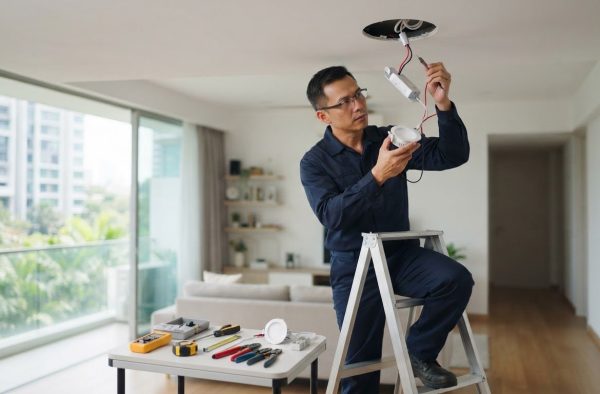
Electrical services Singapore homeowners commonly arrange include repairs to existing power sockets or switches, light fixture installation and LED ceiling light replacement, and ceiling fan setup. These are different job types. A socket or switch repair addresses an existing fitting, while installing a light or fan means setting up a fixture. A new light can refresh a room or replace an existing one. A ceiling fan is a separate installation job, not a way to diagnose an electrical fault. For general context on how household electrical systems vary internationally, see global electricity standards.
When describing the job, be specific about what you can observe. For example, note whether a light flickers, a switch feels loose, or a socket works intermittently. These details help distinguish a visible fixture concern from a problem that may involve more than the fitting itself. Sar Deen Engineering provides residential power socket and switch repair, light fixture installation, and ceiling fan setup.
When is an electrical issue more than a simple fixture problem?
Sparks, a burning smell, unusual heat, visible damage, or repeated power trips need prompt professional attention. Stop using the affected fixture or equipment, and do not open sockets, switches, or electrical panels yourself. These signs do not establish the cause, so avoid guessing whether the issue is limited to a fixture or involves a wider part of the electrical system.
Note when the symptom occurs and which fixture or area is affected. If the problem returns, report that rather than treating it as a one-off inconvenience. Clear observations give a professional a useful starting point for assessing the issue and determining the appropriate work.
Electrical Services Singapore: Compare Repairs, Replacements, and Installations
Choosing between repair, replacement, and installation starts with the job you have in mind. A loose or intermittent switch is an issue with an existing fitting. Adding a ceiling fan is an installation. Use the table to describe the need, not to diagnose the cause. Electrical symptoms can have different explanations, so the appropriate work is determined through assessment.
| Observed need | Likely service category | Useful information to prepare |
|---|---|---|
| A socket or switch looks damaged, feels loose, or works intermittently | Power socket or switch repair, with replacement considered after assessment | Which fitting is affected, what it looks or feels like, and when the issue occurs |
| You’re adding a light or changing an existing fixture | Light fixture installation | Fixture type, room, and whether it’s a new installation or a change to an existing fitting |
| You want a ceiling fan installed | Ceiling fan setup | Fan type and intended installation location |
| A fixture is visibly damaged or no longer suits the room | Assessment for repair or replacement | What is damaged or changing, and any symptoms you have noticed |
Repair or replace a power socket or switch?
Describe any visible damage, looseness, or intermittent operation. These observations help explain the problem, but do not show by themselves whether the fitting can be repaired or should be replaced. An assessment helps determine the suitable option. Do not open, test, or attempt to rewire a socket or switch yourself. For guidance on engaging the appropriate professional in Singapore, refer to the Energy Market Authority’s Engage Only Licensed Electrical Workers.
Install a light fixture or ceiling fan?
Installation means adding or changing a fixture. Repair addresses an existing fitting that is not working as expected. If you are planning a new light or fan, note its type and the room or location. If an existing fitting has a fault, describe the symptom separately rather than assuming installation is the solution. For more detail on the process, read the ceiling fan installation guide.
Once you know whether the job involves a repair or installation, prepare a clear description of what you have noticed or what you want installed. For residential electrical services singapore homeowners can arrange, see residential electrical services.
How to Assess an Electrical Service for Your HDB, Condo, or Landed Home
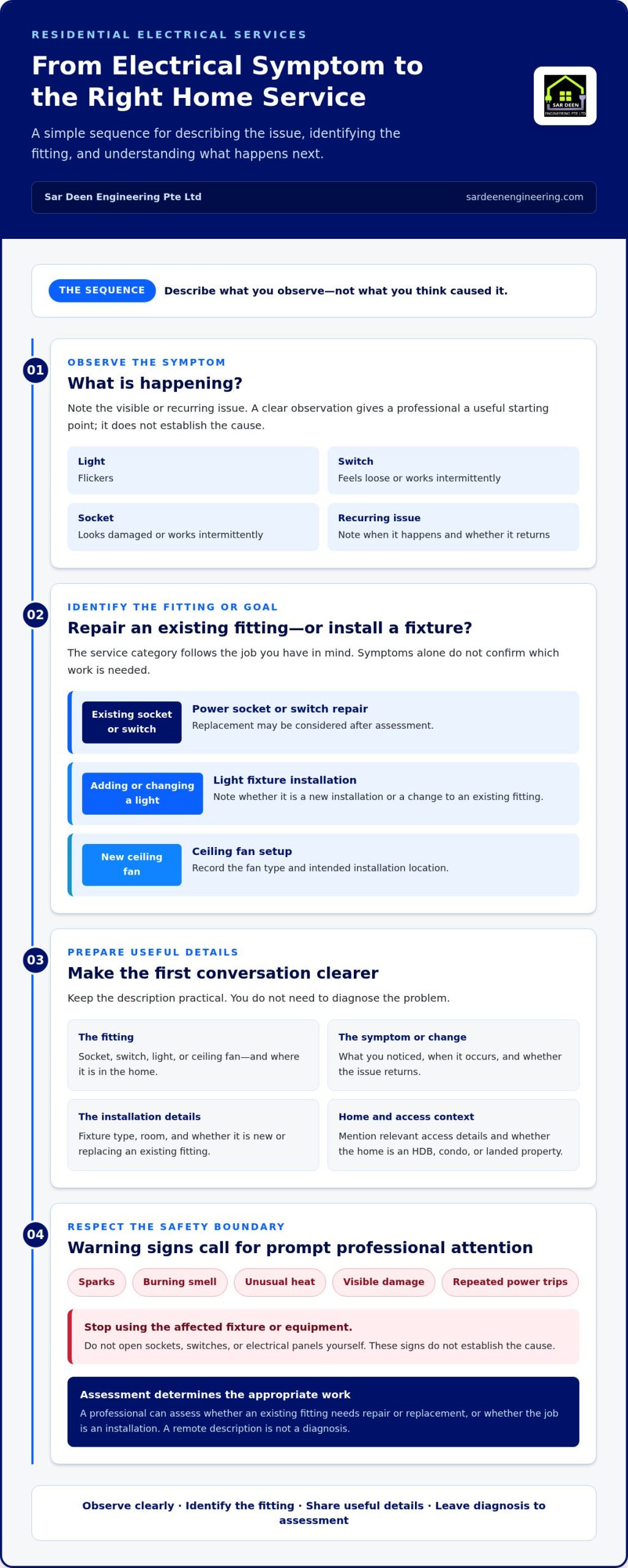
A clear description makes the first conversation about a home electrical job more useful. You do not need to identify the cause. Focus on what you have observed, which fixture is involved, and any practical access details. This preparation is useful for electrical services Singapore residents arrange in different types of homes.
Use these four steps to prepare:
- Step 1: Identify the symptom. Describe what is happening, such as a light that flickers or a switch that works intermittently.
- Step 2: Record the fixture. Note whether it is a socket, switch, light, or ceiling fan, and where it is in the home.
- Step 3: Note relevant access. Mention practical details, such as whether the fixture is in a high or difficult-to-reach spot.
- Step 4: Describe the property. Say whether it is an HDB flat, condominium, or landed home, and share any relevant access or work arrangements.
What information helps describe the electrical issue?
Include when the symptom started, when it tends to happen, and whether it has occurred more than once. For example, explain whether a light flickers occasionally or each time it is switched on. Share visible observations, but do not touch exposed wires or dismantle a fitting to gather more information. A short description helps communicate the issue, but it cannot establish the cause or confirm which repair is needed.
What should residents consider in different property types?
Property type can affect access and arrangements for work, but it does not reveal the home’s wiring layout. In an HDB flat, consider entry arrangements and applicable building procedures. In a condominium, management access or work arrangements may be relevant. In a landed home, describe the fixture’s location and any access constraints. Follow the procedures that apply to your building or residence.
Before arranging work, consider whether someone needs to provide access, whether the affected area can be reached safely, and whether there are building procedures to follow. Keep the description factual. A recurring symptom is useful to report, but its cause still needs assessment.
These details help focus the discussion on the fixture and the practical conditions at the property. The professional handling the job can assess the technical issue without relying on a guess based on the property type or symptom alone.
What Happens During a Residential Electrical Repair or Installation?
Knowing the usual steps can make an electrical appointment easier to prepare for. The process starts with your description of the issue or installation request, followed by an assessment of the affected fixture. The work scope is discussed before the agreed repair or installation is completed and checked. Inspection and installation steps depend on the fixture and conditions at the property.
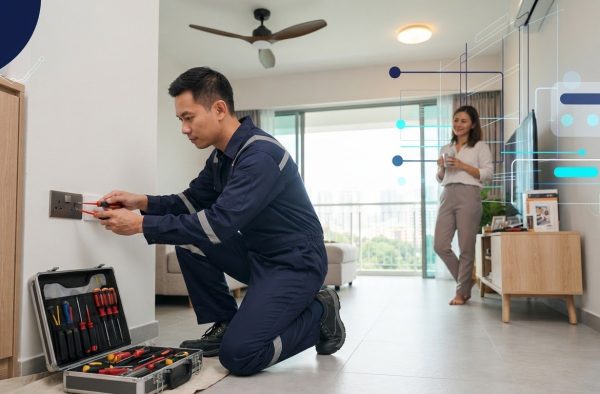
A socket or switch repair may need a different assessment from installing a light fixture or setting up a ceiling fan. The professional needs to understand what you have noticed and consider the fitting and access conditions. Once the work scope is clear, you will have a better idea of what the job involves before work begins.
How can you prepare for an electrical service visit?
Keep preparation simple. Identify the affected socket, switch, light, or fan, and note the symptoms and when they occur. Mention whether the issue has happened repeatedly. This gives the professional a clear starting point without asking you to diagnose the cause.
- Clear furniture or belongings only where needed to provide safe access to the affected area.
- Keep children away from the work area while the service is underway.
- Do not attempt a repair or remove a fitting before the appointment.
These steps help keep the immediate work area clear and reduce obstacles. You do not need to dismantle anything or handle electrical parts to prepare.
What should a clear job handover cover?
At the end of the job, ask for a straightforward summary of the work completed and any practical usage guidance. For an installation, this can help you understand how to use the fixture as intended. For a repair, make sure you know what was addressed and what to watch for during normal use.
If the original symptom remains or returns, report it rather than ignoring it. A recurring issue is useful information for further assessment. The process keeps expectations clear, from describing the issue to understanding what was done, without assuming every fixture or home requires the same steps.
Sar Deen Engineering provides electrical services for socket and switch repairs, light fixture installation, and ceiling fan setup. Arrange residential electrical service.
Residential Electrical Services Singapore: Get Help with Fixtures and Home Repairs
A fixture problem can disrupt a room’s routine, whether a socket is unreliable, a switch is not working as expected, or you are planning to add a light or ceiling fan. Sar Deen Engineering Pte Ltd provides residential electrical services across Singapore, including fixture repairs and installations as part of everyday home maintenance.
Which residential electrical services can Sar Deen help with?
Choose the service that best describes the job you have in mind:
- Power socket and switch repair: Get help with an existing socket or switch that appears damaged, loose, or intermittent. Describe what you have noticed rather than trying to diagnose the cause yourself.
- Light fixture installation: Arrange installation when you are adding a light fixture or changing one in your home. Mention the room and fixture type to describe the job clearly.
- Ceiling fan setup: Set up a ceiling fan as a distinct installation task. Include where you want it installed and any practical access details that may help explain the work.
These jobs address specific home fixtures. A repair concerns an existing socket or switch, while light fixture installation and ceiling fan setup involve installing a fixture. Keeping those needs distinct helps define the service request. The precise work scope depends on the job and site conditions.
How to take the next step with less uncertainty
Prepare a short, factual description before making an enquiry. State which fixture is affected, what it is doing, and when the issue occurs. For an installation, name the fixture and intended location. Include useful access information, too. You do not need to identify the technical fault; your observations give the team a practical starting point.
Electrical work can sit alongside other household maintenance needs, such as painting, tile repairs, plumbing, or furniture assembly. Keeping the electrical request focused on the socket, switch, light, or fan helps clarify the job without turning a fixture repair or installation into a broader renovation plan.
For electrical services singapore residents can arrange for socket and switch repair, light fixture installation, or ceiling fan setup, share the fixture, symptoms, or installation location with Sar Deen Engineering. The work scope depends on the specific job and site conditions, but clear details make it easier to explain what you need.
Get help with residential electrical services.
Make Your Next Home Electrical Job Easier to Arrange
Choosing the right electrical services singapore homeowners need starts with a clear description of the issue. Note which fixture is affected, what you have observed, and any access details. A professional assessment can then establish whether the job involves a repair or installation.
Sar Deen Engineering provides residential power socket and switch repair, light fixture installation, and ceiling fan setup across Singapore. These services address common fixture needs at home, with the work based on the specific fitting and site conditions.
Before making an enquiry, identify the affected fixture and note the symptoms or installation you have in mind. You do not need to diagnose the cause. Those details help move the conversation from a household concern to a defined service request.
Arrange residential electrical service with Sar Deen Engineering.
Frequently Asked Questions
What electrical services are commonly needed in a Singapore home?
Common home electrical jobs include repairing power sockets and switches, installing light fixtures, and setting up ceiling fans. These services address different needs: a repair concerns an existing fitting, while an installation adds or changes a fixture. Electrical services Singapore homeowners arrange may depend on what they observe, such as a switch that works intermittently or a planned lighting upgrade. Describe the fixture and issue clearly, but leave diagnosis to a professional.
When should I call for electrical repair instead of replacing a fixture?
Arrange an assessment when an existing fixture is damaged, loose, or working intermittently. Repair may be suitable, while replacement may be appropriate if the fitting is damaged, unsuitable, or part of an upgrade. Symptoms alone do not determine the right option. Share what you have noticed and let a qualified professional assess the fitting before deciding on the work. Do not open or attempt to rewire a socket or switch yourself.
Is it safe to use a socket that feels hot or smells unusual?
No. Stop using a socket that feels unusually hot or has an unusual smell, and arrange prompt professional attention. Do not plug in another device to test it, touch exposed parts, or open the fitting. Heat or smell does not confirm the cause, but it is a reason to treat the situation seriously rather than continue using the socket. If you notice sparks or visible damage too, keep clear of the affected fitting.
Can a handyman install a ceiling fan or light fixture?
Do not assume that any handyman can carry out electrical installation work. Singapore’s Energy Market Authority requires electrical installation, maintenance, and repair work to be undertaken by a Licensed Electrical Worker (LEW). This applies to work such as installing a light fixture or ceiling fan. Arrange the job with an appropriately licensed electrical worker, and describe the fixture and its intended location so the work can be assessed.
How do I know whether a power trip is caused by a socket or another electrical issue?
You cannot reliably identify the cause of a power trip from the trip alone. Note what was in use, which area or fixtures were affected, and whether the trip has happened repeatedly. Do not open a socket, switch, or electrical panel to investigate. Repeated trips warrant professional assessment because symptoms can have different causes. Share your observations so the affected equipment and circumstances can be considered without guessing at a wiring fault.
Do electrical service requirements differ for HDB flats and condominiums?
The electrical issue still needs to be assessed based on the affected fixture and site conditions, but access and building procedures may differ. In an HDB flat, consider relevant access arrangements and applicable work procedures. In a condominium, management access or work arrangements may also apply. Follow the procedures for your residence, and include the property type and any access details when describing the job. Do not assume the building type reveals the cause of a fault.
What information should I provide when arranging an electrical repair?
State which fixture is affected, what you have observed, and when the issue occurs. Mention whether it has happened more than once, along with the room or location and any useful access details. For example, say that a particular switch works intermittently rather than guessing why. Do not touch exposed wires or dismantle the fitting to gather information. A clear description explains the request, but an assessment is needed to determine the work.