Ceiling Fan Installation Singapore: The 2026 Homeowner’s Guide
What if your new ceiling fan could cut your cooling costs by 70 percent while being safer than your old aircon unit? Many homeowners view a fan as a simple decor piece, but it’s actually a precision engineering task. If you’re planning a ceiling fan installation Singapore, you likely want to escape high electricity bills and noisy motors. It’s common to feel overwhelmed by DC motor technology or the fear of a poor installation. You need a solution that is reliable, quiet, and fully compliant with local safety laws.
We agree that your home deserves the best cooling without the technical headaches. This 2026 guide helps you master the essentials of choosing and mounting the perfect fan. We’ll explain how to use the $400 NEA Climate Vouchers effectively and navigate HDB’s strict 2.4-metre height regulations. Learn how to identify the mandatory SAFETY Mark and choose the right “hugger” models for low ceilings. We cover everything from energy savings to structural safety to ensure your home stays cool and your family stays safe.
Key Takeaways
- Professional installation prevents common safety hazards like wobbling and ensures your fan remains structurally secure for years.
- DC motors are the 2026 standard for Singapore homes, offering quieter operation and up to 70 percent more energy efficiency than AC models.
- Compliance is essential, so always verify that your fan meets HDB weight limits and the mandatory 2.4-metre vertical clearance rule.
- Maximize your savings by using the $400 NEA Climate Vouchers to offset the hardware costs of eligible energy-efficient fans.
- A successful ceiling fan installation Singapore requires careful site preparation and coordinating your layout to avoid the strobe effect from existing lights.
Why Professional Ceiling Fan Installation is Essential in Singapore
Living in Singapore means managing heat 365 days a year. Most households rely on air conditioning, but the environmental and financial costs are rising. A professional ceiling fan installation Singapore offers a sustainable alternative that works with your home’s natural airflow. Modern fans aren’t just decorative; they’re high-performance machines designed for the 2026 energy standards. Choosing the right unit is about more than just aesthetics. It’s about engineering a cooler home environment.
Older Alternating Current (AC) fans are becoming obsolete. Direct Current (DC) motors now dominate the market because they’re quieter and more efficient. Learning about ceiling fan motor technology and sizing helps you see why this transition matters. DC fans use less power and offer more speed settings, giving you precise control over your environment. They run cooler and last longer, making them a reliable choice for the tropical humidity.
The Efficiency Gap: Fans vs. Air Conditioning
Ceiling fans don’t actually lower the room temperature. Instead, they create a wind-chill effect that makes you feel up to four degrees cooler. This allows you to set your aircon at a higher temperature, such as 25 or 26 degrees, without losing comfort. Research shows that DC fans consume 50 percent to 70 percent less energy than AC models. By making a fan your primary cooling source, you’ll see a noticeable drop in your power consumption. It’s a simple way to support Singapore’s green initiatives while keeping your wallet happy.
Safety Risks of Unqualified Installation
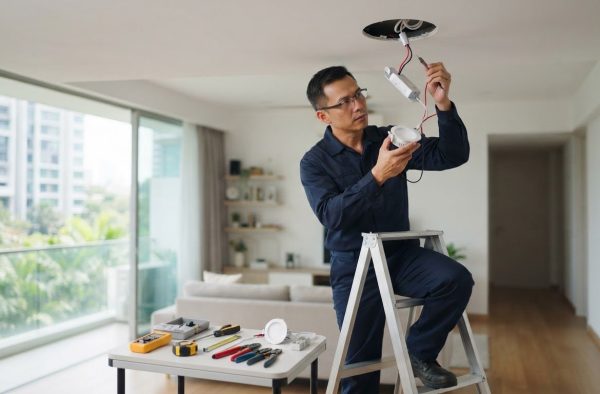
A fan is a heavy, rotating object suspended above your head. If the mounting bracket is loose or the anchor bolts aren’t suitable for concrete, the unit will wobble. Over time, this vibration leads to motor burnout or, in extreme cases, the fan falling. Improper wiring is another major concern. Poorly connected wires can overheat and cause electrical fires. Professional ceiling fan installation Singapore ensures every component meets the CPSO SAFETY Mark standards. It’s about protecting your family from avoidable accidents. A professional assessment checks for:
- Secure anchoring into the concrete soffit.
- Proper blade balancing to prevent noise and stress.
- Correct wiring that won’t overload your residential circuit.
- Adherence to HDB weight and height regulations.
Don’t risk your safety for a DIY project. A steady partner ensures your fan is mounted correctly the first time. This gives you peace of mind and a quiet, effective cooling solution for years to come.
Understanding Fan Technology: DC Motors and Sizing Guide
Choosing the right technology is the first step in a successful ceiling fan installation Singapore. In 2026, the DC Motor is the most energy-efficient choice for residential fans. While older AC models were the standard for decades, they simply can’t compete with the precision of modern engineering. DC motors convert electricity more effectively, generating less heat and significantly more torque. This shift in technology is why the NEA focuses its Climate Voucher program exclusively on these energy-saving models.
DC Motors: The Energy-Saving Revolution
A standard DC motor consumes between 30W and 45W at maximum speed. In contrast, older AC motors often pull 70W to 100W or more. This represents a 50 percent to 70 percent reduction in energy use. Beyond the bills, DC fans are whisper-quiet. They’re perfect for bedrooms where you need steady airflow without mechanical humming. These units also offer up to six speed settings and a reverse function to circulate trapped warm air. Because these fans involve complex internal electronics, you should follow the Energy Market Authority’s guidelines on licensed electrical workers when setting up new points or modifying circuits.
Sizing Your Fan for Singapore Home Layouts
Getting the size right is a matter of physics. If the fan is too small, it won’t move enough air. If it’s too large, it creates a buffeting effect that feels uncomfortable. For standard HDB bedrooms under 10 square metres, stick to a 36-inch to 44-inch blade span. Larger master bedrooms or condo living halls typically require 46-inch to 56-inch models. Always maintain at least 0.6 metres of clearance between the blade tips and your walls or wardrobes. This prevents air starvation and ensures the breeze flows smoothly throughout the room.
Ceiling height is the final constraint. Most HDB flats have a finished height of 2.6 metres. To stay within the legal 2.4-metre clearance, you’ll likely need a hugger or flush-mount fan. These sit close to the ceiling without a long downrod. If you aren’t sure which model fits your specific layout, consult a local technician to assess your space before you buy. We help you choose a size that balances airflow with safety requirements.
- Bedrooms (under 10sqm): 36 to 44 inches.
- Master Bedrooms (10-15sqm): 46 to 52 inches.
- Living Rooms (20sqm+): 52 to 60 inches.
- Wall Clearance: Minimum 0.6 metres from blade tip to wall.
Navigating Singapore Regulations: HDB vs. Condo Installation
Homeowners often focus on the fan’s design, but the structural mounting point is the most critical factor for safety. Every ceiling fan installation Singapore must adhere to specific building codes to prevent structural failure or legal issues. Whether you live in a new BTO flat or a private condominium, understanding these boundaries ensures a smooth process. Compliance isn’t just about following rules; it’s about making sure your heavy, rotating appliance stays exactly where it belongs.
HDB Ceiling Standards and Weight Limits
HDB regulations are clear about vertical space. You must maintain a minimum clearance of 2.4 metres from the floor to the fan blades. Since most HDB ceilings are 2.6 metres high, this leaves only 20 centimetres for the fan’s profile. This is why flush-mount designs are the standard choice for public housing. Weight is another major factor. Fans installed on concrete ceilings without a permit must not exceed 6 kg. If your chosen model is heavier, or if the mounting requires structural modification, you must obtain HDB approval first. The absolute maximum structural limit is 35 kg. While you’re selecting a compliant model, remember that the Climate Friendly Households Programme offers vouchers to help offset the cost of energy-efficient hardware.
Condo False Ceilings and Structural Supports
Private properties present different challenges, particularly regarding false ceilings. You cannot mount a fan directly to plasterboard. It will eventually pull through the ceiling due to vibration and weight. Professional installers use a specialized spreader bracket or a steel suspension rod anchored directly into the concrete soffit above the false ceiling. This transfers the weight to the building’s structure rather than the decorative panel. Additionally, your Management Corporation Strata Title (MCST) may have specific by-laws. These often cover the appearance of fans on balconies or restricted drilling hours. Always check your condo’s renovation handbook before scheduling your ceiling fan installation Singapore to avoid fines or stop-work orders.
A Licensed Electrical Worker (LEW) plays a vital role in these setups. They verify that your existing wiring can handle the load and that the mounting point is structurally sound. High-speed fans create dynamic loads, meaning the stress on the ceiling is higher than the fan’s static weight. A professional assessment catches hidden issues like hairline cracks in the concrete or poor existing wiring. We prioritize these engineering checks to give you total peace of mind.

Pre-Installation Checklist: Climate Vouchers and Site Prep
A successful ceiling fan installation Singapore starts long before the technician knocks on your door. Proper preparation saves time and prevents unexpected costs on the day of the job. In 2026, Singaporean households have more support than ever to make energy-efficient choices. However, you need to understand the rules to maximize these benefits and ensure your home is ready for the upgrade.
Maximizing Government Incentives
The Climate-Friendly Households Programme (CFHP) provides a total of $400 in Climate Vouchers for eligible households. This includes Singapore Citizen and Permanent Resident HDB households, along with Singapore Citizen households in private properties. You can use these vouchers to subsidize the cost of energy-efficient DC motor fans until 31 December 2027. Look for models with high energy-efficiency ratings at participating retailers to ensure eligibility. It’s important to remember that these vouchers apply only to the hardware. You’ll still need to budget for professional labor and mounting materials separately, as the programme doesn’t cover installation fees.
Preparing Your Home for Installation
Start by identifying your power source. If you’re replacing an existing light, the process is straightforward. Adding a fan to a new location requires running new wiring, which may involve trunking or concealed points. Evaluate your electrical load if you plan to add multiple fans to the same circuit. Before the team arrives, clear a two-metre radius under the installation point. Cover your furniture and flooring with plastic sheets to protect them from drilling dust. Ensure the technician has clear, unobstructed access to your main distribution board (DB box) in case the power needs to be isolated for safety. If you notice any outlets near the work area showing scorch marks or feeling warm to the touch, arrange power socket repair Singapore professionals trust before the installation day to eliminate fire risks.
Review this final checklist to ensure you’re ready for your ceiling fan installation Singapore:
- Voucher Check: Verify Singpass access for voucher redemption at the retail store.
- Safety Check: Confirm your chosen fan has the mandatory 8-digit SAFETY Mark code.
- Space Check: Measure your ceiling height to ensure you maintain the legal 2.4-metre clearance.
- Access Check: Clear a path to the DB box and remove fragile items from the work area.
If you’re unsure about your home’s electrical capacity or the best mounting location, book a professional site assessment today. We help you prepare your home for a safe and efficient setup that fits your specific residential layout.
Reliable Electrical Solutions: Why Choose Sar Deen Engineering
Choosing the right team for your ceiling fan installation Singapore is about more than just finding someone with a ladder. It’s about ensuring your home’s electrical infrastructure is safe and efficient for the long term. Sar Deen Engineering brings engineering-grade expertise to every residential project. We’ve provided expert electrical solutions since 2021, focusing specifically on HDB and condo residential requirements. A professional setup doesn’t just look better. It extends the life of your motor by ensuring perfect balance and stable wiring.
Beyond Installation: A Comprehensive Approach
We believe home maintenance should be simple and stress-free. When we visit your home, we look at the big picture. Our team integrates your new fan setup with other electrical services Singapore to ensure your circuits are balanced. We don’t just hang the fan and leave. We check the health of your wiring and the stability of your mounting points. If we notice a flickering light or need a power socket repair Singapore homeowners can rely on during the visit, we handle it immediately. This all-in-one approach saves you from booking multiple appointments and keeps your home running smoothly. Whether you’re setting up a new room or completing a renovation, pairing your fan installation with a professional furniture assembly service Singapore residents trust means your entire space comes together safely and efficiently in a single visit.
Quiet Confidence in Every Connection
Our brand functions as a supportive guide for homeowners who value reliability. We project the image of a steady partner who handles complex setups with ease. This professional mindset applies to all our technical tasks. Whether you need help with a complex fan mounting or a professional toilet bowl replacement Singapore, we provide grounded, stable results. We’re a local problem solver deeply familiar with the practical requirements of our community. We value your peace of mind above all else.
Don’t settle for a wobbly fan or questionable wiring. A professional installation ensures your DC motor runs quietly and efficiently for years to come. We’re ready to help you transition from a state of need to a state of completion. Contact Sar Deen Engineering for professional ceiling fan installation today.
Enjoy Cooler Living with Engineering Confidence
Mastering your home’s cooling starts with choosing the right technology and ensuring it’s mounted correctly. By prioritizing high-efficiency DC motors and adhering to Singapore’s strict safety standards, you create a space that’s both comfortable and compliant. Remember that a successful ceiling fan installation Singapore relies on precise structural anchoring and clear vertical clearance. Whether you’re maximizing your 2026 Climate Vouchers or retrofitting a condo with false ceilings, engineering-grade expertise makes the difference between a wobbly unit and a whisper-quiet breeze.
Sar Deen Engineering has provided expert residential solutions since 2021. We specialize in HDB and condo safety standards, offering prompt and reliable service across the island. Our team handles the technical details so you can enjoy peace of mind and lower utility bills. We’re ready to help you complete your home maintenance goals with a steady, professional hand. Take the first step toward a more comfortable home today.
Book Your Professional Ceiling Fan Installation with Sar Deen Engineering
Frequently Asked Questions
Do I need a special permit for ceiling fan installation in my HDB flat?
You don’t need a permit for a standard ceiling fan installation Singapore if the fan weighs 6kg or less and is mounted on a concrete ceiling. However, you must maintain a 2.4-metre clearance from the floor to the blades. If the fan exceeds 6kg or requires structural modification, you must apply for an HDB permit. Always ensure your installer checks the concrete’s integrity before mounting heavy appliances.
Can I install a ceiling fan on a false ceiling in my condo?
Yes, you can install a fan in a condo with a false ceiling, but you cannot mount it directly to the plasterboard. Technicians use a specialized spreader bracket or a steel rod anchored into the concrete slab above. This ensures the building structure supports the weight rather than the decorative panel. Always check your MCST by-laws for specific rules regarding balcony installations or drilling hours.
What is the difference between AC and DC ceiling fans for Singapore homes?
DC motors are the 2026 standard for energy efficiency in Singapore. They consume 50 percent to 70 percent less electricity than older AC models and operate much more quietly. DC fans also offer up to six speed settings and a reverse function for better airflow control. AC fans are typically more basic and noisier, making DC the preferred choice for bedrooms and areas using NEA Climate Vouchers.
How much weight can a standard HDB ceiling support for a fan?
A standard HDB concrete ceiling can structurally support a maximum load of 35kg. However, any fan weighing more than 6kg requires a formal HDB permit for installation. It’s vital to use heavy-duty expanding anchor bolts rather than simple wall plugs for these setups. Professional installers verify the weight of your fixture and the condition of the concrete to ensure the unit remains securely attached during operation.
Should I choose a 3-blade, 4-blade, or 5-blade ceiling fan?
A 3-blade fan generally moves air at a higher velocity, creating a stronger wind-chill effect. In contrast, 4-blade or 5-blade fans are often quieter and provide a gentler, more consistent breeze. The choice depends on your room’s purpose and your personal comfort needs. Most Singaporean households prefer 5-blade models for living rooms because of their aesthetic appeal and steady, quiet performance throughout the day.
Can a ceiling fan be installed at the same point as my existing light fixture?
You can install a ceiling fan at an existing light point if the wiring is in good condition. Most modern fans include integrated LED lights, allowing you to maintain illumination while adding cooling. The technician will verify if the electrical load is suitable and if the mounting point requires reinforcement. This is a common way to upgrade your home’s comfort without the need for extensive renovation.
How long does a typical ceiling fan installation take?
A standard replacement on a concrete ceiling typically takes between 45 minutes and 90 minutes. If the job involves running new non-concealed wiring or reinforcing a false ceiling, it may take 2 to 3 hours. Professional teams work efficiently to minimize disruption to your daily routine. We recommend clearing the area under the fan beforehand to help the technician complete the task as quickly as possible.
What should I do if my ceiling fan starts wobbling or making noise?
If your fan wobbles or makes clicking sounds, turn it off immediately to prevent motor damage or structural failure. This issue often stems from loose mounting screws, unbalanced blades, or a worn-out motor bearing. A professional ceiling fan installation Singapore includes using a balancing kit to ensure smooth operation. If the problem persists, a technician should inspect the internal wiring and the ceiling anchor to ensure your safety.