Power Socket Repair in Singapore: The 2026 Homeowner’s Safety Guide
According to the Singapore Civil Defence Force, electrical faults caused 304 residential fires in 2025 alone. That makes electrical issues one of the leading fire hazards in local homes. When an outlet sparks, feels warm to the touch, or shows faint scorch marks, it’s tempting to dismiss it as a minor quirk. Yet arranging prompt power socket repair Singapore homeowners can trust is often the difference between a simple fix and a dangerous short circuit.
You want your household to stay safe, but worries about electrical fires, hidden contractor fees, and confusing licensing rules can leave you second-guessing your next step. You shouldn’t have to live with that uncertainty. This guide will show you how to spot critical warning signs, understand why high-load modern appliances strain wall points, and discover how professional repairs keep your property secure. Here is everything you need to assess your home’s outlets and restore complete peace of mind.
Key Takeaways
- Learn how to detect subtle hazard cues like buzzing sounds, burning odors, and warm faceplates before they turn into serious electrical issues.
- Understand how tropical humidity and modern high-wattage appliances put sustained strain on standard 13A Type G sockets.
- Discover the legal safety standards for power socket repair Singapore homeowners must follow, and why simply resetting a tripped breaker leaves underlying faults unresolved.
- Find out how professional diagnostics and methodical replacements deliver lasting electrical stability for both HDB flats and condominiums.
Understanding Power Socket Failures in Singapore Homes
Every residential wall outlet in Singapore serves as the direct link between your home electrical grid and daily electronics. Standard households use the 13A Type G socket, designed to supply 230V single-phase power safely. Because it handles continuous electrical current, a socket endures steady wear and tear. Over time, that constant physical and electrical demand takes a toll. When an outlet stops working properly, the visible socket is rarely the sole culprit. Often, a failing faceplate points to deeper wiring strain, loose connections, or degraded terminal blocks tucked behind the wall. Addressing these early through reliable power socket repair Singapore services ensures small connection issues don’t develop into dangerous fire hazards.
The Anatomy of a Standard Power Point
Behind the clean exterior lies a precise set of mechanical and electrical components:
- Internal copper contacts: High-grade copper clips grip the pins of your plug firmly. A snug grip ensures steady current transfer and prevents heat buildup.
- Integrated switch mechanism: The rocker switch creates a rapid, decisive break in the circuit, minimizing the internal electrical arcing that occurs when powering appliances on or off.
- Fire-retardant faceplate: Approved faceplates use polycarbonate plastics engineered to withstand high temperatures without catching fire, providing a crucial barrier between active wires and your living space.
Why Sockets Are Not “Set and Forget” Fixtures
Many homeowners treat wall outlets as permanent fixtures. In reality, mechanical wear starts the moment you plug in a device. Repetitive insertions gradually loosen the internal spring tension of the copper clips. Once that grip weakens, electrical resistance increases, generating localized heat. At the same time, ambient dust, humidity, and tiny carbon deposits from micro-arcs settle inside the housing, degrading connectivity. Modern electronics also demand continuous, clean current. When older sockets with degraded contacts struggle to supply that stable power, delicate appliances experience voltage fluctuations. If a plug feels loose or wobbles inside the point, it is time to arrange professional power socket repair Singapore homeowners rely on for complete domestic safety.
Identifying Common Warning Signs and Electrical Hazards
Electrical faults rarely happen without warning. In most homes, subtle sensory cues signal an escalating issue long before a breaker trips or a circuit cuts out completely. Learning to recognize these signs gives you the chance to act early and keep your household protected.
Pay close attention to these critical red flags during daily use:
- Warm faceplates: A power point should never feel noticeably warm to the touch. Heat indicates high electrical resistance or loose terminal screws transferring thermal energy into the plastic housing.
- The “smell test”: Overheated insulation and melting internal components release a distinct, fishy or acrid chemical odor. If you catch an unfamiliar burning scent near a wall point, treat it as an urgent hazard.
- Ghosting or flickering: If a plugged-in lamp flickers or an appliance shuts down when you bump the plug, the internal contact pins have likely lost mechanical grip.
Physical Damage and Scorching
Visible discoloration around the three-pin openings is never normal. Electrical arcing occurs when current jumps across tiny air gaps between loose metal contacts, leaving behind distinctive brown or black burn rings. These scorch marks show that internal temperatures have reached dangerous levels. In addition, cracked or chipped faceplates pose an immediate danger. Physical cracks compromise the protective barrier, leaving live wiring exposed to airborne moisture, household dust, and accidental finger contact.
Loose Connections and Buzzing Sounds
When a plug feels loose enough to slide out on its own, high electrical resistance builds up at the loose contact points. That resistance generates concentrated heat right inside the wall box. Even more concerning is an audible hum or faint crackling sound coming from behind the switch. Loose wires vibrate and spark as alternating current passes through, creating that buzzing sound. Switch off the point immediately and do not plug anything else into it. For persistent buzzing or thermal damage, arranging a timely inspection through Sar Deen Engineering resolves the fault before it damages your home wiring.
Catching these red flags early keeps your property safe. When you notice heat, unusual odors, or audible buzzing, scheduling prompt power socket repair Singapore residents rely on ensures your electrical fixtures remain fully stable and secure.
Technical Causes: Why Power Sockets Fail in 2026
Understanding why an outlet fails helps you prevent recurring electrical breakdowns. In Singapore, power points face a demanding operating environment. Typical HDB and condominium electrical fittings have a service life of roughly 10 to 15 years. However, high ambient moisture, sudden power surges during tropical storms, and modern electrical loads often cut that lifespan short. Over time, recurring voltage spikes degrade the delicate internal rocker switches, weakening their ability to isolate live currents cleanly. When performance drops, booking timely power socket repair Singapore technicians can execute restores the protective balance your electrical grid needs.
Humidity and Oxidation in the Tropics
Singapore’s year-round relative humidity frequently tops 80%, accelerating copper oxidation behind wall plates. As moisture penetrates unsealed junction boxes, copper terminals develop a thin layer of copper oxide. This green or dull film acts as a poor conductor, sharply increasing electrical resistance at the terminal screws. Kitchen and service yard sockets face the brunt of this problem due to concentrated steam and moisture, causing rapid internal heat accumulation during regular use.
The Overloading Reality of Modern Households
Modern residential living demands far more current than legacy circuits were engineered to distribute. Consider the combined strain of common daily appliances:
- High-draw kitchen gear: Air fryers, induction hotplates, and rapid-boil kettles routinely draw 1,800W to 2,200W each.
- Daisy-chained adapters: Stacking multi-way plugs or cheap power strips into a single 13A wall outlet forces excessive amperage through one terminal block, softening the internal plastic casing.
- Power-heavy tech setups: High-performance multi-monitor workstations and gaming rigs keep circuits under continuous load, accelerating thermal fatigue.
If you find your kitchen circuits regularly overheating, cooling your home efficiently helps balance the load. Consider a professional ceiling fan installation Singapore homeowners use to maintain steady air circulation and take strain off power-hungry air conditioners. When high demand leaves an outlet scorched or unresponsive, prompt power socket repair Singapore specialists provide keeps your entire distribution panel balanced and safe.

Professional Repair vs. DIY: Safety and Legal Risks
Tackling an electrical repair yourself often looks straightforward. You turn off the switch, swap three wires, and screw the faceplate back into position. However, working without specialized testing equipment leaves you blind to hidden faults. Many homeowners also fall into the circuit breaker trap. When a breaker trips, flipping the toggle back up restores power, but it doesn’t eliminate the underlying fault. If high resistance or a frayed neutral wire triggered the trip, that hazard continues to smolder behind your wall. A dedicated diagnostic check evaluates the entire circuit, catching problems before they spread.
The Dangers of Improper Grounding
Loose grounding wires present severe, invisible hazards. If the Earth conductor slips out of its terminal, stray electrical currents cannot safely divert to the ground. Instead, that current energizes the exterior metal casing of your appliances. Touching an ungrounded appliance turns your body into the path to ground, resulting in a dangerous shock. A continuity test is an electrical diagnostic procedure that verifies an unbroken, low-resistance ground path back to the distribution board to ensure complete user protection.
Singapore Regulations and Insurance Compliance
Singapore enforces strict standards under the Electricity Act to protect residential buildings. Major electrical modifications and fixed wiring installations require a Licensed Electrical Worker (LEW). Beyond safety, compliance directly affects your insurance coverage. Most domestic property insurers maintain policy exclusions for damage caused by unlicensed electrical alterations or improper DIY work. If an electrical fire starts at a self-installed point, your insurer can reject the claim entirely.
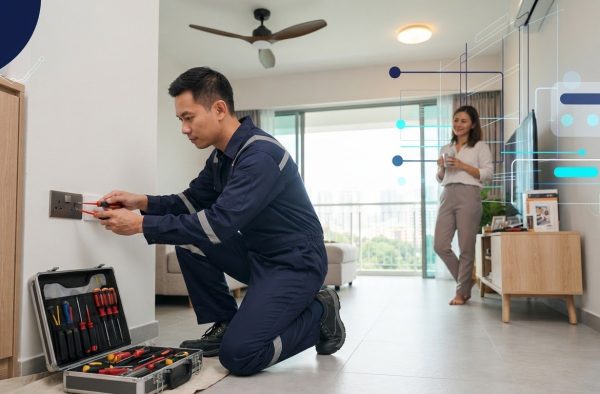
A qualified engineering team does far more than swap faceplates; they verify circuit integrity and ensure every terminal meets national standards. To resolve electrical issues safely, book a certified technician through Sar Deen Engineering’s electric service. Choosing professional power socket repair Singapore homeowners trust delivers absolute compliance and lasting peace of mind.
Reliable Power Socket Services by Sar Deen Engineering
Electrical issues can disrupt your entire household routine. Established in 2021, Sar Deen Engineering acts as a steady partner for residential maintenance across Singapore. We approach every electrical call-out with quiet confidence and meticulous care, removing the stress of troubleshooting faulty outlets. Our technicians handle everything from loose faceplates to complex wiring faults using a disciplined three-step method: diagnose the underlying circuit condition, replace damaged hardware with safety-certified fittings, and test the entire installation under live load. When you need dependable power socket repair Singapore homes can count on, our team delivers transparent solutions without hidden surprises.
Our Comprehensive Diagnostic Process
Every service call begins with targeted electrical testing. We assess terminal voltage, test line continuity, and confirm earth loop impedance to ensure your household earthing path remains fully functional. Throughout the inspection, our technicians explain what failed and why, keeping communication clear and honest before any work begins. Because we operate as an all-in-one home maintenance resource, we can also resolve complementary fixtures during the same visit. Whether you need a ceiling fan fitted, an electrical water heater connected, or professional toilet bowl replacement Singapore homeowners schedule alongside fixture updates, our multi-trade capabilities save you time and coordination headaches.
Why Homeowners Trust Sar Deen Engineering
Managing home repairs shouldn’t feel chaotic. Our team respects your living space, following clean-work protocols and leaving work areas spotless once repairs finish. We bring deep technical familiarity to both older HDB estates with surface casing and contemporary condominiums with concealed conduit systems:
- Tested components: We install approved Type G sockets built with high-grade copper contacts and flame-retardant housings.
- Unified maintenance: We streamline your home upkeep by managing electrical fixes, plumbing repairs, and wall painting under one reliable service provider.
- Grounded expertise: Our technicians focus on lasting stability, ensuring every connection complies with local safety standards.
Don’t wait for a warm faceplate or flickering socket to escalate into a costly hazard. Arrange a comprehensive check-up today and secure your home with trusted power socket repair Singapore residents rely on for lasting peace of mind.
Restore Complete Electrical Safety in Your Home
Wall outlets power our daily routines, but they aren’t built to last forever. When tropical humidity corrodes internal copper terminals or heavy appliance loads trigger localized heat, acting on early warning signs keeps your household secure. Remember that a simple breaker reset never fixes underlying circuit stress, loose wiring, or damaged contact points behind the wall.
Sar Deen Engineering delivers lasting stability with a professional engineering approach. We combine transparent pricing with comprehensive home maintenance expertise, ensuring your fittings receive thorough testing and certified care. You don’t have to navigate electrical hazards or contractor uncertainty on your own. Take the safe step forward to protect your living space. Contact Sar Deen Engineering for reliable power socket repair Singapore homeowners trust and restore total confidence in your electrical system.
Frequently Asked Questions
Is it safe to use a power socket that has a small burn mark?
No, it is never safe to use a socket with visible burn marks. Even minor brown discoloration indicates electrical arcing or excessive heat buildup inside the unit. The plastic housing and internal copper clips have already suffered thermal damage. Continuing to draw power through it risks igniting surrounding wall materials. Turn off the wall switch immediately, unplug any devices, and arrange for a proper replacement.
Can a handyman legally change a power socket in Singapore?
Minor like-for-like socket replacements may be performed by competent technicians, but major electrical modifications require a Licensed Electrical Worker (LEW) under the Singapore Electricity Act. Uncertified alterations pose serious safety risks and can void home insurance policies in the event of an electrical fire. Engaging an engineering firm like Sar Deen Engineering ensures your power socket repair Singapore work follows official safety codes and strict testing standards.
Why does my power socket make a clicking or buzzing sound?
A buzzing or clicking sound points to loose wiring terminals or deteriorating contact points inside the socket. As alternating current passes through loose connections, it creates continuous micro-arcs that generate audible vibrations. This arcing produces intense localized heat, eroding metal contacts and melting plastic housing over time. Stop using the socket straight away, as this noise signals an immediate fire risk that requires qualified diagnostic troubleshooting.
Does a faulty power socket cause the circuit breaker to trip?
Yes, a degraded power socket frequently causes circuit breakers or Residual Current Circuit Breakers (RCCBs) to trip. If internal copper terminals loosen, wires short-circuit, or moisture creates an earth fault, the breaker trips to protect your home grid from fire. If your consumer unit trips whenever you plug into or switch on a specific outlet, the socket’s internal components have broken down and require urgent inspection.
How long does a typical power socket repair take?
A standard single or double socket replacement usually takes between 20 and 45 minutes to complete. That timeframe includes cutting off the circuit power safely, isolating the faceplate, inspecting the backbox wiring for heat damage, securing new terminals, and running live continuity checks. If the technician discovers degraded wiring or oxidized cables within the conduit, repairs may take slightly longer to ensure complete circuit safety.
What should I do if my plug is stuck inside the socket?
Never force or yank a stuck plug out while the socket remains connected to live power. First, switch off the socket rocker switch and shut down the corresponding circuit breaker at your main distribution panel. High operating heat often melts the plug’s plastic casing directly to the socket faceplate, fusing them together. Once the power is isolated, leave the fitting alone and contact an electrical technician to remove and replace both damaged components safely.
Should I replace all my sockets if one fails?
You don’t need to replace every socket at once, but an isolated failure often signals that nearby outlets are nearing the end of their lifespan. Power points installed during the same renovation experience similar operational wear and environmental humidity. If one socket begins scorching or losing tension, having a technician inspect the rest of the circuit during your power socket repair Singapore visit helps identify other aging outlets before they fail.
Will a new power socket help stop my electricity bill from rising?
A new socket won’t dramatically reduce your total utility bill, but it prevents wasted power caused by thermal resistance. Loose contacts and corroded copper terminals generate unnecessary resistance, dissipating energy as wasted heat instead of powering your appliances efficiently. While the monetary loss is modest, that trapped heat strains your devices and damages power cords. Replacing faulty points preserves equipment health and keeps your home running at peak electrical efficiency.