Landlord Handover Repair Services Singapore: A Practical Guide
Could a small defect become a sticking point at handover? A loose door handle, cracked tile or faulty light can leave you unsure what to fix before inspection. With landlord handover repair services Singapore, start by documenting the property’s condition and comparing it with the tenancy agreement. This helps you focus on relevant repairs instead of guessing.
It’s understandable to worry that overlooked damage could lead to disagreement or disrupt the next move. A joint inspection and dated photos can help clarify what needs attention. The tenancy agreement matters too: it sets out the handover conditions and repair responsibilities, including any minor repair clause.
This guide explains what to inspect, how to prioritise functional and visible defects, and how to organise the work. Sar Deen Engineering provides residential repairs across Singapore, including tile repair, painting, toilet bowl replacement, drainage clearing, electrical fixture work, and door lock or handle replacement. Use a clear repair list to prepare a functional, presentable property for handover.
Key Takeaways
- Inspect each area in a consistent order, from the entry and living spaces to bedrooms, kitchen, bathrooms, and utility spaces.
- Record each issue’s location, visible condition, and whether the item works to create a clear repair list.
- Prioritise active leaks and functional faults before cosmetic work. Assess related damage before repairing nearby finishes.
- Plan landlord handover repair services Singapore by agreeing on the work scope, completing functional repairs first, then finishing surfaces and reviewing the results.
- Sar Deen Engineering handles practical property repairs, including painting, toilet replacement, grouting, tile repair, and fixture work.
What landlord handover repairs in Singapore should cover
Handover repairs are targeted fixes made before keys change hands. Their purpose is to address specific property issues, not to make a home look brand new. Sort your observations into three groups: visible damage, functional faults, and presentation concerns. A chipped tile is visible damage; a switch that doesn’t work is a functional fault; faded paint may be a presentation concern. Categorising issues this way helps landlords and tenants discuss each one clearly.
The tenancy agreement and records of the property’s original condition help set expectations. Review the agreed handover terms alongside the inventory, condition report, and dated photographs, if available. Singapore’s landlord-tenant arrangements sit within Singapore’s legal framework, so the written agreement matters when deciding which work is relevant. Repairs can help prepare a property, but they can’t guarantee deposit recovery or prevent a disagreement.
What counts as a handover repair?
A repair addresses a defect or fault, such as damaged paint, a loose fitting, a leak, a cracked tile, or a faulty switch. Cleaning removes dirt, while routine upkeep covers regular care rather than fixing a defect. A larger renovation changes or upgrades the property beyond targeted repairs. The appropriate scope depends on what the inspection reveals and what the parties agreed for handover.
Keep the distinction practical. A small patch of damaged paint may call for a local repair or repainting, while changes to the home’s layout go beyond ordinary handover work. A loose handle or faulty socket is a functional issue, not general presentation. Record what you can observe without assuming the cause. For example, note the location of a damp patch rather than concluding that a hidden pipe has failed.
What should landlords and tenants check first?
Begin with the tenancy agreement, inventory, and any original condition records. These can help distinguish existing marks and normal deterioration from issues that appeared during the tenancy. Then walk through the property together where practical, checking each room and noting visible damage or items that don’t work. Record the facts first, then discuss responsibility and repair scope against the agreement and available evidence.
Use a concise, dated list. For each item, write:
- Location: room and specific area, such as the kitchen wall beside the sink.
- Observation: what is visible, such as peeling paint or a loose fitting.
- Function: whether the relevant item works, if it can be safely tested.
- Evidence: a dated photo or reference to the original condition record.
This record makes it easier to decide which items need repair, which are presentation concerns, and which may already be documented. It also gives landlord handover repair services Singapore a practical starting point. Sar Deen Engineering provides residential repair and maintenance, including painting, tile repair, epoxy grouting, toilet bowl replacement, and fixture work. A clear inspection list connects observed issues to relevant work without treating every mark as a repair or turning handover preparation into a renovation.
How to assess a Singapore property before handover
A consistent room-by-room walkthrough makes it easier to spot overlooked defects and compare the property’s current condition with its inventory. Follow the same route each time, and record what you can observe rather than guessing why a fault occurred. This gives both parties a clearer basis for deciding what needs attention before the keys change hands.
Follow a consistent inspection route
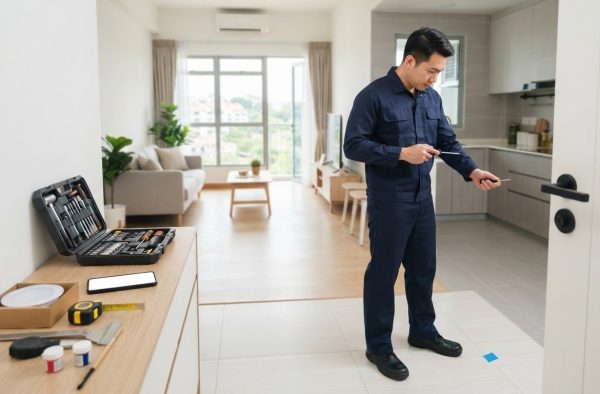
Start at the entry. Check the door, lock, handle, nearby walls, and visible switches. In living areas, look over painted surfaces, floor tiles, light fittings, and accessible sockets. Continue through each bedroom, noting marks or damage to walls, flooring, doors, and fittings. In the kitchen, inspect visible surfaces, taps, drainage, and signs of leaks. In bathrooms, look at the toilet bowl, tiles, grout, taps, and visible plumbing. Finish in utility spaces by checking accessible fittings and looking for visible damp patches or drainage concerns.
For every observation, write down the room, exact location, what the issue looks like, and whether the item works. For example: “Kitchen, below sink, damp patch on cabinet base, source not established.” This is more useful than writing “plumbing problem” because it records what you saw without making a technical or legal conclusion. In a condominium, keep shared-area concerns separate from defects inside the unit. The BCA Strata Management Guides provide strata-management guidance that can help readers understand maintenance in strata properties.
Document each issue clearly
Take photos in good lighting. Capture a wider view to show where the issue is, then a close-up of the detail. Include a reference point, such as a door frame or sink, where it helps identify the location. Label each image by room and match it to the inspection note or inventory entry, if one exists. Keep the original and handover photos together so changes can be reviewed without relying on memory.
Inspection checklist: Record each issue’s room and exact location, visible condition, whether the item works, and a matching photo or inventory reference.
Look closely, but don’t attempt risky repairs
Pay attention to chipped or cracked tiles, damaged paint, loose door hardware, visible water marks, slow or blocked drainage, and toilet bowl faults. Test accessible switches and fittings only in a normal, safe way. Don’t open electrical fittings, touch exposed wiring, or dismantle plumbing to investigate. Note the symptom and leave diagnosis or repair work to the appropriate service professional.
After the walkthrough, group your notes by room and mark which items appear functional, cosmetic, or unclear. This makes the findings easier to discuss and helps define a focused repair scope. If the inspection identifies several household issues, Sar Deen Engineering’s residential repair services cover tile repair, painting, drainage clearing, and fixture repairs across Singapore.
Which handover repairs should you prioritise first?
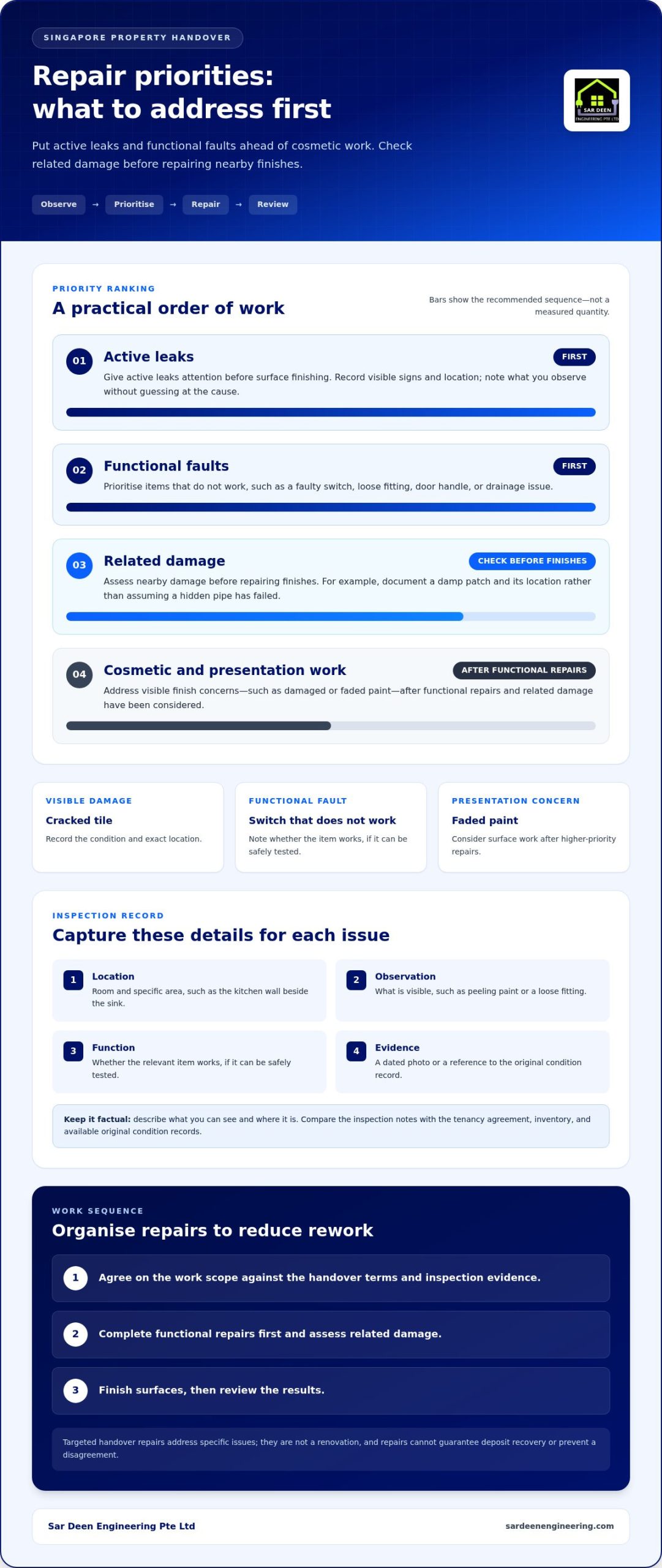
Start with issues that affect safety or function, then address damage that could worsen. Leave appearance work until the underlying problem is resolved. This order helps prevent repeat work. Painting over a damp patch, for example, may hide the mark temporarily while the source of the moisture remains. Use the inspection notes and tenancy agreement to decide which items belong in the handover scope. A scuff or faded surface isn’t automatically a repair requirement.
Sort the work into a practical sequence:
- Address active leaks and immediate functional faults. Note visible water and drainage concerns, toilet problems, or electrical faults. Arrange appropriate repair work rather than attempting risky DIY.
- Assess related damage. Check whether moisture or a fault has affected nearby walls, cabinets, tiles, or fittings before planning surface work.
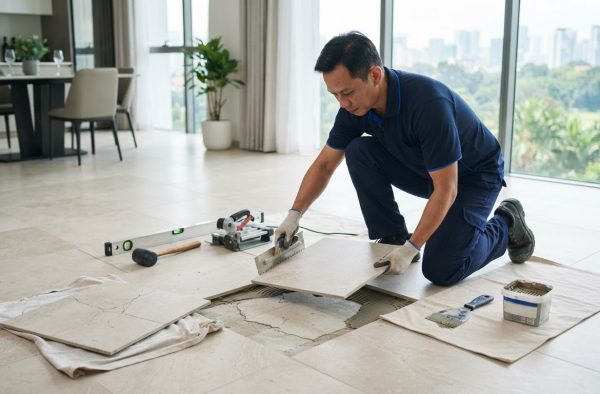
- Complete repairs to affected surfaces and fixtures. Resolve the cause first, then deal with damaged tiles, grout, or other finishes as appropriate.
- Finish with appearance items. Consider paint touch-ups or broader repainting only after functional repairs and related damage have been assessed.
Why should functional faults come before cosmetic work?
An unresolved leak can continue to affect nearby surfaces and fittings, so repainting or patching first may mean doing that work again. Drainage problems, toilet faults, and electrical concerns also affect how the property functions. Record the symptoms and arrange suitable repair work before final appearance tasks. Don’t open electrical fittings or dismantle plumbing yourself. Use an appropriate professional for plumbing or electrical work.
Group related tasks by repair type as well as location. For example, list plumbing and drainage concerns together, electrical faults separately, and paint or tile work under surface repairs. This makes the scope easier to understand and clarifies the order of work. If a leak is near a painted wall and damaged grout, assess the water issue and affected area first. Then plan the relevant finish repairs.
When are painting and surface repairs appropriate?
Compare paint damage with the condition records and agreed handover terms. A small, isolated mark may call for a different response from widespread peeling or discolouration, so don’t assume every blemish requires a full repaint. Likewise, consider tile repair or epoxy grouting where the inspection identifies a relevant defect. For a closer look at condominium painting considerations, see this condo painting services guide.
With landlord handover repair services Singapore, a clear priority list connects observed issues to the right category of work without expanding the job unnecessarily. Sar Deen Engineering provides residential repairs across Singapore, including drainage clearing, toilet bowl replacement, socket and switch repair, tile repair, epoxy grouting, and painting. Grouping work by cause and finish makes the repair plan easier to coordinate and review.
How to organise landlord handover repairs without rework
Turn inspection notes into a work plan before arranging repairs. Separate faults that affect function or may cause further damage from appearance items such as paint marks. Then group related tasks by room and repair type. This gives everyone a shared view of what is being addressed, what still needs assessment, and what can wait. A written scope also makes it easier to review the finished work against the original observations.
Use this sequence to keep tasks clear:
- Agree the scope. Match each proposed task to an inspection note and the handover terms. Record what work is included and flag anything that needs further assessment.
- Complete functional repairs. Address agreed plumbing, drainage, toilet, or electrical faults before covering nearby surfaces.
- Repair affected finishes. Once functional work is complete, arrange relevant tile, grout, or paint repairs.
- Review the result. Compare completed work with the original list and keep dated completion photos with the job record.
How can you make the repair scope clear?
Describe each task by room, location, and observed issue. For example, “Bathroom, floor beside toilet, cracked tile” is clearer than “fix bathroom.” Separate requested work from items that need assessment during the repair, and record any agreed changes to the scope. Keep expectations tied to the documented condition and handover terms. This helps prevent unrelated improvements from being mixed into a focused repair plan.
Keep one record for each property handover. It can contain the inspection list, agreed tasks, relevant correspondence, and before-and-after photos. For toilet issues, note whether the concern involves visible damage, operation, or replacement. If replacement is being considered, the toilet bowl replacement guide can help you understand relevant considerations before agreeing on the work.
What should the final handover review include?
Return to the original inspection list and mark each agreed item as completed, still outstanding, or requiring further discussion. Take completion photos from similar angles to the original images so the change is easy to review. Check that the recorded work matches the agreed scope, rather than treating the review as a promise about deposit recovery or a guarantee against disagreement.
Store the final notes and images alongside the original records. This creates a straightforward reference if questions arise later and helps distinguish handover repairs from ongoing upkeep. For routine care beyond the immediate handover, use this Singapore home maintenance checklist as a broader reference.
For landlord handover repair services Singapore, Sar Deen Engineering brings residential repair work such as painting, toilet bowl replacement, tile repair, grouting, and fixture repairs together through one provider across Singapore. Use your prioritised work list to arrange relevant handover repairs, then keep the agreed scope and completion records together for review.
Arrange Singapore landlord handover repairs with Sar Deen Engineering
Sar Deen Engineering Pte Ltd provides residential repair and maintenance services across Singapore. If your handover inspection has identified several practical issues, a clear list helps connect each one with relevant work. Note the room, observed condition, and whether the issue affects function or appearance. This gives the repair scope a useful starting point without assuming every mark needs attention.
Which handover issues can Sar Deen Engineering address?
Match the work to the defect. Damaged walls or worn paint may call for condo or wall painting. Bathroom concerns can include toilet bowl installation or replacement, while damaged tiles and worn grout may need tile repair or epoxy grouting. The work should reflect what the inspection shows and the agreed handover scope.
Other common items can also be grouped by repair type:
- Electrical fixtures: light fixture and ceiling fan installation, plus power socket and switch repair.
- Drainage: clearing choked drainage or pipes where a blockage has been observed.
- Household hardware: door lock or handle replacement, or furniture assembly where relevant to the handover.
- Other home fixtures: water heater installation where the planned work involves fitting a replacement unit.
Grouping related tasks makes it easier to describe the work and see how it fits into the property’s preparation. Sar Deen Engineering handles multiple types of residential repair and installation through one service provider. Keep the work tied to the actual condition and agreed scope. Repairs can help prepare a property for handover, but they can’t guarantee a deposit outcome or prevent disagreements between landlord and tenant.
What information helps start a repair request?
Prepare the property type, handover timing, and room-by-room issue list. Add clear photographs and label each one by location. Briefly note whether the issue affects function, appearance, or both. For example, distinguish a switch that doesn’t work from a scuff beside it. This information makes the requested work clearer and keeps the discussion focused on observed needs.
If an item’s cause or repair scope is unclear, describe the visible symptom rather than guessing at a diagnosis. Keep agreed work details and any updates together with the inspection record. That gives you a consistent reference as repairs are arranged and the property is reviewed.
For landlord handover repair services Singapore, Sar Deen Engineering can bring relevant painting, plumbing, tiling, electrical fixture, and household hardware work together under one provider. Share the property details and repair notes through the Sar Deen Engineering team website to describe the work you need. A clear request is a practical first step towards preparing the property for its next handover.
Make the Next Handover Easier to Manage
Use this handover to leave a clearer starting point for whoever manages or occupies the property next. Keep the inspection notes, agreed repair scope, and completion records together. This simple habit can make future maintenance decisions easier, even after the keys have changed hands.
For landlord handover repair services Singapore, Sar Deen Engineering can handle relevant residential repairs, from painting and tile work to plumbing, electrical fixtures, and household hardware. Share the property type, handover timing, and a concise list of observed issues so the repair request starts with useful details. Repairs can prepare the home, but no repair plan can promise a particular deposit outcome.
Arrange the home repairs your handover needs with Sar Deen Engineering. A clear plan and practical repair work can help you move towards handover with greater confidence.
Frequently Asked Questions
Is a landlord handover repair inspection necessary before every tenancy change?
A walkthrough is useful before each tenancy change, even if the property appears to be in good condition. It can identify a new fault, confirm whether existing issues have changed, and create a clear record for the next occupant. Compare observations with the previous inventory or condition report. For a long-term rental, this also helps the landlord decide which maintenance items to address before advertising or arranging the next move-in.
What repairs should I prioritise before handing over a rental property?
Prioritise defects that affect safe use or essential functions, such as an active leak, a toilet that cannot be used, a blocked drain, or a faulty switch. Consider whether an issue could worsen or affect a neighbouring surface. Then assess paint marks, tile damage, or loose hardware against the tenancy terms and condition records. This directs attention to practical needs without treating every sign of use as damage.
Can a tenant arrange repairs before returning the keys?
A tenant can arrange repairs, but should first review the tenancy agreement and discuss the proposed work with the landlord or agent. The agreement may set out who handles repairs, approval steps, or limits on changes to the property. Get the scope and responsibility recorded before booking work. Keep receipts, messages, and completion photos together, especially if the repair relates to a reported fault or an agreed handover condition.
How much do landlord handover repairs cost in Singapore?
The cost depends on the type and scope of work, the number of issues, and what assessment reveals. A small paint touch-up differs from replacing a toilet bowl or repairing several damaged tiles. Avoid relying on a broad estimate before the tasks are described. For landlord handover repair services Singapore, prepare a room-by-room list with photos and clear notes so the required work can be understood and scoped appropriately.
How long do handover repairs usually take?
There isn’t one standard duration for every handover repair. A single straightforward task differs from work involving several rooms or a fault that needs assessment before nearby surfaces can be finished. The repair scope, property access, and any required materials can affect planning. Share the handover date and task list early, then allow room in your schedule for a final review rather than planning key return immediately after work.
Can one service provider handle painting, plumbing, and electrical repairs?
Yes. Sar Deen Engineering Pte Ltd provides multiple residential repair and installation services through one provider, including painting, toilet bowl replacement, drainage clearing, power socket and switch repair, and light fixture installation. Combining relevant tasks can simplify coordination when a property needs different types of work. List each issue separately so the scope remains clear and each repair can be matched to the observed need.
What happens if a repair issue is found during the final inspection?
Record the newly found issue before arranging additional work. Note its location and visible condition, take a clear photo, and compare it with earlier records where possible. Then discuss the finding with the other party and agree on the next step and who will arrange it. Keep any scope changes in writing. If the issue is unclear, describe what you observed rather than assuming its cause or responsibility.