Floor Tile Replacement Singapore: How to Choose the Right Fix
Does one cracked or hollow-sounding tile mean your whole floor needs to come up? Not necessarily. With floor tile replacement Singapore homeowners can often address a damaged area without turning a small defect into a full-floor project. The right fix depends on what caused the damage and whether nearby tiles are affected.
It’s understandable to worry that a loose tile could signal a larger problem, disrupt daily routines, or leave an obvious mismatch after repair. Replacement may suit a tile that’s cracked, badly chipped, loose, or beyond practical repair. Other issues may call for a different tile service. Matching the new tile also takes care, as the original may be discontinued or the existing floor may show wear that a replacement won’t.
This guide explains how to assess the scope, what targeted replacement involves, and how to prepare your Singapore home before work begins. You’ll learn what happens during removal and fitting, which details are useful when discussing the job, and how Sar Deen Engineering’s residential tile service can help address the problem. The aim is simple: replace only what the floor condition justifies, with a clear plan for the work.
Key Takeaways
- Learn when floor tile replacement Singapore homes may need, and when a smaller repair could be more suitable.
- See the usual stages of replacement, from assessing the tiles to finishing the repaired area.
- Compare replacement, tile repair, and regrouting to understand which option addresses the problem you’re seeing.
- Prepare the work area by clearing items and recording the affected tiles before the job begins.
- Find out what details and photos can help Sar Deen Engineering understand your tile service needs.
When Does Floor Tile Replacement in Singapore Make Sense?
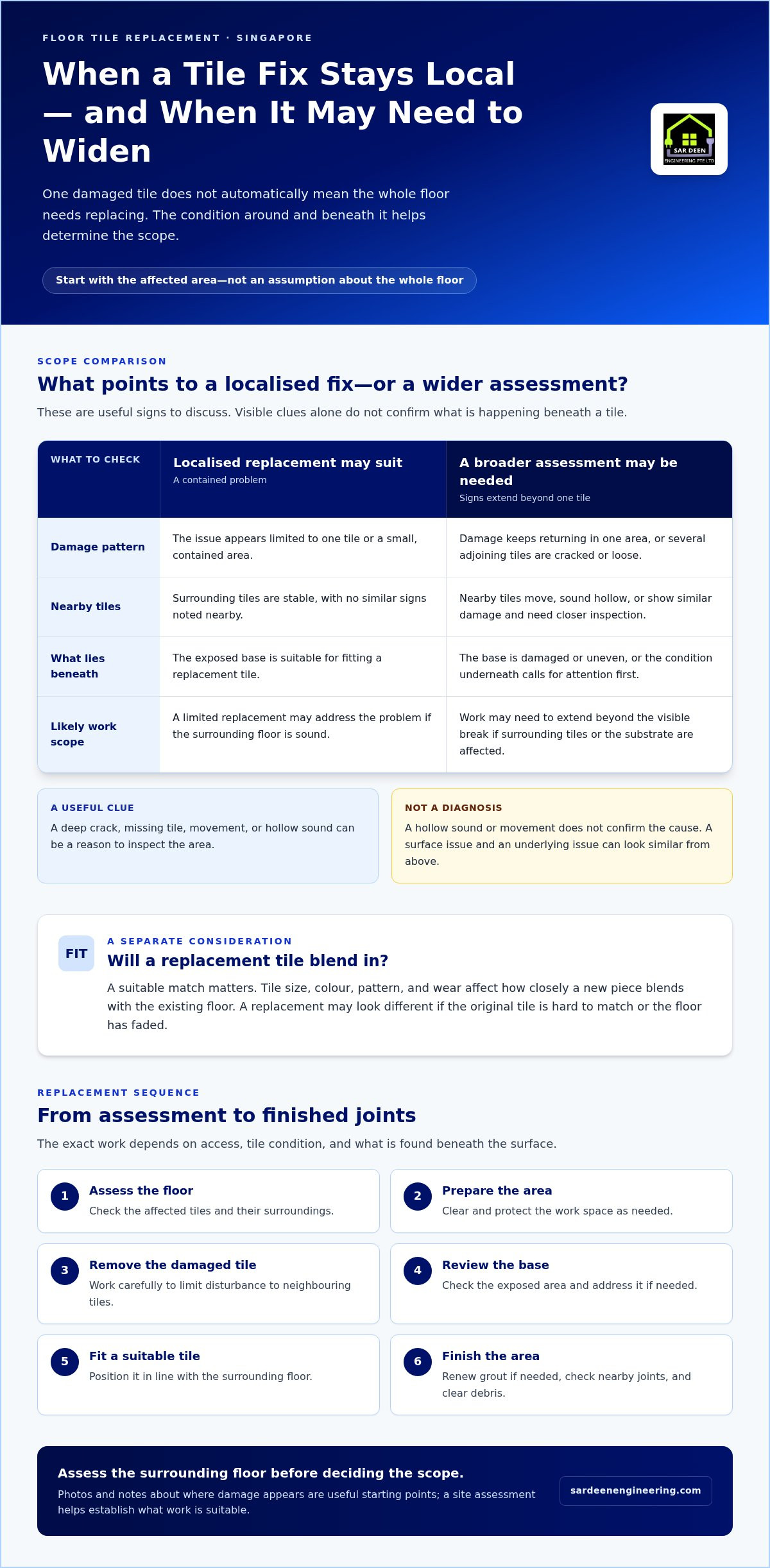
Visible tile damage doesn’t automatically mean the entire floor needs replacing. A single chipped tile in an otherwise sound area may call for a local fix, while a pattern of loose or repeatedly damaged tiles deserves a closer assessment. For floor tile replacement Singapore homeowners should consider not just the surface, but also how many tiles are affected and the condition of the floor beneath them.
Start by identifying the type and location of the damage. Is a tile cracked through, missing, or moving underfoot? Is the issue limited to one spot, or are nearby tiles affected too? Note what you can see, but don’t treat a visual clue as a diagnosis. A surface problem and an issue beneath the tile can look similar from above.
Which floor tile problems may call for replacement?
A broken or missing tile has lost part of its protective surface, while a scratch may only affect the finish. A deep crack may make replacement worth assessing, especially if the tile is breaking further or has sharp edges. Movement or a hollow sound when tapped can also be a reason to inspect the area, but neither confirms the cause by itself.
Look for a pattern. If damage keeps returning in one area, or several adjoining tiles are cracked or loose, the surrounding floor may need attention as well. Tile materials and their uses vary, so understanding the types of tiles and their characteristics can help you describe what you have. Photos and notes about where damage appears are useful starting points, but they don’t replace an assessment of the floor.
Can one damaged tile be replaced without redoing the floor?
Sometimes. Targeted replacement may suit a localised problem when the surrounding tiles are stable and a suitable match is available. The tile’s size, colour, pattern, and wear all affect how closely a new piece blends in. Even a well-fitted replacement may look different if the existing floor has faded or the original tile is no longer easy to match.
Access matters, too. Removing a tile carefully takes room to work, and the substrate, the layer beneath the tile, can affect what needs attention once the damaged piece is lifted. If adjoining tiles are loose or the underlying surface is uneven or damaged, the work may need to extend beyond the visible break. A site assessment helps determine whether a single-tile fix is suitable.
Localised replacement focuses on a limited damaged area and can be appropriate when the issue is contained. Broader floor work may be needed if multiple surrounding tiles or the substrate are affected. The right scope depends on the tiles’ condition, the area involved, and what is found beneath the surface. One damaged tile doesn’t automatically call for a new floor, but repeated or widespread signs should be assessed before choosing a limited fix.
What Happens During Floor Tile Replacement?
Floor tile replacement Singapore homeowners arrange usually follows a clear sequence, but the exact work depends on the tile condition, access to the area, and what lies beneath the surface. A single tile in an open space may be simpler to reach than one beside a doorway, cabinet, or fixed fitting. The steps below show what to expect without assuming every job is identical.
In short: assess the floor, prepare the area, remove the damaged tile, review the base, fit a suitable replacement, then finish the joints and surface.
How are existing floor tiles removed and replaced?
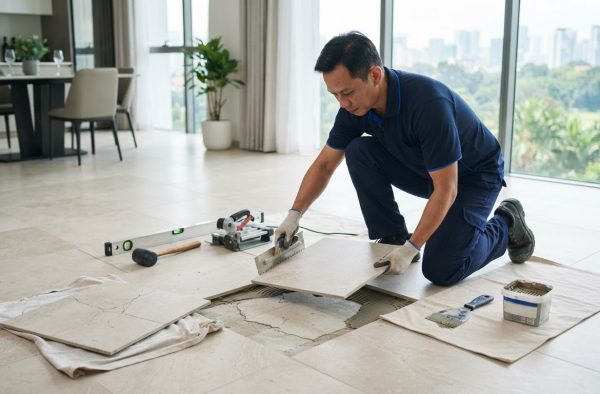
The work begins with an assessment of the affected tiles and their surroundings. The work area is then cleared and protected as needed. This helps contain dust and debris and gives the installer room to work. The damaged tile is removed carefully, with attention to limiting disturbance to neighbouring tiles. Careful removal can reduce the chance of affecting surrounding flooring, but it can’t rule out breakage, particularly if adjacent tiles are already weak or closely bonded.
Once the tile is out, the exposed area is reviewed. The base may need attention before a replacement can be fitted. The installer then positions a suitable tile and checks that it sits in line with the surrounding floor. Tile size, thickness, pattern, and the condition of adjacent edges can all affect how neatly it fits.
Finishing depends on the existing joints and surface. Grout may need to be renewed around the replacement, while nearby joints may need a closer look if they’re cracked or worn. The area is then cleared of work debris. For general reference on installation methods and tile considerations, see BCA Singapore’s ceramic tiling guidelines.
What can affect the replacement work?
Removal is not always straightforward. A tile may break into small pieces, and careful work around its edges can take more effort than lifting a tile that is already loose. Tight access, nearby fixtures, or a narrow working space can also affect how the repair is approached.
The condition beneath the tile matters. If the exposed base is damaged or uneven, fitting a new tile over it may not be suitable without addressing that area first. If surrounding tiles move or show similar damage, the recommended scope may extend beyond the one visible break. Removal can reveal conditions that weren’t visible at the start, which may change the work plan.
There’s no fixed duration that applies to every replacement. The number of tiles, access, removal difficulty, and any work needed beneath the surface all affect how long the job takes. A site assessment helps establish a practical scope and sequence before work begins. For residential tile repair and replacement, Sar Deen Engineering’s tile service can help you plan a suitable fix.
Replace, Repair, or Regrout: Which Floor Tile Fix Fits?
A cracked tile, a worn surface, and crumbling grout are different problems. The right fix depends on which part has failed and what an inspection reveals beneath or around it. This comparison can help you describe the issue and understand the options before choosing a scope for floor tile replacement Singapore work.
| Option | Issue it addresses | Typical scope | Key limitation |
|---|---|---|---|
| Replacement | A tile that is broken, missing, or too damaged to remain in place | Remove the affected tile, assess the exposed area, and fit a suitable replacement | A close match may be difficult if the original tile is unavailable or the surrounding floor has changed with age |
| Tile repair | A local defect that may be addressed without removing the whole tile | Focus on the damaged area, depending on its type and condition | Not suitable for every break or for a problem caused by the base beneath the tile |
| Regrouting | Worn, cracked, stained, or deteriorating grout between tiles | Work on the joints rather than replace the tiles themselves | Won’t fix a broken or loose tile, or resolve an underlying cause |
When is replacing a tile different from repairing it?
Replacement removes the damaged tile and puts another in its place. Repair aims to address a local defect while keeping the tile, where its condition allows. For example, a limited surface blemish may be assessed differently from a tile split through its body. Neither approach suits every floor. If the exposed area beneath a tile is damaged, the appropriate work may need to address that too.
Matching also plays a part. Differences in tile size, thickness, colour, or pattern can make a replacement stand out. A repair may preserve more of the existing surface, but it won’t restore a tile that is missing or too badly broken to remain. An on-site assessment helps determine which option suits the actual condition.
When is regrouting relevant to floor tile work?
Grout fills the joints between tiles. If it’s worn, cracked, or discoloured, regrouting may improve the joints without replacing the tiles. Those signs alone don’t prove that a tile has failed. Regrouting isn’t a substitute for replacing a broken tile, and it won’t correct movement or a problem beneath the floor.
Keep the concern clear: is the tile itself damaged, or is the grout joint the main issue? If the latter, Sar Deen Engineering’s separate guide to epoxy grouting in Singapore covers grout-focused considerations. If the tile is cracked, missing, or moving, the assessment should consider the tile, surrounding floor, and joints.
How to Prepare Your Singapore Home for Floor Tile Replacement
A little preparation can make floor tile replacement Singapore work easier to organise in an occupied home. Clear access to the affected area, protect nearby belongings, and note the floor’s condition before work begins. These steps also help you explain the issue clearly and keep track of what was discussed.
What should homeowners clear or protect before work starts?
Move furniture, rugs, floor mats, and fragile belongings away from the affected tiles. Clear a route to the work area so tools and materials can be brought in without shifting items at the last minute. If something cannot be moved, identify it before work starts so the access plan can account for it.
- Remove small furniture, rugs, shoes, and personal items near the affected floor.
- Move fragile or valuable belongings out of the immediate work area.
- Keep children and pets away from active work areas.
- Make the route to the repair area as clear as practical.
Tile removal can create dust and debris. Keep nearby belongings out of the way, and avoid storing items in the route or beside the work area. A clear space gives the service team room to focus on the repair and reduces the chance of household items getting in the way.
What should HDB and condominium residents plan for?
Access arrangements and building procedures can differ between properties. Before work, review the relevant HDB or condominium management guidance for requirements that apply to the planned work. This is useful if the job involves a shared access route, a wet area, or work that could affect neighbouring units. Procedures for one property may not apply to another.
For bathroom or kitchen floors, describe the location clearly when arranging the work. Wet-area work can involve considerations beyond replacing the visible tile, so include the room and any signs of moisture when explaining the issue. This helps keep the scope and any property procedures clear.
Document the floor before anything is moved or removed. Take clear photos from a few angles, including close-ups of cracks, missing pieces, grout joints, and nearby tiles. Note which tiles are affected and whether the issue changes over time. These details help explain the job and provide a useful reference during the assessment.
Keep the photos and notes with your household maintenance records. Note the room, location, visible damage, and any change you’ve noticed. When discussing the work, share the property type and photos so the scope can be considered with useful context.
For help with a residential tile issue, discuss your tile replacement needs with Sar Deen Engineering.
Arrange Floor Tile Replacement with Sar Deen Engineering
Sar Deen Engineering provides residential tile repair and replacement services in Singapore. If you’re unsure whether a damaged tile needs repair or replacement, start by describing what you can see. A clear account of the affected area helps frame the discussion and identify a suitable scope for the floor.
For floor tile replacement Singapore homeowners can share a few practical details before discussing the work. You don’t need to identify the cause yourself. Focus on the visible condition and any changes you’ve noticed. The affected area and floor condition determine the appropriate scope, which can be assessed before the work is planned.
What information helps describe the tile issue?
Keep your description simple and specific. Say which room the tile is in, roughly where it sits, and what has changed. For example, note whether it’s cracked, chipped, missing, loose, or showing damage to the grout nearby. Mention whether the problem seems limited to one tile or extends to surrounding tiles.
- Share the property type, such as an HDB flat or condominium.
- Name the affected room and describe where the damaged tile is located.
- Explain what you can see, including cracks, movement, missing pieces, or worn joints.
- Include clear photos of the affected tile and the surrounding floor.
- Note whether nearby tiles have similar damage or feel loose.
Photos taken both close up and from farther back can show the damage and its position in the room. If you have a spare tile or know the tile’s material, size, or pattern, mention that too. These details help clarify the floor’s appearance and replacement considerations, though they don’t determine the final scope on their own.
What should homeowners expect from the next step?
The next step is a discussion of the issue and the work that may suit it. Visible damage is only part of the picture. The surrounding tiles, access to the area, and the floor beneath can also affect the scope. An initial description helps organise the conversation, while an assessment of the actual floor shows whether the work should remain localised or include a wider area.
Keep expectations practical. A photo can show a crack or missing tile, but it can’t reveal every condition beneath the surface. The scope may become clearer after the affected area is reviewed. Sar Deen Engineering’s residential tile service covers tile repair and replacement, with the work tailored to the floor’s condition.
Gather the room details and photos, then Discuss your floor tile needs with Sar Deen Engineering.
Take the Next Step with a Clear Plan
A damaged floor doesn’t have to become a bigger project by default. First understand what the affected area needs, then choose a scope that suits the floor and your home. That keeps the decision focused, whether the right direction is repair, replacement, or grout work.
Sar Deen Engineering provides residential tile repair and replacement services, as well as epoxy grouting, for customers across Singapore. Homeowners can discuss their tile concerns and the work needed to address them.
Describe what you want the floor to do: remain safe to walk on, look more consistent, or address a recurring issue. A clear discussion helps you understand the work being considered before deciding how to proceed. You don’t need to identify the technical cause before getting started.
Discuss your floor tile needs with Sar Deen Engineering and take a considered step toward the right fix for your home.
Frequently Asked Questions
Is it possible to replace floor tiles without replacing the whole floor?
Yes, replacing only the affected tiles can be practical when damage is confined and a compatible tile is available. The surrounding floor matters: neighbouring tiles may be loose, or the tile bed beneath the damaged piece may need attention. For example, a single break in a stable entryway differs from a cluster of shifting tiles. An on-site assessment helps set a sensible scope without assuming the whole floor needs replacement.
Can new floor tiles match the existing tiles exactly?
An exact match isn’t always possible, especially if the original tile has been discontinued or the existing floor has aged. Look for spare tiles left from the original installation. Compare the tile’s dimensions, surface finish, and colour in the room, not just under shop lighting. Even a close match may appear different because sunlight, indoor lighting, and years of wear can change how older tiles look.
How much does floor tile replacement cost in Singapore?
The cost of floor tile replacement Singapore homeowners pay varies by project, so a reliable figure depends on the scope. The number of tiles, access, removal difficulty, availability of a compatible tile, and any condition found below the surface can all affect the work involved. Describe the affected room and share clear photos when discussing the job. That gives the service team useful context to consider the scope.
What happens if the floor beneath a removed tile is damaged?
If the base is damaged or uneven, the replacement tile shouldn’t simply be fitted before that area is reviewed. The exposed surface may need preparation, and its condition can change the work required. For instance, damage extending beyond the tile footprint may call for a broader scope. The cause and suitable response can’t be determined from appearance alone, so assess the exposed area before finishing the floor.
Can floor tile replacement fix a leak in a bathroom?
Replacing a surface tile alone doesn’t necessarily stop a leak or address its cause. If you notice damp patches, recurring moisture, or water appearing beyond the tiled area, the underlying issue should be assessed before deciding on tile work. These signs don’t identify the source by themselves. Understanding what is happening beneath or around the floor helps determine whether tile replacement is appropriate or another repair needs attention first.
How long should I wait before walking on replaced floor tiles?
The safe waiting period depends on the materials used and the installation conditions, so there isn’t one reliable timeframe for every floor. Follow the service team’s instructions before walking on the area, cleaning it, or moving furniture back. For example, avoid placing a heavy cabinet on a newly fitted tile until you’ve been told it’s ready for that use. Clear guidance helps protect the finished work.