
Minor Renovation Handyman Singapore: A Practical Guide to Small Home Projects
A loose door handle, a chipped tile and a light that needs replacing can turn into a bigger headache when you’re unsure whether to bundle the jobs or start a renovation. A minor renovation handyman Singapore homeowners choose should be able to handle practical, clearly scoped tasks without turning routine repairs into a full-scale project.
It’s sensible to plan first. Some small jobs can be grouped together, but HDB guidelines and condo management rules may affect the work, especially if it involves structural changes, drilling or shared areas. Knowing the difference between maintenance and renovation can help you avoid surprises and keep the scope manageable.
This guide explains what minor works can involve, how to prepare a clear task list, and what to consider before work begins in an HDB flat or condominium. You’ll also see how Sar Deen can help with related residential tasks, from tile repairs and painting to fixture installation, furniture assembly and door hardware replacement. The aim is simple: get practical repairs organised with less disruption.
Key Takeaways
- Judge minor work by its scope and complexity, not simply by how many small tasks are on the list.
- Build a clear project brief by noting defects, priorities and locations, then add concise descriptions and photos.
- Prepare for HDB and condo work separately, and check the current requirements that apply to your home and proposed tasks.
- Keep the job manageable by clearing access, protecting belongings and agreeing on the task list before work begins.
- A minor renovation handyman Singapore homeowners use can bring related maintenance tasks together, from painting and tile repair to fixtures, furniture assembly and door hardware.
What counts as minor renovation handyman work in Singapore?
Minor renovation is a limited home repair, replacement, installation or surface refresh that improves a specific area without substantially changing the home’s layout or structure. That may mean replacing one toilet bowl, repairing a power socket or repainting a marked wall. The label depends less on how many tasks you list and more on the work’s scope, complexity and effect on the property.
For a broader reference, the definition of home improvement covers changes made to a home, from repairs to upgrades. In practical terms, minor works usually focus on keeping existing spaces functional or fresh. They don’t typically involve reconfiguring rooms, removing walls or carrying out extensive alterations.
A useful way to judge your own job is to ask: does it address a specific defect or update an existing feature, or does it change how the home is built or arranged? A few separate tasks can still form a manageable project if each one is clearly defined. Conversely, one complex alteration may need more planning than several straightforward repairs. This distinction helps homeowners searching for a minor renovation handyman Singapore identify a realistic scope before work begins.
Which home jobs commonly fit a minor works scope?
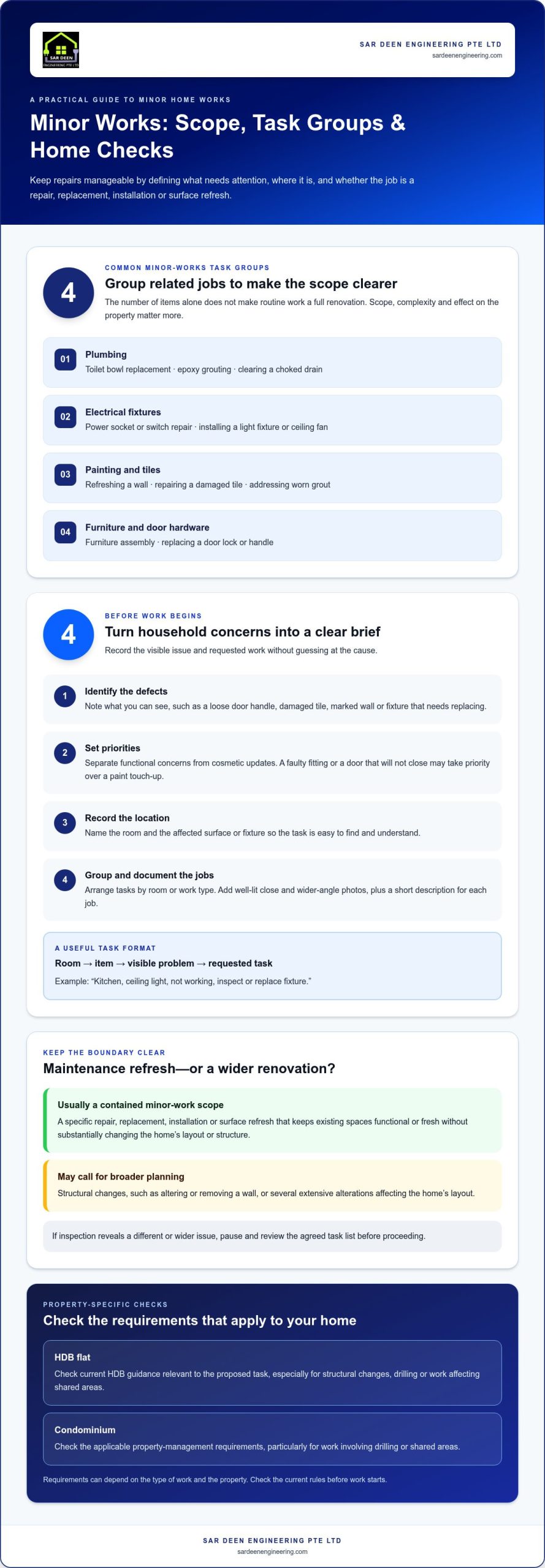
Think in task groups. Writing related jobs together makes the project easier to describe and organise, even if they involve different parts of the home:
- Plumbing: toilet bowl replacement, epoxy grouting or clearing a choked drain.
- Electrical fixtures: power socket or switch repair, or installing a light fixture or ceiling fan.
- Painting and tiles: refreshing a wall, repairing a damaged tile or addressing worn grout.
- Furniture and door hardware: assembling furniture, or replacing a door lock or handle.
Make each item specific. “Repair socket in study” is easier to understand than “fix electrical issues.” If several tasks are related, such as repairing a bathroom tile and replacing its toilet bowl, list both under the same room. The number of items alone doesn’t turn routine work into a full renovation.
When does a small job become a larger renovation?
The project may move beyond minor work when it involves structural changes, such as altering or removing a wall, or when several extensive alterations affect the home’s layout. That doesn’t mean every repair needs a renovation permit or a full renovation. Before work starts, check the current HDB guidance relevant to the proposed task, or the applicable property-management requirements for a condominium. Rules can depend on the type of work and the property.
To keep the scope clear, describe what needs attention, where it is, and whether the request is to repair, replace or install something. If inspection reveals a different or wider issue, pause and review the task list before proceeding. This simple boundary helps distinguish a contained maintenance project from work that calls for broader planning.
How to scope a minor renovation project before work begins
A clear scope turns a collection of household concerns into a practical task list. It helps you explain what needs attention, decide what matters first and keep the agreed work distinct from new requests that arise later. This preparation is useful whether you’re arranging one repair or planning several jobs around the home.
To scope a minor project, identify each defect, prioritise functional needs, record where the work is needed, then group related tasks and document them with clear photos and concise descriptions.
- Identify the defects. Walk through the home and note each problem you can see, such as a loose door handle, damaged tile, marked wall or fixture that needs replacing. Describe the issue rather than guessing at its cause.
- Set priorities. Separate functional concerns from cosmetic updates. A faulty fitting or a door that won’t close may need attention before a paint touch-up. This helps you decide what should lead the list without assuming every visible issue has the same urgency.
- Record the location. Name the room and the affected surface or fixture. “Bathroom, cracked tile beside the vanity” is clearer than “tile repair.”
- Group and document the jobs. Arrange tasks by room or work type. Take well-lit photos from close and wider angles, and add one short description to each. Photos provide context, while words clarify what you want repaired, replaced, installed or refreshed.
How should homeowners describe each repair or installation?
Use a simple format: room, item, visible problem, requested task. For example: “Kitchen, ceiling light, not working, inspect or replace fixture.” State what you’ve observed without presenting a diagnosis as fact. Note relevant access details or household constraints, such as furniture that limits access or times when a room needs to remain clear. Keep the wording brief and specific.
How can related jobs be grouped into one visit?
Group tasks by room when they share access, or by work type when that makes the list easier to review. Include dependencies: if a damaged surface needs repair before it can be painted, put the repair first. Mark which jobs are priorities and which can wait. For a wider routine that includes recurring upkeep, use this home maintenance checklist to help spot other items to record.
For a minor renovation handyman Singapore project, share the organised scope and photos together, then keep a copy of the agreed tasks. If the work changes after it begins, record the new request and review how it affects the original list before proceeding. A focused brief also makes it easier to match related needs with practical support, such as Sar Deen’s home repair and installation services.
Before scheduling work in an HDB flat or condominium, check the requirements that apply to the proposed tasks. For private properties, the BCA’s BCA exemptions for minor building works can help clarify which building works are exempt from BCA approval. This is one reference point, not a substitute for checking the rules that apply to your property and project.
Singapore HDB and condo considerations for minor renovation work
The same repair can involve different preparation depending on where you live. HDB flats and condominiums have different sources of property guidance and coordination, so don’t assume that a process for one applies to the other. Before arranging a minor renovation handyman Singapore project, identify the work clearly, then check the requirements relevant to your home and task.
Use this comparison as a starting point, not as a substitute for current instructions from HDB or your condominium’s management.
| Planning point | HDB flat | Condominium |
|---|---|---|
| Approvals and requirements | Check current HDB guidance for the specific work. | Check the development’s applicable management procedures. |
| Coordination | Clarify what the proposed task involves and follow relevant HDB instructions. | Ask management about any required coordination or submission process. |
| Access | Plan access to the flat and affected areas. | Check access arrangements for workers, tools and shared areas. |
What should HDB residents check before minor works?
Start with the current HDB guidance that applies to the exact task. Requirements depend on the type and extent of work, so avoid relying on a blanket assumption that all small repairs either need or don’t need approval. Describe the proposed work plainly, such as replacing a bathroom fixture or repairing a tile, and check the relevant instructions before arranging it.
For bathroom planning, the toilet bowl replacement guide can help you understand what to consider for that specific job. Keep the work description consistent with the task you intend to carry out.
What should condo residents coordinate before work?
Condominium procedures can vary by development. Check with the applicable management office for any process that may apply to your proposed work, including worker access, use of service routes and arrangements for tools or materials. Also review the current guidance on permitted work hours. Don’t assume that another condo’s requirements apply to your building.
For painting, consider how access and work arrangements fit the rooms and surfaces involved. The condo painting services guide offers related planning context for this type of work.
Make your checks specific. A surface refresh, fixture replacement and alteration to a built element may not follow the same process. Share a clear description of the task when making enquiries with HDB or building management, and keep any instructions with your project notes. If the proposed work changes, review the requirements again rather than assuming the original guidance still covers it.
Good preparation keeps a small job focused. Check the relevant property guidance, arrange access, and make sure the scope you’re planning matches the work being carried out.
How to prepare your home and keep minor works manageable
A little preparation helps keep attention on the agreed work. Before the visit, make the affected area accessible and note the condition of nearby surfaces or belongings. Keep the task list close by so everyone can refer to the same scope. For a minor renovation handyman Singapore project, clear preparation also makes it easier to spot when a new issue falls outside the original request.
What should you do before the handyman arrives?
Focus on the work area, not the whole home. Clear access to the room, fixture or surface, and move or cover nearby belongings where practical. Take photos of existing marks or damage, then keep them with your notes and agreed task list. If furniture or household routines may affect access, record that detail so it can be discussed before work starts.
- Clear the route and work area: Move loose items away from the repair or installation point.
- Protect nearby belongings: Cover or relocate items that could be affected by work in the area.
- Keep records handy: Have the agreed tasks, photos and any relevant notes available for reference.
For help organising related home upkeep alongside a specific repair, explore Sar Deen’s home maintenance services.
Before work proceeds, review the task list together and make sure it still reflects what you want done. If an inspection reveals a related issue, pause before adding it. For example, a repair may expose a separate area that also needs attention. Discuss how it changes the scope, then agree on whether it should be handled as part of the current work or recorded as a separate task. This keeps expectations clear and helps prevent a small job from expanding without a deliberate decision.
How can you review the completed minor works?
Use the original list as your guide. Walk through each item with the service provider and check that the completed repair or installation matches the agreed scope. If something looks different from what you expected, describe the specific detail and refer to your notes or photos. Keep the discussion calm and factual, then record any observation or follow-up clearly.
- Review each item on the agreed task list.
- Compare the completed work with the repair or installation requested.
- Write down any follow-up observations and the item they relate to.
A clear close-out matters as much as a clear start. It gives you a useful record of what was addressed and what remains for a future maintenance plan.
How Sar Deen Engineering helps with minor renovation handyman needs
Once your task list is clear, matching each item to the right type of home maintenance work is simpler. Sar Deen Engineering provides residential repair and installation services across Singapore, covering several common minor-work categories through one company. That can make it easier to organise related needs in a single project brief, without turning a list of repairs into a full-scale renovation.
Which Sar Deen services suit common minor home projects?
Match the request to the affected surface, fixture or fitting. A concise list can include tasks from different rooms, while keeping each item distinct and easy to review.
- Painting: Wall painting or condo painting for surfaces that need a refresh.
- Tiles: Tile repair and epoxy grouting for specific tile or grout concerns.
- Plumbing: Toilet bowl installation and replacement, water heater installation, or choked drainage and pipe clearing.
- Electrical: Light fixture and ceiling fan installation, power socket and switch repair, or electrical service.
- Furniture: Furniture assembly for items that need putting together.
- Door hardware: Door lock and handle replacement for worn or unsuitable fittings.
For example, a homeowner might list a wall that needs painting, a cracked tile for repair and a door handle for replacement. Keeping each item tied to its room and requested task helps create a focused scope. Sar Deen’s range of residential maintenance categories lets related requests sit under one service provider, rather than requiring separate project notes for every type of work.
What details help start a clear service enquiry?
Give the request enough context to understand the work. State whether the home is an HDB flat or condominium, name each affected room, and identify the fixture or surface. Add a short description of the issue and what you’re seeking, such as a repair, replacement, installation or paint refresh.
Photos can help show the location and visible condition. Include relevant access or scheduling considerations, such as a room that needs to remain clear or a preferred time window. If the work is subject to HDB or condominium procedures, include any relevant instructions you’ve received so the scope can be discussed with those requirements in view.
Keep related jobs together, but don’t combine separate concerns into a vague request. “Replace the toilet bowl in the main bathroom” and “repair the bedroom power socket” are easier to review than “fix bathroom and electrical issues.” If the requested work changes, update the task list before proceeding so the agreed scope stays clear.
For a practical minor renovation handyman Singapore option, organise the needs into a clear list and share the details with Sar Deen. Contact Sar Deen about your home maintenance needs to discuss your repair and installation requirements.
Make your next home project easier to start
Small home projects are easier to act on when the next step is specific. Use your notes as a living home-care record. After work is completed, mark what was addressed and add remaining observations to a future maintenance list. This gives you a clearer view of what may need attention next, without treating every new observation as an immediate renovation.
When you’re looking for a minor renovation handyman Singapore homeowners can turn to for practical residential maintenance, start with the task that matters most and describe the work plainly. A focused request gives the conversation a useful starting point and helps you plan the next step at a pace that suits your home.
Sar Deen Engineering supports residential maintenance and installation needs across painting, plumbing, electrical fixtures, tile repair and furniture assembly. To discuss the work on your list, contact Sar Deen Engineering about your home maintenance project. Take it one clear task at a time and move forward with confidence.
Frequently Asked Questions
Can a handyman handle minor renovation work in Singapore?
Yes, a handyman can handle suitable repair, replacement and installation tasks, provided the work fits their skills and any applicable requirements. For example, Sar Deen handles home maintenance jobs such as furniture assembly, tile repair and door hardware replacement. Electrical and plumbing work may have specific rules for who can carry it out, so consider the exact task, not just its size, before arranging work.
What is considered minor renovation work in an HDB flat?
Minor work in an HDB flat usually means a contained repair or update that doesn’t change the flat’s structure or layout. Examples include refreshing a wall with paint, replacing a toilet bowl or repairing a damaged tile. The proposed work matters more than the number of tasks. If the job involves changing a wall or another structural element, treat it as a different category and check HDB’s current guidance.
Do I need HDB approval for minor repair or installation work?
Not every small repair requires an HDB permit, but requirements depend on the proposed work. Structural changes, such as wall demolition or alteration, require a permit before work starts. Some work that doesn’t need a permit may still have contractor requirements. Check HDB’s current guidance for the exact task. Electrical work must be carried out by an EMA-licensed electrical worker, while plumbing-system work requires a PUB-licensed plumber.
Do condo residents need management approval for handyman work?
There isn’t one approval process that applies to every condominium. Check your development’s current procedures to find out whether the proposed work needs notification, approval or access arrangements. Even a contained job may involve booking a service lift, registering workers or following building work-hour guidance. Share the specific task with management, especially if it involves drilling, common areas or moving bulky items through shared spaces.
How much does a minor renovation handyman service cost in Singapore?
There’s no single cost for every minor works project. The amount depends on the tasks, their complexity, materials and access needs. Replacing a fitting is different from combining several repairs or refreshing multiple surfaces. Prepare a clear list of work and photos so the scope can be understood. Sar Deen can discuss your specific home maintenance requirements without relying on a generic estimate that may not fit the job.
Can I combine several small home repairs into one handyman visit?
Yes, related tasks can be grouped in one project brief for review. For example, you could list a light fixture installation, a damaged tile and a door handle replacement, with each task assigned to its room. Note any work that must happen first, such as completing a surface repair before painting. A grouped list gives the provider a clearer picture of the request, though the work sequence depends on the tasks.
What should I prepare before a handyman starts work at home?
Before work begins, make sure the person handling the job can reach the relevant room and fixtures. Keep building-management or HDB instructions that apply to the work available, and make access arrangements for shared areas if needed. If someone else in the household will be present, brief them on the agreed tasks and any areas that are off-limits. This helps keep the visit focused on the planned work.

