Bathroom Epoxy Grouting Singapore: Choosing Anti-Slip Treatment for Bathroom Tiles
A bathroom floor can feel slippery even when its grout looks clean and intact. That’s because the tile surface and the joints between tiles do different jobs. If you’re researching bathroom epoxy grouting Singapore, note that epoxy grout addresses the joints, not the grip of the tile surface itself.
It’s natural to look for one fix when wet tiles cause concern, but start by identifying what needs attention. Worn or stained joints may call for grout work, while a slippery tile surface needs a separate assessment. Epoxy grouting is not an anti-slip coating and does not guarantee protection against falls.
This guide explains how grout work differs from anti-slip surface treatment and what to compare, including joint condition, tile surface, and ongoing maintenance. Sar Deen Engineering provides residential epoxy grouting and tile repair across Singapore, helping homeowners assess when grout work may be relevant to their bathroom floor.
Key Takeaways
- Wet-floor slipperiness can have several causes. Note where and when it happens, including after cleaning or shower use.
- Anti-slip treatment focuses on the exposed tile surface, while grout work addresses the joints. Identify which area needs attention before choosing an approach.
- Compare treatment options by surface suitability, upkeep, and limitations rather than relying on broad performance claims.
- When considering bathroom epoxy grouting Singapore, assess the joints separately from the grip of the tile surface.
- Inspect the slippery area, tile surface, and grout condition to decide whether to explore surface treatment, tile repair, or grouting.
Why bathroom tile slip resistance matters in Singapore homes
Bathroom floors can move quickly from dry to wet. Showering, bathing, washing, and cleaning may leave water on the walking surface, while soap or cleaning residue can make some areas feel slick. A floor that feels steady when dry may feel different when wet. Check the surface, how water drains, and how the floor is used day to day.
Bathroom anti-slip treatment focuses on the exposed tile face, not the joints between tiles. Tile-surface grip and grout-joint condition are separate issues. A worn or damaged joint may need grout attention, while a slippery tile surface calls for a separate assessment. Bathroom epoxy grouting Singapore addresses grout-related concerns, not tile-surface grip.
What makes bathroom tiles feel slippery when wet?
Water can reduce the sense of grip underfoot, and soap or cleaning product left on the floor may change how it feels. Smooth or polished finishes may feel different from textured surfaces, especially when wet, but appearance alone cannot establish how a particular tile will perform. Bare feet or footwear, the amount of water present, and cleaning habits can all affect the experience.
Slip resistance can be measured using different methods, as outlined in Floor slip resistance testing. Your own observations are useful, but they are not a formal test. If a floor repeatedly feels slippery, an assessment of the surface can help distinguish a tile-surface concern from residue, drainage, or a joint defect.
Which bathroom areas need the closest attention?
Start with the shower floor, the space beside a bathtub or other bathing fixture, and the walking route between the wet area and the bathroom entrance. These spots are regularly exposed to water. Note where water collects and whether it drains away. Pooling can affect footing even when the tile surface has not changed.
Record when the floor feels slippery, such as after showering, cleaning, or stepping out of the bathing area. Note whether your footing changes with footwear, too. These observations help describe the problem but do not diagnose its cause. A surface treatment cannot replace repairs to loose tiles or address underlying water and drainage issues. Have the floor assessed before choosing a treatment, particularly if the tile or grout appears damaged.
Bathroom epoxy grouting and anti-slip treatment solve different problems
These options work on different parts of the floor. Epoxy grouting is applied to tile joints, while anti-slip treatment targets the exposed tile surface. Choose based on what needs attention: a slippery tile face, damaged grout, or a separate drainage or tile issue. Neither option should be treated as a complete solution for every bathroom-floor concern.
| Option | Treatment area | Problem addressed | Likely use case | Key limitation |
|---|---|---|---|---|
| Epoxy grouting | Joints between tiles | Grout-related wear or deterioration | Joints that are missing, cracked, or visibly degraded | It does not coat the tile face or guarantee waterproofing. |
| Anti-slip treatment | Exposed walking surface | Underfoot grip concerns | A tile surface that feels slippery during normal bathroom use | Suitability depends on the tile material and treatment instructions; it cannot guarantee a slip-proof floor. |
What does bathroom epoxy grouting address?
Epoxy grouting concerns the joints between tiles. Look for grout that is missing, cracked, crumbling, or otherwise deteriorated. These signs point to a grout-related concern, but they do not establish the cause of every damp patch or leak. Grout work alone does not replace waterproofing or resolve every underlying water issue. For more detail on grout condition, see this epoxy grouting guide.
What does anti-slip treatment address?
Anti-slip treatment is applied to the tile’s walking surface rather than the joints. Its suitability and result depend on the tile material and the treatment instructions. Do not assume that a product intended for one surface is suitable for another, or that treatment removes the need for ongoing floor care. The BCA newsroom provides broader building and safety context, but it should not be read as approval of a particular bathroom treatment.
Assess surface grip, water flow and drainage, cleaning residue, and grout condition separately. For example, if the joints look sound but the tile surface feels slippery, replacing grout may not address the concern. If grout is visibly damaged, repairing it will not automatically change the tile’s grip. A loose tile or persistent water issue also needs attention beyond a surface treatment.
If the joints need work, Sar Deen Engineering’s residential epoxy grouting service addresses grout-related concerns. Identifying the affected area first helps keep the next step focused on the floor’s actual condition.
Compare bathroom anti-slip treatment options before deciding
Anti-slip options differ in how they affect the walking surface and what they require for everyday cleaning. Some are applied to an existing floor, some form a coating, and others use a textured surface. No category suits every bathroom. A method that may work for one tile material or pattern of use may not suit another.
The right option depends on tile material, bathroom use, and maintenance needs. Compare the likely finish and cleaning routine, then check compatibility and application details against the specific product instructions. Do not rely on a broad claim to predict how the finished floor will look or feel.
How do treatment types differ in use and upkeep?
Use these categories as a starting point, not as a performance guarantee. Product directions and the floor’s condition matter.
- Professionally applied treatments: These are applied to an existing tile surface. They may suit homeowners who want to address grip without changing the tile, but the result, appearance, suitable materials, and care requirements depend on the product.
- Coatings: A coating forms a layer over the surface. It may change the floor’s finish or feel, and its suitability depends on the tile, bathroom conditions, and the manufacturer’s directions. Cleaning methods and wear can affect upkeep.
- Textured surface solutions: Textured tiles or other surface options provide a different surface character rather than relying on grout joints. They may involve a more substantial change to the floor, and texture can affect both appearance and cleaning effort.
Before deciding, read the instructions for intended bathroom use, compatible materials, preparation, application, cleaning, and ongoing care. Do not assume one treatment works on every tile or remains unchanged with use. Consider how the floor will look across the whole bathroom, including whether treated and untreated areas may look different.
When might tile replacement or repair be more suitable?
A slippery surface is not the same as a damaged tile. Cracks, movement, a hollow sound, or a broken edge may indicate a repair issue that should be assessed before surface treatment. Applying a treatment will not secure a loose tile or resolve the cause of damage. Keep grout concerns separate: missing or deteriorated joints may call for grout work. This complete epoxy grouting guide can help you assess those signs.
Choose based on the problem you can observe. If joints need attention, bathroom epoxy grouting Singapore is relevant to that grout-related work, while tile repair addresses damaged tiles. Sar Deen Engineering provides residential epoxy grouting for bathroom joints that need attention. Check surface grip, tile condition, and grout condition separately so the next step matches the floor.
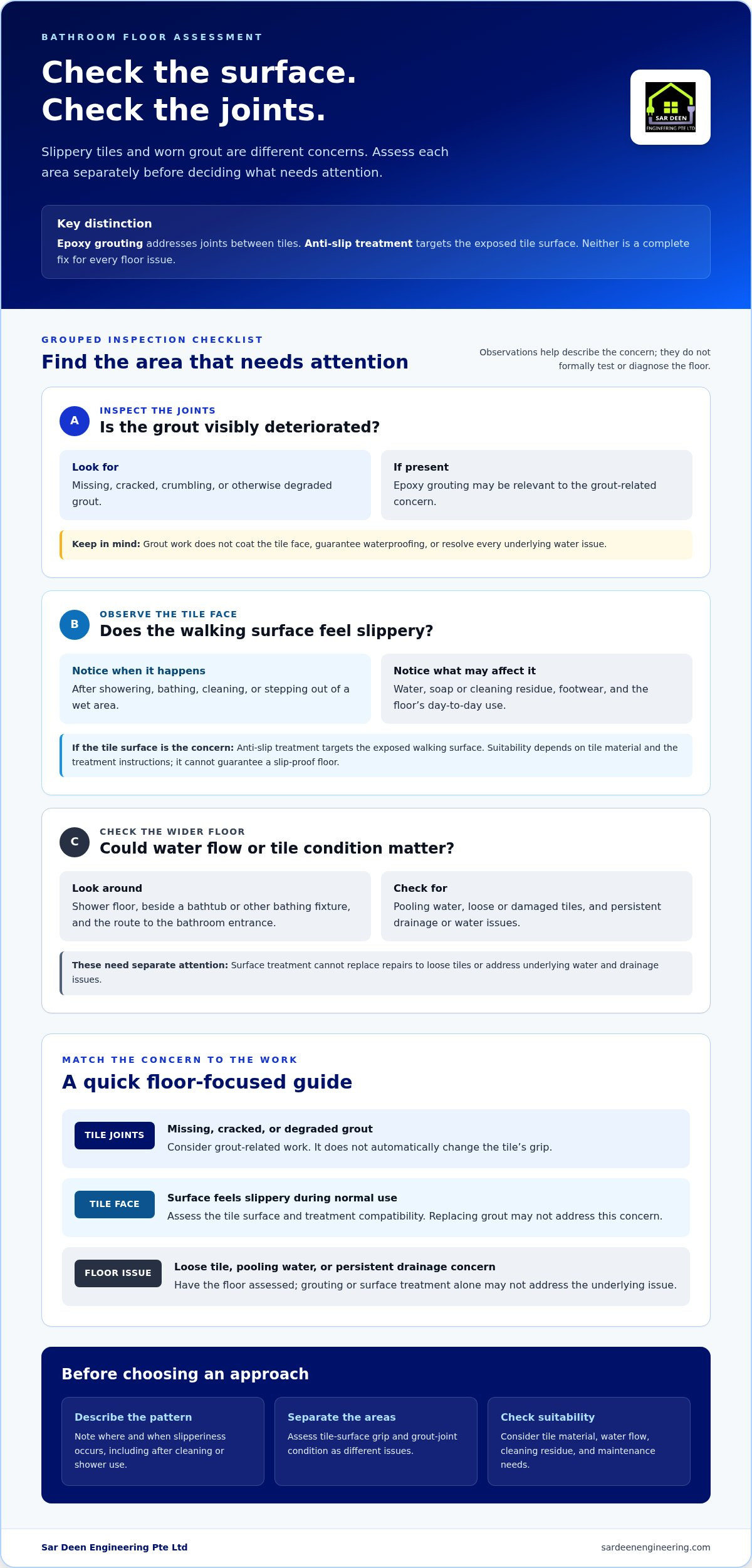
Use this checklist to assess bathroom anti-slip treatment suitability
A few observations can make the next step clearer. Before comparing treatments, note where the floor feels slippery and inspect the surface for maintenance needs or damage. This checklist helps distinguish a grip concern from a tile or grout defect, so you can focus on the condition that needs attention.
What should you check on the bathroom floor first?
Map the wet walking routes, including the shower area, the path beside bathing fixtures, and any spot where water tends to collect. Record when slipperiness occurs, such as after showering or cleaning. A short note or photo can help show whether the concern is limited to one area or occurs across the floor.
- Identify the slippery area. Note the exact location and whether it feels different when wet, after cleaning, or at other times. Include any pooling water and how long it appears to remain.
- Inspect the tiles and grout. Look for residue, cracks, loose or uneven tiles, damaged edges, and missing or deteriorated joints. A surface that needs cleaning is different from one that needs repair.
- Identify the tile material. Record the material or tile details if known. Do not assume all ceramic or stone surfaces behave alike. If you are unsure, avoid guessing from colour or appearance alone.
- Compare treatment instructions. Check whether the treatment is intended for that tile material and bathroom use. Review its stated finish, preparation, application, and care directions before deciding.
- Plan the upkeep. Consider your regular cleaning products and habits. Check that the specified cleaning method is practical for your household and that you can follow the care directions.
How should you plan treatment and aftercare?
Read the instructions for the specific treatment rather than relying on a general estimate. Follow its stated application and curing period, and keep the bathroom floor out of use for that period. Cleaning intervals, suitable products, and performance claims should also come from the product instructions. Do not substitute another treatment’s directions or assume that a surface will keep the same feel indefinitely.
Separate routine upkeep from signs that need repair. Residue or water left after use may call for a closer look at cleaning or drainage. A loose tile, damaged joint, or persistent water issue points to a different concern. Surface treatment will not secure a loose tile or correct an underlying water problem, so address visible damage before planning surface work.
Use your notes to describe the problem clearly and match the next step to the floor condition. If the joints are the concern, Sar Deen Engineering provides residential epoxy grouting for grout-related needs. Arrange bathroom epoxy grouting when the joints need attention. Grout work and surface grip remain separate considerations.
Choose the right bathroom fix with Sar Deen Engineering
Choose the next step based on which part of the bathroom needs attention. If the exposed tile feels slippery, the concern is surface grip and calls for a separate assessment. If the joints are missing, cracked, or deteriorated, grout repair may be relevant. Damaged tiles are a different issue. Keeping these problems distinct helps you choose work that matches the condition instead of expecting one type of repair to address everything.
When is epoxy grouting the relevant bathroom service?
Epoxy grouting is relevant when bathroom tile joints need attention. Look for visible gaps, cracks, or grout that appears to be breaking down. These signs help describe the condition, but they do not establish the cause of a leak or mean that grout work will waterproof the floor.
Sar Deen Engineering provides residential epoxy grouting in Singapore for grout-related concerns. The exposed tile surface needs its own grip assessment because epoxy grout is applied to joints, not as an anti-slip treatment. If the tile itself is cracked, loose, or otherwise damaged, tile repair is a separate service to consider.
What should the homeowner do next?
Before deciding, describe the affected area and what you can see. Note whether the concern is at the tile face, in the joints, or on a damaged tile. Record when the floor feels slippery and whether you see pooling water or residue. Clear observations help focus the assessment on the actual bathroom issue, rather than assuming grout work or surface treatment is automatically the right answer.
- Surface feels slippery: Focus on assessing the tile’s grip and the suitability of any surface treatment.
- Joints show wear: Consider grout repair for missing, cracked, or deteriorated grout.
- Tile is damaged: Consider tile repair before planning any surface treatment.
For homeowners researching bathroom epoxy grouting Singapore, start with the condition of the joints. Sar Deen Engineering’s residential epoxy grouting service addresses grout-related needs, while surface grip remains a separate consideration. Describe the visible condition and location of the problem so the next step matches the floor, without assuming one repair will solve unrelated concerns.
Explore Sar Deen Engineering’s home maintenance services for support with your bathroom issue.
Make your next bathroom-floor decision with confidence
Before choosing a treatment, note what feels different underfoot, where it happens, and whether the concern changes after cleaning or shower use. This simple record can keep the next discussion focused on the floor’s condition rather than assumptions about what might fix it.
If you’re considering bathroom epoxy grouting Singapore, focus first on the tile joints. For a slippery tile surface, treat grip as a separate question and assess the surface accordingly. Matching the work to the problem helps set realistic expectations and avoids treating grout repair as a substitute for surface treatment.
Explore Sar Deen Engineering’s home maintenance services for the next step with your bathroom. A clearer picture of the floor condition can help you make an informed choice.
Frequently Asked Questions
Can epoxy grout make bathroom tiles less slippery?
No. Epoxy grout is used in the joints between tiles, not as a treatment for the exposed tile surface. If the floor feels slippery, assess the tile face separately. For example, if the joints look sound but the walking surface feels slick after a shower, grout replacement may not address that concern. Bathroom epoxy grouting Singapore is relevant when tile joints need attention, not to change surface grip.
Is anti-slip treatment suitable for every bathroom tile?
No. Suitability depends on the tile material and the specific treatment instructions. A product intended for one surface may not be appropriate for another, even if both tiles look similar. Check the manufacturer’s guidance for compatible materials and intended use before applying anything. If the tile type is unknown, identify it rather than relying on appearance alone. The product instructions may recommend testing a small area.
Can I use the bathroom immediately after anti-slip treatment?
Not necessarily. The floor may need to remain unused during application and while the treatment cures. The waiting period depends on the chosen product and its instructions, so there is no single time that applies to every bathroom. Keep people off the treated area until the stated period has passed. Follow instructions about ventilation, water exposure, and re-entry rather than judging readiness by whether the floor looks dry.
Will anti-slip treatment change the appearance of bathroom tiles?
It can, depending on the treatment and tile surface. Some products may alter the sheen, texture, or overall look, while others may have a subtler visual effect. Check product information for appearance details and testing guidance before treating a visible floor area. Consider lighting and any difference between treated and untreated sections. If matching the original finish matters, include that in your selection criteria instead of assuming the surface will look unchanged.
Can anti-slip treatment fix black or missing grout?
No. Anti-slip treatment targets the tile surface and will not replace missing grout or repair deteriorated joints. Black grout may be stained or dirty, but colour alone does not identify the cause. Clean a small area using a method suitable for the tile and grout, then inspect the joints for gaps, cracking, or crumbling. If grout is missing or damaged, address that separately from any concern about tile grip.
Does epoxy grouting by itself waterproof a bathroom?
No. Epoxy grouting addresses tile joints, but it should not be treated as a substitute for a bathroom waterproofing system or as a guaranteed fix for leaks. If water appears beyond the wet area, recurs despite cleaning, or affects an adjacent surface, the cause needs assessment. Repairing grout may be relevant when joints have deteriorated, but persistent water issues can involve conditions beyond the visible grout lines.
How should I clean bathroom tiles after anti-slip treatment?
Use the cleaning method specified for the treatment and tile, since unsuitable cleaners or tools may affect the surface. Check the product instructions for approved cleaning products, frequency, and any limits on scrubbing. Do not assume a familiar bathroom cleaner is compatible. After cleaning, rinse or remove residue as directed and observe how the floor feels during normal use. Recheck the surface over time, especially in frequently used wet areas.