
Rental property maintenance services in Singapore: what to expect
A maintenance issue should reach you through a clear reporting route, usually via the tenant’s agreed contact or a property manager handling tenant communication. The manager can coordinate inspections and repairs, then keep you informed about the issue and next steps. For rental property maintenance services in Singapore, a clear reporting process helps prevent problems from going unnoticed.
It’s reasonable to want to know what’s happening in your property, who is arranging the repair and when access is needed. This guide explains how maintenance concerns are reported, how repair responsibility is handled, and what to expect from scheduling, urgent responses and quotes. It also explains how to share useful details so the issue can be assessed and the right work arranged.
Key Takeaways
- Set a clear route for tenants to report problems, so maintenance issues reach the right person and inspections can help spot concerns early.
- For water leaks, warranty status can affect who is responsible for arranging and paying for waterproofing repairs.
- Clear access notes, the affected location and preferred timing help make repair scheduling easier.
- When an issue could pose an immediate risk, keep people away from the affected area while the urgent maintenance route is arranged.
- Group repair items by room or area and share safe reference photos to help clarify the work needed for a quote.
How will I know when a maintenance issue is raised at my rental property?
You’ll receive updates through the reporting route agreed with your tenant or property manager. The tenant reports the problem, the manager records it and contacts the landlord about the next step. For example, a loose-tile report should identify its room and condition. This record gives everyone a clear starting point for arranging an inspection or repair.
Agree on a practical reporting method before the tenancy begins. It could be a named property manager, an email address or a designated messaging channel. Ask tenants to describe what happened, when they noticed it and whether it is getting worse. A photo can show visible damage, such as paint peeling near a window. For urgent concerns, make the escalation route clear rather than relying on routine messages.
Preventive maintenance helps landlords identify problems before tenants report visible damage. Property management may coordinate inspections and routine checks, then arrange repairs when an issue appears. During an inspection, look for cracked grout, damp patches, loose fittings or switches that no longer work properly. Record each issue’s location and condition, then compare it with previous inspection notes. This helps distinguish a new concern from an existing one.
Inspections also give tenants a clear opportunity to raise concerns. Explain which areas will be inspected and how follow-up issues will be recorded. In Singapore’s property market, a well-maintained rental home can support tenant satisfaction and longer tenancies. Records of reported issues, inspection observations and completed repairs also help landlords track recurring problems, such as a damp patch that returns after repainting.
- Record the report: note the affected area, reported symptoms and date raised.
- Assess urgency: separate an active leak or electrical concern from cosmetic damage.
- Arrange follow-up: coordinate an inspection or repair and document the outcome.
Are permits or licensed contractors required for rental property repairs in Singapore? Requirements depend on the repair and the property’s rules. The type of work, building requirements and involvement of specialist systems determine what approvals or qualified tradespeople are needed.
What rental property maintenance services are available in Singapore? Common work includes tile repair, power socket and switch repair, wall painting and electrical services. The issue’s location and nature help determine the relevant repair. For instance, a cracked tile calls for a different response than a faulty socket.
Use a consistent reporting route, inspection record and follow-up process. This lets landlords see when an issue was raised, what action followed and whether the repair resolved it. Clear records also help property managers spot recurring concerns and plan preventive maintenance based on the property’s actual condition.
Responsibility for water leakage and waterproofing repairs
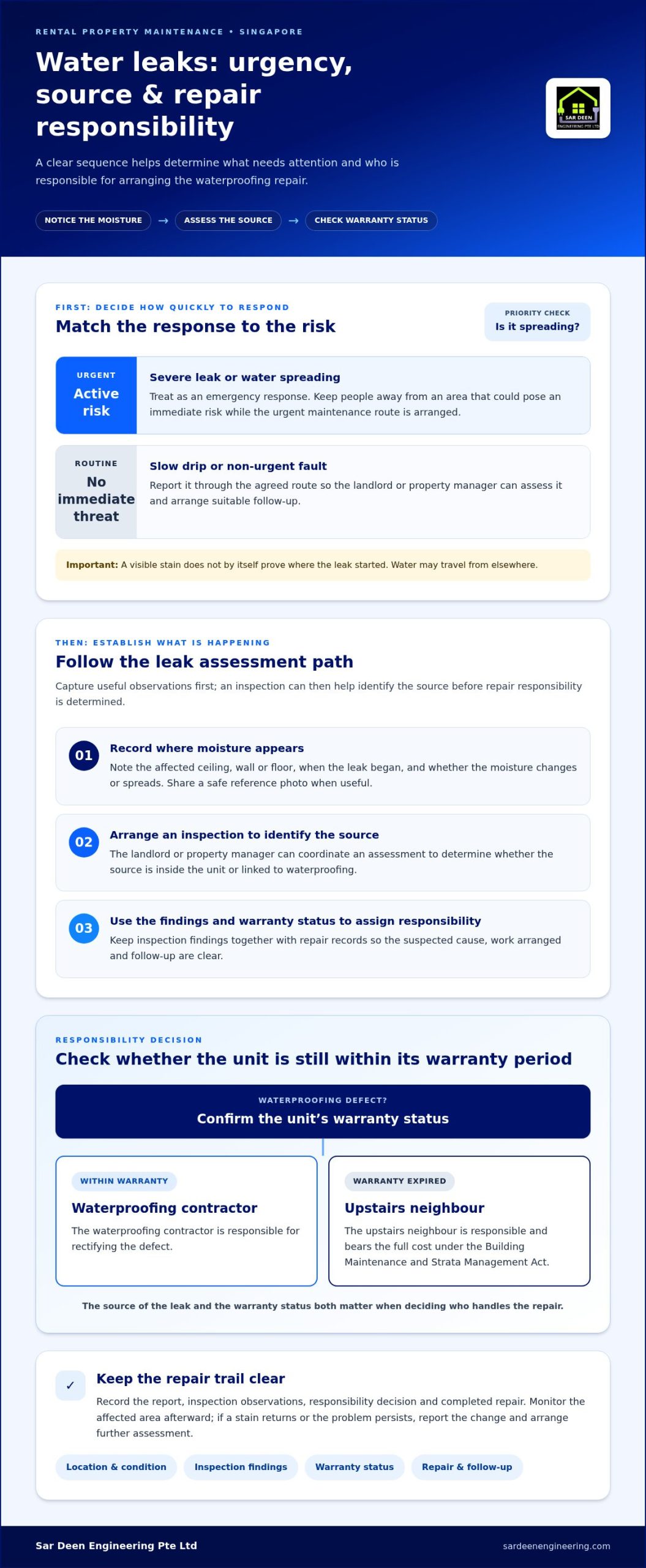
Water leaks need prompt attention because moisture can spread beyond the visible stain. Responsibility for waterproofing repairs can depend on whether the unit is still within its warranty period.
What maintenance services do Singapore landlords typically include in a rental agreement? Agreements commonly explain how tenants report repairs, who arranges routine work and how urgent issues are handled. They can also clarify access arrangements and responsibility for repair costs.
Routine and Emergency Repairs
Routine repairs address wear or faults that don’t pose an immediate threat, while emergency repairs respond to active risks such as severe water leaks. This distinction helps a landlord or agent set priorities and arrange a suitable response. A slow drip beneath a sink needs attention, but an active leak spreading across a ceiling calls for faster action. Clear reporting helps tenants understand which route to use.
For water damage, first record where moisture appears and whether it changes. A tenant can note when the leak began and share a safe photo of the affected ceiling, wall or floor. The landlord or property manager can then arrange an inspection to identify whether the source is inside the unit or linked to waterproofing. Don’t treat a stain alone as proof of the source, since visible water can travel from elsewhere.
In Singapore, if a unit is still within its warranty period, the waterproofing contractor is responsible for rectifying the defect. After the warranty expires, the upstairs neighbour is responsible and bears the full cost under the Building Maintenance and Strata Management Act. Warranty status and the source of the leak therefore matter when deciding who handles the repair. Keep inspection findings and repair records together to make the cause and responsibility easier to follow.
Preventive Maintenance and Repairs
Preventive maintenance means monitoring the property and addressing early signs before damage spreads. Regular checks around bathrooms, kitchen sinks, window edges and tiled floors can reveal dampness, loose grout or recurring stains. Record each finding with its location and date, then compare it with earlier notes. This gives landlords and agents a clearer picture of whether a repair worked or the problem returned.
After a repair, monitor the affected area rather than assuming the visible mark tells the whole story. For example, if a ceiling stain reappears after drying, report the change and arrange further assessment. A tile repair service can address damaged tiles, while persistent water ingress still needs its source identified. Keeping the repair scope focused helps prevent cosmetic work from hiding an unresolved leak.
Addressing rental property maintenance issues early can prevent small problems from becoming more extensive repairs. Prompt attention also gives the responsible parties a chance to assess concerns before further work is needed.
Booking details, access arrangements and scheduling
A repair booking works best when the tenant, landlord and maintenance contact share the same details. For a Singapore rental flat, include the property type, affected area, issue and access notes. State whether the tenant will be present or whether another named contact can provide access. These details help the person arranging the visit plan the appointment around the property’s access requirements.
Start the request with the service name and exact location. “Tile service, bathroom floor beside the shower” is more useful than “problem in bathroom.” Add when the issue began and whether it has changed. For recurring repairs, record the location, timing and any previous repair or adjustment, if known. A safe reference photo can clarify visible damage, but don’t enter an unsafe area to take one.
Scheduling depends on practical constraints as well as the repair itself. A tenant may need an agreed arrival window, while a building may have access procedures for contractors. Share operating hours, entry instructions and any restrictions before confirming a visit. If a repair affects a shared area, identify the relevant access point and the person coordinating entry. Clear expectations reduce missed appointments and repeated arrangements.
- Property: identify the unit or premises and the affected room.
- Issue: name the problem and note when it appears.
- Access: give entry instructions and the on-site contact.
- Timing: provide suitable windows and relevant operating hours.
- History: mention earlier repairs or adjustments, if known.
For business-property maintenance, confirm operating hours, access rules, service frequency and the agreed work scope. For example, a repair inside a shop may need to fit around customer hours. A clear schedule helps the tenant or business contact prepare the area and gives the person arranging the work a practical basis for booking.
Before the visit, clarify who approves the work and how payments are handled. Property management may coordinate repairs and rental payment records, but the repair approval and payment route should be clear between the landlord, tenant and managing contact. Keep the agreed scope and any cost approval in writing. This record helps avoid confusion if the job changes after inspection.
After booking, share changes promptly. If the tenant can no longer provide access or the issue worsens before the appointment, update the maintenance contact. A new leak or a spreading crack may change the priority or required work. Keep the original report, appointment details and follow-up notes together so everyone can track what was arranged and what remains outstanding.
Keep the opening message focused on the repair request: name the service and give the exact location before adding other details. Then identify the property type and affected area, explain how access can be arranged, and include a reference photo only if it can be taken safely. Together, these details give the maintenance contact a concise account of what needs attention and where, while the access notes help plan the booking. If taking a photo would be unsafe, describe the affected area and location clearly in writing instead.
Emergency maintenance and urgent property protection
An emergency needs a different response from routine maintenance. A severe water leak, electrical failure, gas leak, fire hazard, heating failure or insecure door can threaten occupants or damage a rental unit. Identify the immediate risk, keep people clear and use the property’s agreed urgent reporting route.
What are the risks of delaying rental property repairs in Singapore? A leak can spread into ceilings, walls and floors, while an electrical fault can create a safety concern. Delays may also disrupt a tenant’s use of the home and allow a small repair to become more extensive.
Judge urgency by what is happening now, not just by the appearance of the damage. Water actively entering a room is different from an old, dry stain. A sparking socket is different from a loose cover. If an area is hot, wet, sparking, unstable or structurally concerning, keep people away while you confirm the urgent maintenance route. Don’t touch exposed wires or enter an unsafe area to take a photo.
- Fire hazard or gas leak: move away from the affected area and report the danger through the emergency route.
- Electrical failure: avoid wet or sparking equipment and keep occupants clear.
- Severe water leak: protect people from the affected space and report where water is entering.
- Insecure door or window: report the access risk and identify the opening involved.
Property management companies can coordinate emergency repairs and update landlords. The agreed process may allow urgent action before owner approval, followed by notification. For non-emergency expenses, the owner is generally consulted first under the management arrangement. Clarify these expectations before a crisis, including who receives the report and who can authorise action.
Give the manager concise details: the property location, the danger, when it began and whether it is worsening. For example, say that water is entering beneath a bathroom door rather than reporting only “a leak.” Mention whether occupants are present and which areas they have avoided. These details help property managers assess the immediate priority and coordinate access.
Regulations and building procedures can shape how repairs are arranged, especially when a problem affects shared areas or building systems. Keep the incident report, access notes and repair updates together. A record of a leak’s location and progression helps explain why urgent work was arranged and what follow-up remains.
Once immediate danger is controlled, arrange an assessment of the cause and affected areas. A ceiling stain after a leak, for example, may still need attention after visible dripping stops. Record the repair outcome and monitor the area for returning moisture. This completes the emergency response and helps identify any further maintenance required.
Maintenance scope and quote preparation
A useful quote starts with a clear description of the work, not just a symptom. Note the property type, affected area, task, priority and preferred timing. For example, “water mark on the bedroom ceiling” identifies a location, while “check the flat” leaves the repair contact guessing. A managing agent can combine the tenant’s report, access details and available photos into a practical work brief.
Separate visible symptoms from suspected causes. A damp patch may need assessment before the repair can be defined. List what you can observe, such as when it appears, whether it spreads and any earlier repair. Don’t disturb specialist systems while preparing the maintenance list. The maintenance professional needs accurate observations, not an attempted dismantling that could cause further damage or obscure the original issue.
- Property and location: identify the unit, room, floor or common area.
- Task and priority: describe each issue and note which needs attention first.
- Timing and contact: give suitable access times and the responsible person’s details.
- Reference material: include safe photos and known repair history.
- Grouping: organise several items by room, floor, common area or access point.
Group tasks when a visit involves several jobs. A list might include a loose tile in the bathroom, a wall mark in the living room and a faulty light switch near the entrance. Separate locations help define the scope and show whether tasks need different access arrangements. They also make it easier to record which items were assessed, completed or left for follow-up.
The quote depends on the defined tasks, condition, access and any findings from an assessment. The price is provided after a quote request, with the work involved, affected areas, access requirements and materials shaping the cost. A quote is easier to understand when its scope names the repair, location and expected work. If an inspection changes the understanding of the problem, clarify the revised scope before proceeding.
Understanding the property helps landlords and managing agents set priorities without treating every defect alike. A cosmetic wall mark differs from a damaged tile that may worsen with use. A leaking tap and air-conditioning servicing are distinct maintenance tasks, each requiring its own scope. Leave specialist systems untouched while documenting symptoms for the relevant repair.
For a defined repair, a focused request helps establish the work required. Share the location, condition and safe reference photos when arranging a tile repair quote. Keep the agreed scope with the maintenance record, so the landlord, tenant and contractor can follow what the visit covers.
Sar Deen Engineering Pte: Condo painting
Sar Deen Engineering Pte Ltd is a practical option when a rental unit needs condo painting or specific fixture and surface work. Turn to the company for condo painting when worn or marked walls need attention between tenancies. Other relevant services include toilet bowl installation and replacement, epoxy grouting and water heater installation.
Match the request to the actual issue. For example, ask about epoxy grouting for grout-related work, rather than treating it as a solution to an unidentified leak. A clear description of the affected area helps define the task and scope. These focused services suit individual maintenance needs, not a full-scale renovation.
Contact Sar Deen Engineering Pte Ltd to discuss your rental property maintenance needs.
Make the next maintenance decision easier
Use your maintenance records to shape a practical plan for the property’s next tenancy stage. A move-in, tenant change or planned refresh can be a useful opportunity to address visible wear and needed fixture work. This makes rental property maintenance services in Singapore part of a considered plan to protect the home’s condition, rather than a response only after problems appear.
Sar Deen Engineering Pte Ltd can help with targeted property work, including condo painting, toilet bowl installation and replacement, and epoxy grouting. These services suit specific needs, such as refreshing walls or repairing worn grout, without treating every issue as a larger project. When you enquire, describe the task and affected area so the work can be discussed clearly.
Choose the repair or improvement that matters most to your property now. Contact Sar Deen Engineering Pte Ltd to discuss your maintenance needs and take a clear next step toward a well-cared-for rental home.
Frequently Asked Questions
How much do rental property maintenance services cost in Singapore?
The price is provided after a quote request, with the task, affected area, property condition, access and materials shaping the cost. To compare the proposed work with your needs, describe each issue separately and request a clear scope. For example, distinguish a blocked drain from a dripping tap. Before approving extra work, make sure the revised scope and cost are clear.
How can landlords arrange urgent plumbing, electrical, air-conditioning, or lock repairs in Singapore?
Landlords can use their agreed property-management or maintenance contact to report urgent repairs. State the property location, what has failed and whether the issue is worsening. A blocked drain, faulty socket, insecure lock and air-conditioning fault require different repair categories, so describe the specific problem. Keep occupants clear of hot, wet, sparking or unstable areas, then share safe access details. Record who is coordinating the repair and any approval given.
What maintenance checks should landlords do between tenants in Singapore?
Before a new tenancy, inspect the property room by room and record defects for comparison later. Test taps and toilet flushing, look for slow drainage, check visible tiles and grout, and confirm doors and locks operate properly. Look for wall marks, damp patches, loose fittings and damaged-looking switches. Note existing wear separately from new concerns, and arrange repairs before handover so the incoming tenant starts with a clear condition record.

