7 Warning Signs of Electrical Wiring Problems at Home
Could a flickering light be a minor annoyance, or a clue to a more serious electrical fault? If you’re searching for “warning signs electrical wiring problems home,” you’re likely trying to work out whether a tripping breaker, warm socket or unusual smell needs urgent attention. These signs aren’t a diagnosis, but they’re worth taking seriously.
It’s sensible to want a clear answer before deciding what to do. This guide explains seven common warning signs, what they may indicate and when to stop using an affected outlet, switch or appliance. You’ll also learn what to do safely while arranging professional help.
Some issues may point to a faulty connection or overloaded circuit, while others need closer inspection to identify the cause. Don’t open wiring or attempt a repair yourself. Sar Deen Engineering Pte Ltd provides residential electrical services, including power socket and switch repair. Read on to recognise the clues and choose a safe next step.
Key Takeaways
- Recognise common signs of electrical wiring problems at home, including burning odours, hot outlets, sparks, buzzing, repeated trips, flickering and damaged cables.
- Treat each symptom as a clue, not a diagnosis. Different issues can cause similar signs.
- Know when to stop using an affected outlet, switch or appliance, and how to distinguish recurring concerns from immediate hazards.
- While arranging help, record where and when the symptom occurs, how often it happens and which devices are involved.
- Understand how an electrical assessment can clarify the concern and how power socket and switch repair can address relevant issues.
7 Warning signs of electrical wiring problems at home
A symptom is a clue, not a diagnosis. A light may flicker for several reasons, and a warm socket doesn’t by itself prove that the wiring is faulty. A warning sign is an observable change that deserves attention, not proof of a specific fault. Recognising the warning signs electrical wiring problems home occupants may notice can help you decide what to stop using and what to report.
Electrical wiring carries power through a home, but a visible or sensory clue can come from wiring, a connection, a device or another fault. The overview of electrical wiring offers background on how wiring systems work. Keep your own check to observing from a safe distance. Don’t dismantle or handle anything.
What should you look for around sockets, switches and cables?
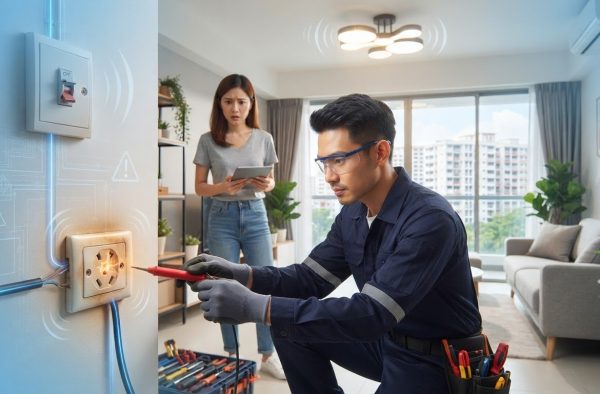
Look for changes without touching or moving the component. Discolouration, scorch marks, cracks, loose-looking fittings and exposed or frayed cable insulation all deserve attention. A surface mark may be cosmetic, but appearance alone can’t establish whether it is harmless or linked to an electrical problem. Don’t open, adjust or handle damaged electrical components. Keep people away from visibly damaged cables and note where the damage is.
Which sounds, smells and changes in operation matter?
Burning or melted-plastic odours, buzzing, crackling, sparks and unusual warmth are reasons to take notice. Odours may come and go, so note when you notice them rather than trying to locate the source by handling equipment. Flickering or dimming lights deserve closer attention if they recur or happen alongside heat, sounds or a burning smell. A single change doesn’t reveal the cause, but a repeated pattern is useful information to share.
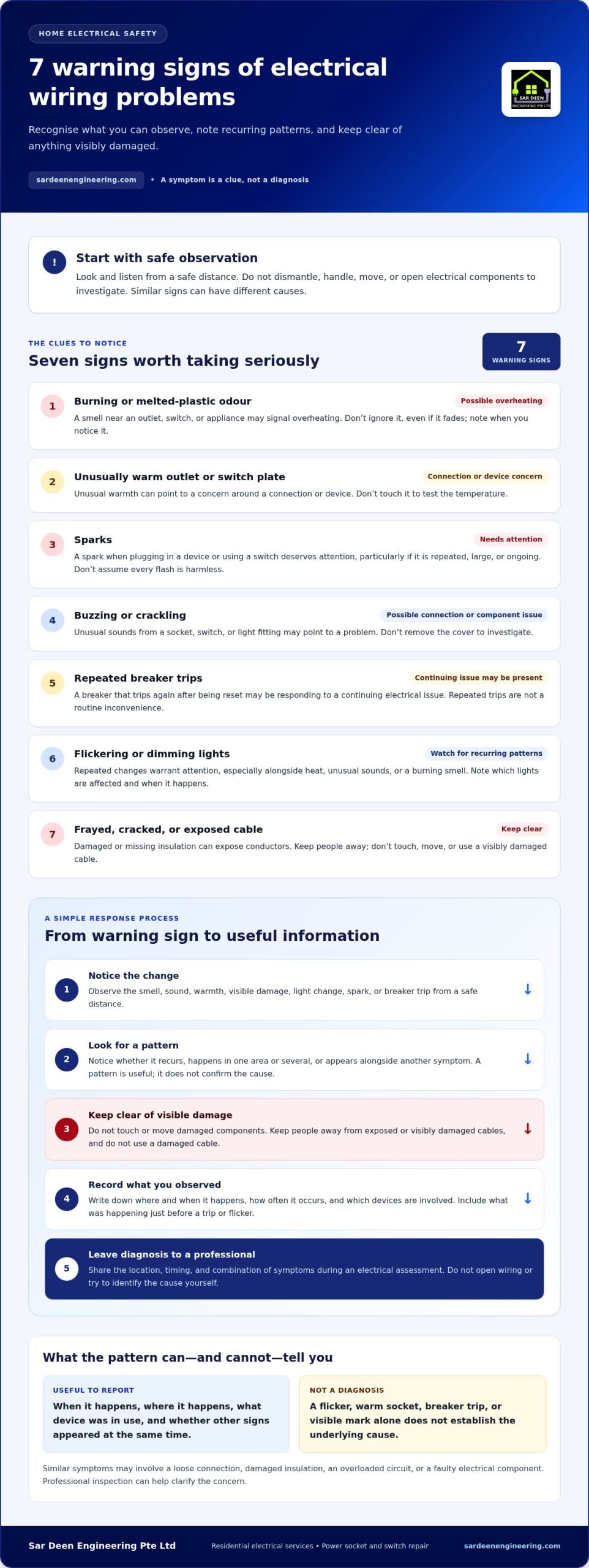
- Burning odour: A smell like burning insulation or melted plastic near an outlet, switch or appliance may signal overheating. Don’t ignore it, even if it fades.
- Hot outlet: An outlet or switch plate that feels unusually warm can point to a concern around the connection or device. Don’t touch it to test the temperature.
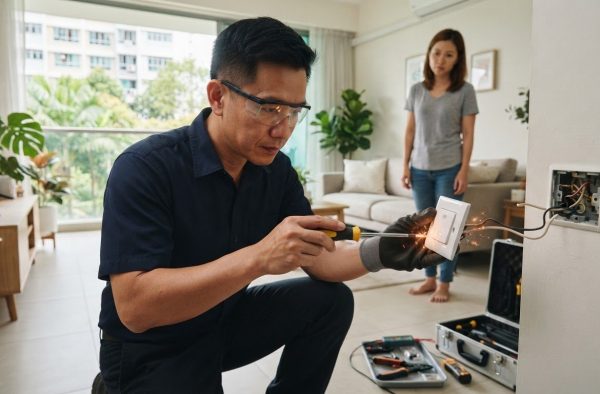
- Sparks: A spark when plugging in a device or using a switch needs attention, particularly if it is repeated, large or ongoing. Don’t assume every visible flash is harmless.
- Buzzing or crackling: Unusual sounds from a socket, switch or light fitting may indicate a problem with a connection or component. Don’t remove the cover to investigate.
- Repeated trips: A breaker that trips again after being reset may be responding to a continuing electrical issue. Repeated trips shouldn’t be treated as a routine inconvenience.
- Flickering or dimming: Lights that repeatedly flicker or dim, especially alongside another symptom, warrant attention. Note which lights are affected and when it happens.
- Damaged cables: Fraying, cracking or missing insulation can expose conductors. Keep clear, and don’t move or use a visibly damaged cable.
What may cause electrical wiring problems and recurring symptoms?
A flicker, unusual warmth or breaker trip can tell you something needs attention, but it can’t identify the cause on its own. Similar symptoms may come from a loose connection, damaged insulation, an overloaded circuit or a faulty electrical component. The pattern matters too. One unexplained flicker is different from recurring flickering combined with a burning smell or repeated breaker trips. Treat symptoms as clues to share during an assessment, not as a diagnosis to make yourself.
Why can lights flicker or breakers trip repeatedly?
Several factors could be involved. A light may flicker when an appliance is in use, for example, but that timing alone doesn’t confirm whether the appliance, circuit load, wiring or another electrical fault is responsible. Repeated breaker trips also have more than one possible explanation. A circuit breaker can interrupt power when it detects a problem, but the trip itself doesn’t establish what caused it.
Look for patterns without testing the circuit. Note whether the symptom happens at a particular time, when a particular device is in use, or in one area or several. If a trip or flicker recurs, record what was happening just before it occurred. Don’t keep resetting a breaker or switch components to try to identify the cause. A simple record can help a professional understand what you’ve observed.
How can heat, odours and damaged insulation develop?
Overheating or deterioration may be involved when an electrical point becomes unusually warm, a burning or melted-plastic smell appears, or cable insulation looks damaged. These signs don’t prove a wiring fault, but they warrant attention because they may involve a connection, component or insulation problem. Scorching and exposed conductors are especially concerning. Don’t touch or move a warm point or damaged cable, and don’t remove covers to inspect what’s behind them.
Consider how symptoms appear together. Recurring flickering accompanied by a buzzing sound, for instance, deserves closer attention than an isolated flicker with no other change. A burning odour near a socket combined with visible discolouration is another pattern to report promptly. These signs still don’t confirm the underlying cause, but they help describe the concern clearly.
Recurring concerns around an outlet or switch call for professional attention. Sar Deen Engineering Pte Ltd provides residential electrical services, including power socket and switch repair. Share the location, timing and combination of symptoms you’ve noticed, and leave investigation of the cause to a professional.
When are home electrical warning signs urgent?
Not every flicker or brief interruption means there’s an immediate emergency. A symptom can have a harmless explanation, but you can’t safely confirm that from appearance alone. The warning signs electrical wiring problems home occupants notice become more urgent when they recur, appear together, or involve smoke, flames or active sparking. Use the situation, not guesswork, to decide what to do next.
What should you do if there is smoke, fire or active sparking?
Smoke, flames or ongoing sparks near electrical equipment are immediate danger signs. Put people’s safety first. Move away and leave the affected area if danger is present, then contact emergency services. Don’t approach the source to investigate or try to manage the hazard yourself.
Keep clear of the outlet, switch, appliance, exposed wire and any nearby water. Don’t touch or move equipment, even if the sparking stops. Avoid re-entering the area while danger remains, and follow instructions from emergency responders. If you’re uncertain whether the situation is safe, move away and seek emergency help.
What if a socket is hot or a breaker keeps tripping?
A hot socket, unusual smell, visible damage or breaker that trips repeatedly may not mean there’s a fire, but it shouldn’t be brushed off as harmless. Stop using the affected socket, switch or equipment. Don’t touch a warm point, plug in another device to test it, or keep resetting the breaker. Repeated trips can signal a continuing issue that needs professional attention.
Use this practical distinction:
- Immediate danger: Smoke, flames or active sparking. Move away from the hazard and seek emergency help.
- Concerning symptoms: Recurring flickering, repeated breaker trips, unusual warmth, burning odours or visible damage without immediate smoke or fire. Stop using the affected point or equipment and arrange professional attention promptly.
A symptom may turn out to have a cause that isn’t dangerous, but there’s no reliable way to decide that by repeatedly using the affected equipment. One brief flicker without other signs is not the same situation as a warm socket accompanied by a burning smell. Likewise, an isolated breaker trip differs from a breaker that keeps tripping after power is interrupted. Patterns and combinations matter.
If the affected area is safe to observe from a distance, note what happened, where it occurred and whether other symptoms appeared at the same time. Don’t open covers, touch damaged components or try to identify the fault by switching electrical parts. These details can help explain the concern when arranging professional help.
For recurring socket or switch concerns, If the situation involves smoke, flames or active sparking, prioritise emergency services rather than routine repair arrangements.
How to reduce electrical risks while arranging an assessment
While waiting for professional help, keep your role simple: observe from a safe distance and avoid using anything that appears damaged or behaves unusually. The warning signs electrical wiring problems home residents notice can help explain what is happening, but investigating inside electrical equipment can create added risk. Don’t open panels or handle wiring to investigate a fault.
What information should you record before help arrives?
A short, factual record can make it easier to describe a recurring issue. Note when it first happened, how often it has occurred, and which room, outlet, switch, light or device is involved. Record what was happening at the time, such as whether a particular device was in use. Stick to what you observed rather than guessing at the cause.
Include any odour, unusual warmth, noise, flickering or visible damage, and note whether more than one sign appeared together. For example, record whether a light in one room flickers repeatedly when a certain device is running. Don’t touch the device or recreate the situation to collect more information. Keep a safe distance, and don’t take a photo or video if doing so means approaching a hazard.
Which prevention habits are safe for residents?
Choose simple steps that don’t involve repair or inspection. Stop using damaged cords, and don’t place cables where doors, furniture or other objects could pinch or crush them. Avoid damaged sockets and exposed cables. If a setup already looks strained, don’t add more devices or connect extra extension cords. Follow the instructions for electrical products, and keep clear of anything that feels unusually warm, smells burnt or shows visible damage.
Everyday home maintenance can also help you keep track of household concerns, without turning a visual check into electrical work. The Home Maintenance Checklist Singapore: A Practical 2026 Guide can sit alongside your notes as a broader reminder to record issues around the home. For electrical concerns, leave panels, wiring and damaged components untouched, even if the problem seems easy to reach.
- Do: Note the location, timing, frequency and devices involved in recurring symptoms.
- Do: Keep people away from damaged cords or electrical points, and stop using affected equipment.
- Don’t: Open a panel, pull at a cable, remove a cover or create a reason to repeat the fault.
Clear observations and a safe distance are useful steps, not substitutes for professional attention. For electrical concerns at home, contact Sar Deen Engineering Pte Ltd about residential electrical services.
Professional help for home electrical wiring concerns
Recognising warning signs electrical wiring problems home occupants report is a useful first step, but it can’t reveal the fault by itself. A flickering light or a warm socket may have several possible causes, and there’s no reliable way to diagnose a home electrical issue remotely. Professional attention can help establish what needs attention and what action may be appropriate.
What happens during a home electrical repair assessment?
The concern you describe, the affected point and the symptoms you’ve observed help guide the assessment. For example, a recurring issue at one switch may need a different response from symptoms affecting several areas. Details such as when it happens, how often it occurs and whether signs appear together can help focus attention on the relevant concern.
An assessment can help determine whether the issue relates to the affected socket or switch, another electrical component, or a wider concern that needs a different next step. The appropriate work depends on what the assessment establishes. A symptom alone can’t confirm that rewiring is needed, and this article can’t specify a repair method or timeline. Avoid opening covers or attempting tests yourself. Share what you’ve noticed and let a professional assess the issue.
Before arranging help, it can be useful to have a brief description ready:
- Location: Identify the room and the outlet, switch, light or other point involved.
- Pattern: Note when the symptom occurs and how often it returns.
- Related signs: Mention any unusual sounds, odours, warmth, flickering or visible damage you observed.
- Devices involved: Say whether a particular device was in use when the symptom appeared.
These notes don’t determine the cause, but they give a clearer account of the concern than a guess about what might be wrong. If there is smoke, fire or active sparking, prioritise emergency help rather than waiting for a routine repair.
How can Sar Deen Engineering help with home electrical issues?
If your concern involves recurring symptoms at a socket or switch, the company can help address the issue through its repair service. The appropriate work depends on the problem, so don’t assume every wiring concern has the same cause or solution.
For a practical next step, explore home electrical services and learn about the electrical support available for homeowners. Describe the affected point and the symptoms you’ve recorded so the concern is clear.
Take the next step with confidence
Noticing warning signs electrical wiring problems home occupants experience can raise questions, but you don’t have to work out the cause alone. Treat your observations as useful information, then choose a safe next step rather than attempting an electrical repair yourself. Clear action can make the concern easier to address.
Home maintenance services also include electrical fixture and ceiling fan installation. The right work depends on the issue, so start by describing what you’ve noticed and where it occurs.
Explore Sar Deen Engineering home electrical services and contact the company about the concern you’ve observed. Taking it seriously is a steady first step toward greater peace of mind at home.
Frequently Asked Questions
Is flickering light always a sign of faulty wiring?
No. Flickering can have several causes, including a bulb, fitting, appliance or circuit issue, so it doesn’t prove the wiring is faulty. Notice whether one light or several are affected, and whether the flickering begins when a device starts running. That pattern can help describe the issue. If it keeps happening or occurs with heat, noise or a burning smell, stop using the affected point and arrange professional attention.
Can I keep using a power socket that feels warm?
A socket that feels unusually warm should be left unused until it has been assessed. Don’t touch it again to compare temperatures, plug in another device, or remove its cover. If there’s also discolouration, buzzing, sparks or an unusual smell, mention those details when arranging help. Smoke, flames or active sparking change the situation: move away from the hazard and seek emergency help.
What should I do if my circuit breaker keeps tripping?
Don’t keep resetting a breaker or reconnecting the same appliances to see whether it trips again. Instead, note which devices were running and what part of the home lost power. For example, record whether the interruption happened while one appliance was in use or several were operating. Leave the affected circuit alone and arrange professional attention. Smoke, burning smells, sparks or unusual heat make the situation more urgent.
Can an overloaded extension cord cause an electrical problem?
It can contribute to electrical concerns, particularly if too many devices are connected or the cord is damaged, pinched or kinked. Follow the product’s instructions and stated capacity, and avoid using extension cords as a permanent replacement for suitable outlets. Stop using a cord that feels hot, smells unusual or has visible damage. If you regularly need extra connections in one area, have the outlet arrangement assessed.
Is a burning smell from a switch or outlet dangerous?
Treat a burning or melted-plastic smell near a switch or outlet as a serious warning, even if there’s no visible smoke. Stop using that point and any equipment connected to it. Don’t remove the cover or investigate inside the wall. Arrange professional attention and describe where the smell is strongest. If smoke, flames or active sparking appear, move away from the area and seek emergency help.
Do older homes always need complete rewiring?
No. Age alone doesn’t show whether a home needs complete rewiring. The phrase “warning signs electrical wiring problems home” points to symptoms that merit attention, not a verdict on the work required. The condition of the installation, past changes and assessment findings all matter. A professional can evaluate the specific concern and help establish an appropriate next step, without assuming that full replacement is necessary.