Door Lock Replacement Singapore: A Practical Step-by-Step Guide
Choosing a new lock before checking the door can turn a simple fix into a poor fit. If you’re searching for door lock replacement Singapore, you may be unsure whether a sticking key, loose handle or unreliable latch needs adjustment or a full change. The right choice depends on the fault, lock type and door, not just the look of a new lock.
A replacement should improve security without creating fitting or compliance problems. This matters especially for HDB fire-rated main doors, where digital locksets must meet certification requirements and installation should involve minimal modification. Private-property doors may have different requirements, so check what applies before choosing.
This guide explains how to spot signs that replacement may be needed, identify common mechanical and digital lock types, and check the door and hardware before selecting a new lock. You’ll also learn when professional help makes sense and what to ask before arranging work. Sar Deen Engineering Pte Ltd provides residential door lock and handle replacement in Singapore for jobs where diagnosis or fitting feels beyond your comfort.
Key Takeaways
- Lost keys, recurring jams or visible damage warrant a closer check, but the symptom alone may not mean the lock needs replacing.
- Before choosing a replacement, note where the lock is fitted and check the door’s thickness, handing and existing cut-outs.
- DIY may suit a straightforward change if you understand the lock and its instructions. Incorrect fitting can affect operation or damage the door.
- For door lock replacement Singapore, prepare photos of the lock, door edge, handle and surrounding hardware to explain the job clearly.
- Before work begins, confirm the proposed replacement, work scope and how the completed installation will be tested.
Door Lock Replacement in Singapore: When Is It Better Than Repair?
Lost keys, repeated jamming, visible damage or a change in occupants can all raise the question of whether it’s time for a new lock. But a difficult key or door that won’t latch doesn’t automatically mean the lock has failed. The cause could be a loose handle, a misaligned door or a strike plate that no longer lines up.
Before arranging door lock replacement Singapore, observe what happens instead of forcing a quick fix. A brief symptom check can help you work out whether the problem looks like an adjustment, repair or replacement.
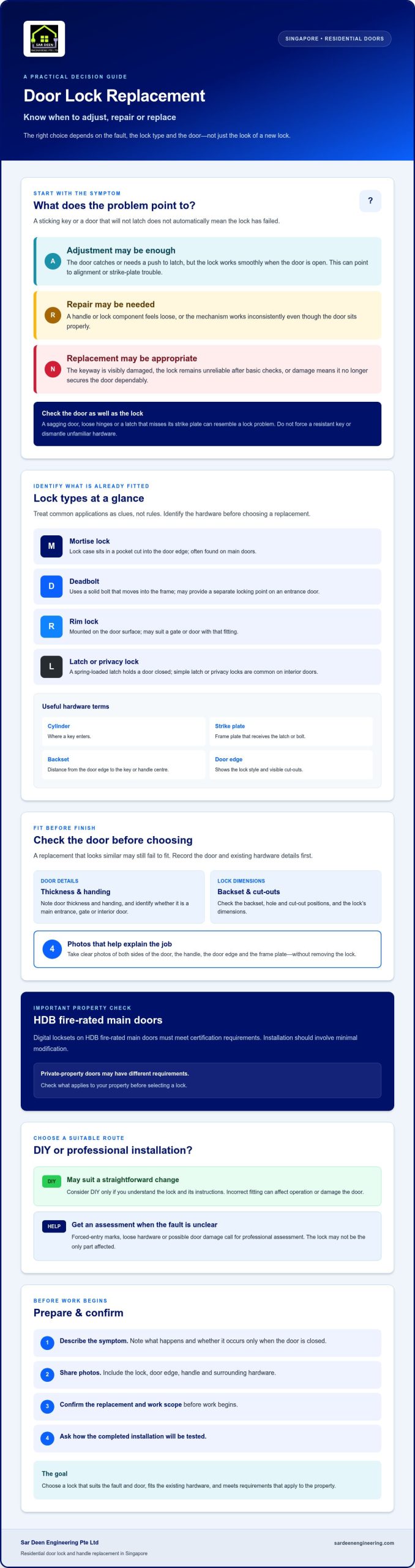
- Adjustment may be enough: The door catches or needs a push to latch, but the lock works smoothly when the door is open. This can point to alignment or strike-plate trouble.
- Repair may be needed: A handle or lock component feels loose, or the mechanism works inconsistently even though the door sits properly.
- Replacement may be appropriate: The keyway is visibly damaged, the lock remains unreliable after basic checks, or damage means it no longer secures the door dependably.
Signs a door lock may need replacement
Look for persistent sticking, a key that won’t turn normally, visible damage around the keyway or a lock that no longer holds securely. These signs can indicate wear or damage, but check the surrounding door too. A sagging door, loose hinges or a latch that misses its strike plate can resemble a lock problem. If keys are lost or occupants have changed, consider whether the existing access arrangement still feels secure, even if the mechanism works normally.
Don’t force a key that resists turning. It could break or worsen the damage. Avoid dismantling unfamiliar hardware, especially if you can’t tell whether the issue is with the lock or the door.
When repair or realignment may be enough
A misaligned door or strike plate can stop the latch from entering its opening cleanly. Notice whether the issue happens only when the door is closed, changes when you lift or press the door, or affects every key in the same way. These details can help distinguish a door-fit issue from a faulty lock. If you’re unsure what type is installed, this overview of types of door locks can help you describe it.
Forced-entry marks, loose hardware or possible damage to the door call for professional assessment. The lock may not be the only part affected, and replacing it without checking the cause could leave the security problem unresolved. If you can’t confidently identify the fault, ask a professional to assess whether repair, realignment or replacement is the more suitable next step.
Identify Your Lock and Door Before Choosing a Replacement
A replacement that looks similar may still fail to fit. First identify where the lock is installed and note how the door is built. A main entrance door, metal gate and interior room door may use different hardware. Photos and a few measurements can help a supplier or installer assess what may fit without removing the existing lock.
Mechanical lock types and the parts to recognise
A mortise lock sits in a pocket cut into the door edge, while a deadbolt uses a solid bolt that moves into the frame. A latch is the spring-loaded part that holds a door closed. The cylinder is where a key enters, and the strike plate is the metal plate on the frame that receives the latch or bolt.
Common applications vary, so treat these as clues rather than rules:
- Mortise lock: Often found on main doors, with a lock case built into the door.
- Deadbolt: May provide a separate locking point on an entrance door.
- Rim lock: Mounted on the door surface, and may be used on a gate or door where that fitting suits.
- Simple latch or privacy lock: Common on interior doors, such as bedrooms or bathrooms.
Without taking anything apart, photograph both sides of the door, the handle, the door edge and the frame plate. These views can show the lock style, visible cut-outs and how the hardware sits. For general background on residential lock standards, BHMA explains grading factors such as security and durability. Use that as consumer context, not as a substitute for checking requirements that apply to your property in Singapore.
Door compatibility and digital-lock considerations
Before selecting a replacement, check the door’s thickness, lock backset, which is the distance from the edge to the key or handle centre, hole and cut-out positions, and the lock’s dimensions. Note the door’s handing, meaning which way it swings and where its hinges are, plus its material and whether the lock is fitted to the door or gate. Ask the supplier or installer to compare these details with the specific lock’s requirements. Compatibility isn’t universal.
Mechanical locks use a key and may need little more than routine attention to the keyway and moving parts. Digital locks may use a PIN, card, fingerprint or app, and need battery care and a plan for access if the usual method isn’t available. Their suitability depends on the door’s construction, space around the hardware and the lock maker’s installation requirements. If it’s an HDB fire-rated main door, verify applicable requirements before changing the lock. For rented or managed property, check with the landlord or management before altering the door.
If you’re unsure what the existing lock or door can accept, Sar Deen Engineering Pte Ltd provides residential door lock and handle replacement. Share clear photos and any measurements you have, then confirm the lock type and door compatibility before arranging work.
Door Lock Replacement: DIY or Professional Installation?
A simple like-for-like change may be manageable if you understand the lock, have the correct replacement and can follow its instructions precisely. Complex hardware, unfamiliar fittings or a door that’s already damaged can make professional help more practical. The goal isn’t to avoid DIY at all costs. It’s to avoid turning a manageable job into a lock that sticks, a damaged door or an entrance that doesn’t secure properly.
What a straightforward replacement may involve
Before starting, photograph the existing lock and compare its visible parts and measurements with the replacement instructions. Check that the new lock is intended for the door and matches its existing holes and cut-outs. Keep the door open throughout fitting so it can’t close before you’ve confirmed the latch and lock work correctly.
Follow the manufacturer’s steps, and don’t force a component that won’t sit or turn smoothly. Avoid enlarging holes, cutting new openings or altering the door unless you have the right knowledge and are sure the change is appropriate. If the instructions don’t match the hardware in front of you, pause rather than guess.
Before closing the door, test the handle, latch and locking action several times from both sides, where applicable. Check that the key or other access method works smoothly and the door closes without extra pressure. If the lock works only while the door is open, there may be a fitting or alignment issue that needs attention.
When to call a door lock professional
Consider professional assessment if the lock is stuck, the door or surrounding area is damaged, or you can’t identify how the hardware is fitted. A professional can help assess whether the issue lies with the lock, its fit or the door itself. This is especially useful if access could be affected or the work involves a shared or managed property with requirements you need to check first.
Before arranging help, describe the door and lock, explain the symptoms, and ask what the proposed work includes. Confirm whether assessment, replacement hardware, fitting and post-installation testing are within the agreed scope, and ask about any exclusions. Sar Deen Engineering Pte Ltd provides residential door lock and handle replacement in Singapore. Confirm that your lock and door type can be accommodated before proceeding.
Key takeaway: The right replacement depends on both the lock specifications and the door fit. If either is uncertain, get advice before buying or installing hardware.
How to Prepare for a Door Lock Replacement in Singapore
A clear description of the fault helps set expectations before work begins. For door lock replacement Singapore, gather a few details and confirm what the proposed job includes. You don’t need to dismantle the lock or identify every technical part. Photos and a plain account of the problem are a useful start.
Follow these steps before arranging work
- Describe the issue. Note which door the lock is on, what happens when you use it, and when the problem started. Mention whether it affects every key or only one.
- Check access. Say whether you have working keys or another way to open the door. Don’t share access codes or sensitive security details in an unsecured message.
- Take clear photos. Photograph the lock from both sides, the door edge, handle and surrounding hardware. Include visible markings, but don’t remove the lock to find them.
- Confirm permission where needed. If you rent, check with your landlord before changing the lock. For a managed or shared property, ask the relevant management contact whether requirements apply.
- Ask what information is needed. A provider may need measurements, door details or additional photos to assess compatibility. Confirm what to provide rather than guessing or modifying the door.
- Agree on the work and test it. Before work begins, clarify what’s included. Once fitting is complete, check the handle and locking action from both sides, where applicable, and confirm the door closes and secures smoothly.
Quick enquiry checklist: door location and type; symptoms and when they occur; whether keys or access are available; photos of the lock, door edge, handle and surrounding hardware; visible lock markings; and any permission or management requirements.
Questions to ask before work begins
Confirm whether the proposed work covers diagnosis, removal of the existing lock, fitting the replacement and operational testing. Ask whether the replacement type and finish suit the door and its requirements. Check whether further work may be needed and whether it falls outside the agreed scope. If any answer is unclear, settle it before work proceeds.
For an HDB fire-rated main door or another door with specific requirements, verify what applies to the property and proposed lock before confirming the change. Requirements can depend on the door and installation, so don’t assume a lock is suitable based on appearance alone.
If you’re ready to discuss the job, request residential door lock and handle replacement from Sar Deen Engineering Pte Ltd and share the details you’ve gathered.
Arrange Door Lock Replacement with Clear Expectations
A clear enquiry helps both sides understand the job before work is arranged. For door lock replacement Singapore, share the symptoms, door type and what you know about the existing lock. Add photos if available. This gives the provider useful context, but the cause and final solution may not be clear until the door and hardware have been assessed.
What to expect from a clear replacement enquiry
Explain what the lock does, when the problem occurs and whether the door is a main entrance, gate or interior door. Mention visible damage, lost keys or a change in occupants. If you know the lock type or can see markings, include that information without removing any parts. Ask whether the provider can assess that door and lock type, and what measurements or further details are needed.
Before agreeing to work, confirm the proposed replacement and its compatibility with the door. Ask what the scope covers, including diagnosis, removal, fitting and operational testing. Check whether additional work may be needed and whether it falls within the proposed scope. Don’t assume a particular lock, finish, timing or outcome is confirmed until the provider has reviewed the details.
Sar Deen Engineering Pte Ltd provides residential door lock and handle replacement in Singapore. If you’re considering professional help, describe the issue and ask whether your specific lock and door type can be accommodated.
After installation: check the lock before relying on it
Test the new lock with the door open first. Check the key or other access method, handle, latch and locking action. Each should operate smoothly without forcing. Then close the door and confirm it latches and locks as expected. If anything catches, feels loose or behaves differently with the door closed, raise it before relying on the lock.
Ask the installer to explain the basic operation and share any care instructions for the specific product. This is especially useful if the lock uses an access method or maintenance routine you haven’t used before. A clear handover helps you understand normal operation and what to check if a problem appears later.
For a residential replacement enquiry, contact Sar Deen Engineering Pte Ltd about door lock and handle replacement. Share the door details and symptoms, then confirm compatibility and the agreed work scope before proceeding.
Make Your Next Lock Change a Confident One
A sticking key or loose handle doesn’t always mean the whole lock needs replacing. First identify the likely cause, then check the lock type and door fit before choosing new hardware. If you arrange professional help, clear photos and a concise description of the symptoms can make it easier to discuss compatibility, work scope and testing before the job begins.
For door lock replacement Singapore, Sar Deen Engineering Pte Ltd provides residential door lock and handle replacement as part of its home maintenance services in Singapore. Confirm that your specific door and lock type can be accommodated, and ask what the proposed work includes before proceeding.
Ask Sar Deen Engineering Pte Ltd about door lock replacement and share the details you’ve gathered. With the right checks and clear expectations, you can move forward with greater confidence.
Frequently Asked Questions
When should I replace a door lock instead of repairing it?
Replace a lock when it’s visibly damaged, stays unreliable after basic checks or no longer secures the door properly. Lost keys or a change in occupants may also make replacement a sensible security choice. However, sticking or difficulty latching can come from a misaligned door, loose handle or strike plate. If the cause isn’t clear, have the lock and door checked before choosing a repair or replacement.
Can I replace a door lock myself in Singapore?
Yes, a straightforward like-for-like replacement may be suitable if you can identify the lock, confirm compatibility and follow the manufacturer’s instructions. Keep the door open during fitting and test the lock before closing it. Don’t force parts or alter the door if you’re unsure. For a damaged door, unfamiliar hardware or an HDB fire-rated main door, check the applicable requirements and consider professional help.
How do I know which replacement lock will fit my door?
Check the existing lock type, door material and thickness, lock dimensions, handing, and the position of current holes and cut-outs. Photograph the lock on both sides, the door edge, handle and frame hardware. Compare these details with the specific replacement’s requirements, or share them with a supplier or installer for checking. Don’t assume a lock will fit just because it looks similar to the one already installed.
Should I replace a lock after losing my keys?
If a lost key could be linked to your home or you can’t account for who might find it, consider changing the lock to restore control over access. The right response depends on the circumstances and the lock. Explain what happened to a professional and ask whether replacing the lock or another suitable measure is needed. If the door or lock was also damaged, request an assessment of both.
Can I change a mechanical door lock to a digital lock?
Possibly, but the digital lock must suit the door’s construction, thickness, available space and existing cut-outs. Check the lock maker’s installation requirements and any landlord or property-management conditions before making changes. For HDB fire-rated main doors, digital locksets must have a Certificate of Conformity to SS 332 or EN 1634-1. Confirm the required certification and suitable installation approach before purchase.
How much does door lock replacement cost in Singapore?
The cost depends on the replacement lock, door compatibility and work required. The final amount may also differ if the job involves more than changing the lock, so don’t rely on a general estimate as a confirmed quote. Ask for the proposed work scope and charges before proceeding. Sar Deen Engineering Pte Ltd provides residential door lock and handle replacement; contact the company to discuss your requirements.
What should I check after a door lock is replaced?
Test the lock with the door open first. Check that the key or other access method, handle, latch and locking action all work smoothly. Then close the door and make sure it latches and locks without extra pressure or forcing the mechanism. If anything sticks, feels loose or behaves differently with the door closed, raise it with the installer before relying on the lock. Ask about basic operation and product-specific care.