Light Fixture Installation in Singapore: Safety, Choices and What to Expect
The fixture you like may not suit your ceiling, mounting point or existing wiring. Before arranging light fixture installation Singapore homeowners should check more than appearance, particularly when the work could involve wiring or changes to the electrical setup.
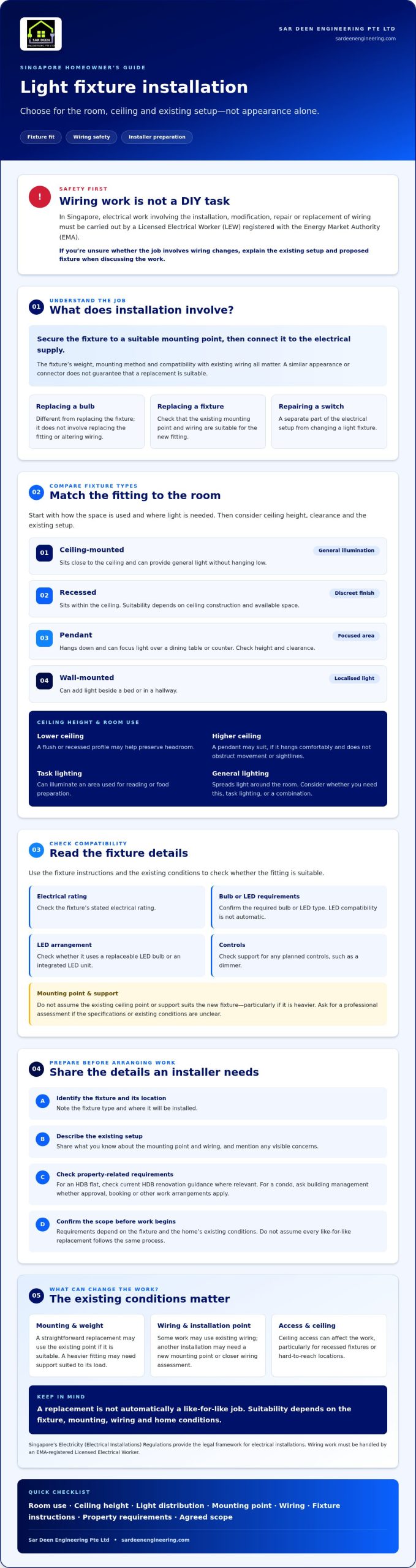
It’s natural to focus first on a new light’s style and brightness. Compatibility and safe installation matter just as much. In Singapore, electrical work involving wiring must be carried out by a Licensed Electrical Worker (LEW) registered with the Energy Market Authority. Don’t attempt wiring work yourself.
This guide covers how to compare common fixture types and assess them against a room’s use, ceiling height and existing setup. It also explains what safety considerations may apply, what details to prepare for an installer and what to expect during the process. Sar Deen Engineering provides residential light fixture and ceiling fan installation in Singapore, offering help when you’re unsure about a fixture’s fit, mounting or wiring requirements.
Key Takeaways
- Compare ceiling-mounted, recessed, pendant and wall-mounted fixtures based on the room’s use, ceiling height and the way you want light distributed.
- For light fixture installation Singapore, consider the existing mounting point and wiring as well as the fixture’s appearance.
- Don’t assume it’s safe to replace a fitting yourself. Electrical work involving wiring must be handled by a Licensed Electrical Worker.
- Before contacting an installer, note the fixture type and location, and describe any visible concerns about the existing setup.
- Confirm the agreed scope before work begins. Installation requirements depend on the fixture and the home’s existing conditions.
What does light fixture installation in Singapore involve?
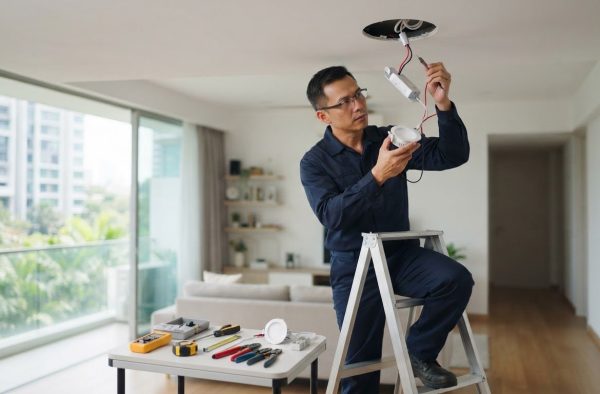
Light fixture installation involves securing a light to a suitable mounting point and connecting it to the electrical supply. A light fixture includes the parts that hold and protect the light source, not just the bulb. Replacing a fixture can involve more than choosing a fitting with a similar appearance or connector. Its weight, mounting method and compatibility with the existing wiring all need consideration.
Replacing a bulb is different because it doesn’t involve replacing the fixture or altering wiring. Switch repair addresses a separate part of the electrical setup. Installing a ceiling fan involves the fan and its mounting requirements, even if it also has a light. Sar Deen Engineering lists light fixture and ceiling fan installation among its residential services.
Which parts of a light fixture installation can vary?
A straightforward replacement may use the existing mounting point and wiring, provided they’re suitable for the new fixture. Another installation may need a new mounting point or a closer assessment of the wiring. Don’t assume every replacement follows the same process.
Consider the fixture’s weight and how it will be supported. A heavier fitting may need a mounting arrangement suited to its load. Access to the ceiling can also affect the work, particularly for recessed fixtures or hard-to-reach locations. Share what you know about the fixture and any visible concerns when discussing the job.
What should Singapore homeowners check before planning?
Start by identifying whether your home is an HDB flat or a private residence. Requirements can depend on the property and the work involved. For HDB flats, check current HDB renovation guidance where relevant. For condos, ask building management whether approval, booking or other work arrangements apply. Check the relevant requirements before scheduling, rather than assuming a like-for-like replacement is exempt.
Singapore’s Energy Market Authority (EMA) states that electrical work involving the installation, modification, repair or replacement of wiring must be carried out by a Licensed Electrical Worker (LEW) registered with EMA. Homeowners shouldn’t undertake wiring work themselves. If you’re unsure whether the job involves wiring changes, explain the existing setup and proposed fixture when asking about light fixture installation Singapore. The scope depends on the fixture and the home’s existing conditions.
Which light fixture types suit different rooms and ceiling setups?
Choose a fixture for how you use the room, not only for its appearance. Ceiling-mounted lights sit close to the ceiling and can provide general illumination without hanging low. Recessed lights sit within the ceiling for a discreet finish, but their suitability depends on the ceiling construction and available space. Pendant lights hang down and can focus light over a dining table or counter. Wall-mounted fixtures can add light beside a bed or in a hallway.
Each type distributes light differently. A central fitting may brighten a room overall, while a pendant or wall light can draw light to a particular area. Decide whether you need broad room lighting, a brighter area for a task, or a combination. Consider glare and clearance too, especially above walkways and dining areas.
How do ceiling height and room use affect fixture choice?
In a room with a lower ceiling, a flush or recessed profile may help preserve headroom. A higher ceiling may suit a pendant, as long as it hangs at a comfortable height and doesn’t obstruct movement or sightlines. Focused task lighting can help illuminate an area used for reading or food preparation, while general lighting spreads light around the room. Consider the fixture’s position in relation to furniture and the way people use the space.
What compatibility details should you check?
Read the fixture instructions for its electrical rating, bulb or LED requirements and mounting method. LED compatibility isn’t automatic. Check whether the fitting uses a replaceable LED bulb or an integrated LED unit, and whether it supports any controls you plan to use, such as a dimmer. Don’t assume the existing ceiling point or support is suitable, particularly for a heavier fixture. If the specifications or existing conditions are unclear, ask for a professional assessment before proceeding.
Electrical work in Singapore must also meet applicable requirements. The Electricity (Electrical Installations) Regulations provide the legal framework for electrical installations. For work involving an electrical installation or wiring, confirm whether a Licensed Electrical Worker (LEW) is required and arrange qualified help when needed. This is especially important if the new light may need a different connection or mounting arrangement.
Before arranging light fixture installation Singapore, make a note of the room, ceiling type, fixture details and anything you’re unsure about at the existing point. If you need help with a residential fixture or ceiling fan installation, you can review light fixture installation services from Sar Deen Engineering.
Can you install a light fixture yourself? Safety and common misconceptions
A fixture may look simple to swap, especially when the new one appears to have matching wires. But appearance doesn’t confirm that the wiring is safe, the circuit is isolated or the ceiling can support the fitting. A poor connection or loose mounting can create a risk of electric shock, overheating or the fixture coming loose.
In Singapore, the Energy Market Authority (EMA) says electrical work involving the installation, modification, repair or replacement of wiring must be carried out by an EMA-registered Licensed Electrical Worker (LEW). Homeowners must not carry out DIY wiring work. If you’re unsure how the rules apply to your job, check EMA’s electrical safety guidance for engaging Licensed Electrical Workers. Replacing a bulb is different from handling wiring or installing a fixture.
When should you stop and call an electrical professional?
Stop if you notice unfamiliar wiring, loose connections, damaged insulation, scorch marks, unusual heat, a burning smell or a circuit behaving unexpectedly. Don’t touch exposed conductors or work on an energised circuit. Turning off a switch alone doesn’t prove that the wiring is safe to handle. If you see damage or aren’t sure how to isolate the supply, keep clear and arrange a qualified assessment.
These signs may point to an issue beyond the fixture itself. Don’t cover heat marks or try to secure a loose connection as a quick fix. Explain what you observed when arranging help, and don’t continue with installation until the concern has been checked.
Does a new fixture always fit the old ceiling point?
No. A replacement can differ in weight, mounting arrangement or wiring requirements. The existing ceiling point may not provide suitable support for a heavier fitting, and older or damaged wiring may need attention. An adaptor that fits, or a fixture that looks like the original, doesn’t confirm safe electrical or mechanical compatibility.
Share the fixture instructions and any information you have about the existing setup with the professional assessing the work. If the mounting, wiring or support is uncertain, ask for it to be checked before installation proceeds. Sar Deen Engineering provides residential light fixture and ceiling fan installation in Singapore and may be a practical option when you need help understanding the installation scope. When you enquire through light fixture installation services, check that the requested fixture and conditions can be accommodated.
How should you prepare for light fixture installation in Singapore?
Sharing a few details before the visit can help clarify what the installation involves. Note the fixture type, the room and its position on the ceiling or wall. Say whether it’s replacing an existing light or being installed in a new location. Keep the fixture instructions or specifications available to discuss with the service provider.
What information should you share before booking?
Describe what you can see without trying to diagnose wiring or mounting issues. For instance, mention visible damage, a high ceiling, limited access or furniture that may be difficult to move. Ask what can be confirmed from the information you provide and what may need an on-site assessment. This helps set expectations without assuming every job follows the same process.
- Fixture type and intended location
- Whether it replaces an existing light
- Visible concerns, such as marks, damage or loose parts
- Ceiling height, access limits and nearby furniture
- Any building-management or renovation requirements you’ve been asked to follow
Before arranging light fixture installation Singapore, clear the area around the work location as far as practical. Move breakable items and furniture that could obstruct access, or ask what needs to be shifted. If you live in a condo, check with building management about any approval, access or work procedures that apply. For HDB or other homes, confirm relevant requirements with the appropriate authority or property manager instead of assuming the rules are the same for every property.
How can lighting work fit around other home maintenance?
If you’re also planning painting or ceiling finishing, consider the order of work. Discuss scheduling with the relevant providers so access, fixture removal and finished surfaces are taken into account. The jobs don’t always need to happen together, and neither service should be assumed to include the other. If a ceiling fan is part of your plans, compare its mounting and clearance needs with those of a light fixture. A ceiling fan installation guide can help you review the differences. A condo painting guide may also be useful when coordinating finishing work.
For a clearer plan, share the fixture details, location and access concerns when asking about residential installation. Arrange light fixture installation support from Sar Deen Engineering, and confirm the scope and preparation needed for your setup.
What should you expect from professional light fixture installation in Singapore?
A well-planned installation starts with confirming the work you need. The installer should understand the fixture type, its location and whether it’s replacing an existing light or going onto a new mounting point. They can then assess visible conditions and clarify the agreed scope before work begins.
The work depends on the fixture specifications and your home’s existing setup. Replacing a light at a suitable existing point may differ from installing a heavier fitting or dealing with wiring concerns. After the agreed work, ask whether operation will be checked and what to do if the light doesn’t work as expected. If an unexpected issue changes the scope, ask for an explanation before deciding how to proceed.
What questions should you ask the installer?
Clarify the details before the appointment. Ask who will assess any electrical work and what qualifications or authorisations apply. In Singapore, work involving wiring must be handled by an EMA-registered Licensed Electrical Worker (LEW). Confirm what the agreed scope includes, such as fitting the fixture, mounting it and checking its operation. Ask how you’ll be told if the installer finds wiring or support concerns, and whether you’re responsible for access, moving furniture or other preparation.
When is professional installation a practical choice?
Professional help is a sensible option if the fixture is heavy, unfamiliar or needs a new mounting point. Arrange an assessment if the existing wiring looks damaged, the connection is unclear or you’re unsure whether the ceiling can support the fitting. A visual match with the old light doesn’t prove the new one is suitable.
Before arranging light fixture installation Singapore, have the fixture details and any visible concerns ready. This gives the service provider a useful starting point and helps you ask focused questions about scope and access. Sar Deen Engineering lists residential light fixture and ceiling fan installation among its services. To discuss your installation needs, contact Sar Deen Engineering about light fixture installation.
Make your next lighting upgrade a confident one
A suitable fixture balances the room’s purpose, ceiling height and lighting needs. Before arranging light fixture installation Singapore, compare the fixture’s mounting and electrical requirements with your existing setup. If wiring, support or compatibility is uncertain, leave the assessment to a qualified professional rather than guessing.
Prepare by noting the fixture type and location, describing any visible concerns, and checking access or building requirements. A clear scope helps you understand what the installation involves and what may need further attention.
Sar Deen Engineering provides residential light fixture and ceiling fan installation, along with home maintenance and electrical services across Singapore. Ask Sar Deen Engineering about light fixture installation and discuss the fixture and setup you have in mind. With the right information and support, you can plan your lighting upgrade with greater confidence.
Frequently Asked Questions
Can I install a light fixture myself in Singapore?
Not if the job involves electrical wiring. Singapore homeowners must not carry out DIY wiring work, and electrical work must be handled by an appropriately qualified professional. Changing a bulb is different from fitting and connecting a new fixture. If you’re unsure whether the task involves wiring, don’t guess or touch the connections. Describe the job to an installer and confirm who is qualified to carry it out.
Do I need a Licensed Electrical Worker to install a light fixture in Singapore?
Electrical work must be carried out by a Licensed Electrical Worker (LEW) registered with Singapore’s Energy Market Authority (EMA). This includes work involving electrical installation, modification or repair, as well as wiring replacement. Ask who will assess and perform the electrical work, and confirm their LEW status where applicable. Check EMA’s current consumer guidance if you’re uncertain how the requirement applies to your installation.
How do I know whether a new light fixture suits my existing ceiling point?
A visual match isn’t enough to confirm compatibility. Check the fixture instructions for its electrical rating and mounting requirements, then consider whether the existing point and ceiling support suit its weight and fitting method. Wiring condition matters too. If you can’t confirm these details, or the fixture is heavier or mounted differently from the old one, arrange a professional assessment before proceeding.
Can I replace a ceiling light without changing its wiring?
Sometimes the existing wiring and mounting point may suit a replacement, so wiring changes aren’t needed. But you can’t assume this from the fixture’s appearance or connector alone. The new light still needs to match the electrical and mounting requirements of the existing setup. If electrical installation work is involved, engage an LEW. Ask the installer to confirm the work scope and discuss any concerns before proceeding.
What should I prepare before a light fixture installer arrives?
Share the fixture type, the room and its position on the ceiling, and whether it replaces an existing light. Keep the fixture instructions available. Mention visible damage, unusual marks, a high ceiling or restricted access without trying to diagnose the cause. Clear nearby furniture and breakable items where practical, and check whether building management has access or work requirements. Ask the provider what else to prepare.
Are LED light fixtures compatible with every existing fitting?
No. LED compatibility depends on the fixture and the existing fitting. Check whether the light uses a replaceable LED bulb or an integrated LED unit, and follow the manufacturer’s instructions for electrical ratings and supported controls. A dimmer or other control may not suit every LED setup. If the instructions are unclear or the existing fitting’s specifications are unknown, ask a professional to check compatibility before installation.
What should I do if I see damaged or exposed wiring during a light replacement?
Stop work and keep clear of the wiring. Don’t touch exposed conductors, attempt a repair or continue fitting the light. Damaged insulation, loose connections, scorch marks or unusual heat can signal a safety concern. Arrange an assessment by an EMA-registered LEW and describe what you observed. If you’re unsure whether the circuit is safe, don’t handle it; wait for qualified help. For residential light fixture installation, contact Sar Deen Engineering to discuss your installation needs.