How to Clear a Toilet Bowl Choke: Complete Troubleshooting Guide
Vigorously pumping a plunger is often the fastest way to turn a simple toilet bowl choke into a messy bathroom flood. When wastewater creeps toward the rim, brute force usually makes things worse rather than better. That sudden rising water triggers instant panic. You worry about dirty water spilling onto your floor, foul sewer odours drifting into your living spaces, and the dread of facing massive emergency repair bills. It’s completely understandable to want a fast, reliable solution that restores order immediately.
You don’t have to risk an overflow or damage your sanitary pipes to get your toilet working again. In this guide, you’ll learn how to diagnose the obstruction accurately, clear stubborn blockages safely using practical tools, and determine whether you’re dealing with a simple trap clog or a deeper drainage issue. We also cover proven bathroom habits and maintenance steps to ensure your system flushes smoothly for good.
Key Takeaways
- Spot early warning signs quickly to stop a minor toilet bowl choke before dirty water spills over your porcelain rim.
- Master safe, non-destructive clearing methods using simple household essentials without risking costly pipe damage.
- Avoid critical plunging and flushing mistakes that worsen blockages or crack delicate ceramic fixtures.
- Differentiate between an isolated trap clog and a multi-fixture stack backup requiring professional drainage clearing.
- Adopt proactive flushing habits and gentle routine care to prevent stubborn blockages from recurring.
Diagnosing a Toilet Bowl Choke: Common Signs and Root Causes
Recognizing early hydraulic changes saves you from dealing with contaminated bathroom floors. A stubborn toilet bowl choke rarely happens without warning. Usually, water flow dynamics change long before a complete obstruction traps wastewater inside the ceramic pan. Identifying these subtle shifts allows you to resolve issues before the fixture becomes completely unusable.
Early Warning Signs of an Impending Toilet Blockage
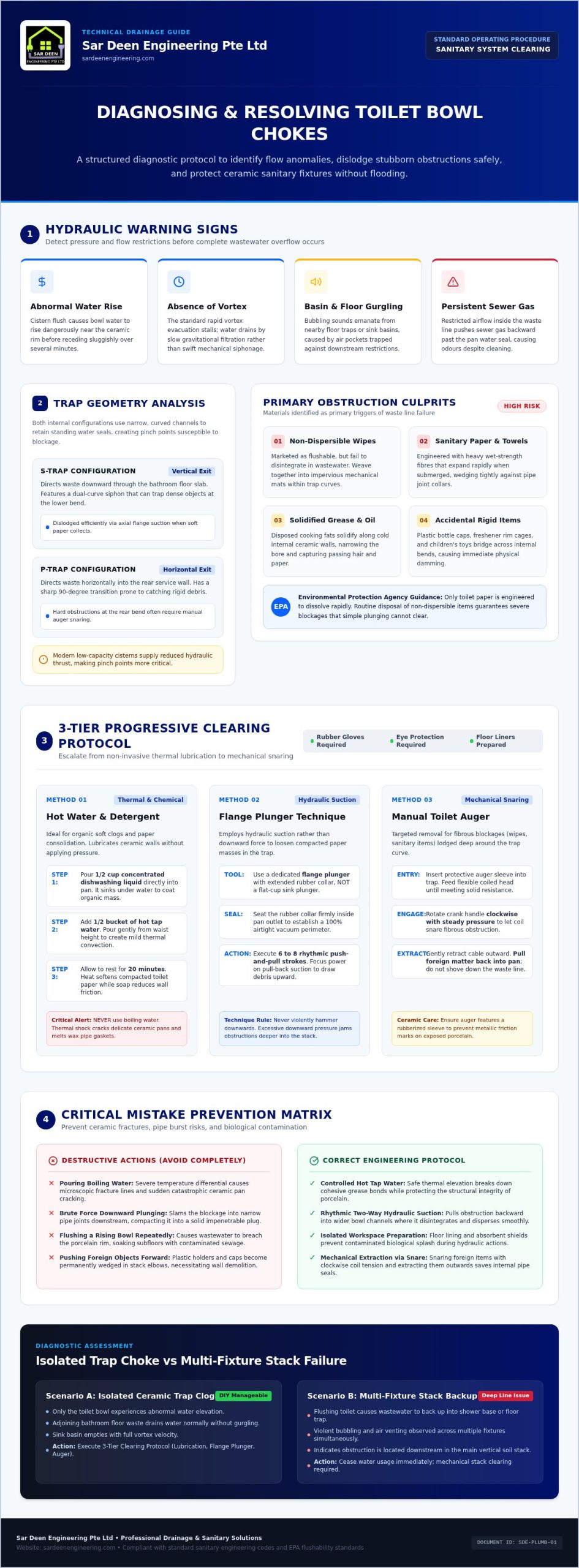
Pay close attention to how water evacuates after each flush. When a passage narrows, the cistern water doesn’t drain with its usual rapid vortex. Instead, water rises abnormally close to the porcelain rim before slowly receding over several minutes. Gurgling sounds escaping from nearby floor traps or sink basins point to trapped air pockets struggling against a restricted waste line. If foul sewer odours linger despite regular cleaning, restricted airflow in the waste stack is often pushing sewer gas backward through the water seal.
Primary Culprits Behind Severe Waste Line Obstructions
Modern low-capacity flush systems use reduced water volumes to conserve resources, which means they provide less hydraulic thrust to push heavy waste through drainage pipes. Several items frequently trigger severe clogs:
- Non-dispersible wipes: Even products marketed as biodegradable fail to break down quickly, weaving together into dense obstructions.
- Sanitary items and paper towels: Heavy fibrous products expand when submerged, lodging firmly against pipe joints.
- Cooking grease and food waste: Disposed oils solidify along the drainage walls, catching hair and paper debris.
- Accidental foreign objects: Plastic bottle caps, small children’s toys, or dropped toilet freshener holders physically bridge internal curves.
Understanding Bowl Trap Geometry: S-Trap vs P-Trap
Every toilet pan relies on an integrated curved channel to hold standing water and block sewer gases. S-trap models direct waste downwards through the bathroom floor, while P-trap setups vent waste horizontally into the rear wall. Both configurations feature narrow, tortuous bends that create natural pinch points. When soft paper collects around these bends, using a proper toilet flange plunger creates sufficient pressure to dislodge the mass. However, when hard objects lodge inside these tight curves, standard mechanical plunging rarely succeeds, often requiring specialized clearing tools to extract the obstruction cleanly.
How to Clear a Minor Toilet Bowl Choke: Step-by-Step DIY Solutions
Facing a sudden toilet bowl choke doesn’t mean you need an immediate panic call to an emergency team. Before reaching for heavy tools, put on waterproof rubber gloves and safety eyewear to guard against splashes. Lay old towels or newspapers around the base of the fixture. Preparing your workspace keeps contaminated water off your floor tiles and lets you work cleanly.
The Hot Water and Dishwashing Liquid Technique
Begin by pouring roughly half a cup of concentrated dishwashing liquid straight into the bowl. The dense detergent sinks beneath standing water, lubricating the ceramic trapway and coating organic matter. Next, carefully pour half a bucket of hot tap water into the opening. Never use boiling water, as high heat can crack ceramic bowls and warp pipe seals. Let the mixture rest for twenty minutes. The combination of heat and lubrication breaks down compacted toilet paper and allows waste to slip through naturally.
Mastering the Flange Plunger for Maximum Suction
Equip yourself with a proper toilet plunger that features an extended rubber neck rather than a flat sink cup. Position the rubber collar directly inside the pan outlet to establish an airtight perimeter. Push down slowly to expel trapped air, then execute six to eight vigorous, rhythmic push-and-pull strokes. Your goal is pulling the obstruction back and forth with hydraulic suction, not merely hammering it deeper. Once you feel resistance drop, pull the tool free and observe the water draining smoothly away.
Using a Manual Drain Auger Safely on Ceramic Fixtures
Feed a manual toilet auger cable into the bowl when plungers fail to dislodge the mass. Many household blockages stem from fibrous items like wet wipes. According to U.S. Environmental Protection Agency guidance, flushing non-dispersible items regularly causes severe clogs that simple plunging cannot shift.
- Insert the auger head slowly until you feel firm resistance inside the trap curve.
- Turn the crank handle clockwise with steady pressure to let the coil snare the obstruction.
- Gently retract the cable, pulling foreign matter out rather than forcing it down the waste line.
- Wipe the metal clean immediately to avoid scratching the exposed ceramic glaze.
If manual tools fail to budge the blockage, mechanical DIY efforts have reached their limit. In that situation, scheduling professional choked drainage and pipe clearing provides a prompt, mess-free resolution before pipe pressures escalate.
Critical Mistakes to Avoid When Unclogging a Toilet
Panic often leads to rushed decisions that turn a minor toilet bowl choke into structural property damage. When wastewater climbs, your natural instinct is to push buttons or grab whatever tool sits within reach. Exercising restraint and following basic mechanical precautions protects your ceramic fixtures from cracking and keeps contaminated water off your bathroom floor.
The Hidden Dangers of Harsh Chemical Cleaners
Pouring concentrated chemical drain openers into modern toilets creates severe hazards. These caustic formulations generate violent exothermic reactions within standing water. Intense localized heat can shatter cold vitreous china bowls in seconds. Caustic fumes quickly saturate small, enclosed bathrooms, irritating your eyes and lungs. Additionally, acidic chemicals eat away at internal rubber pan collars and seals, causing silent leaks behind the bowl. If chemicals fail to clear the pipe, subsequent plunging risks splashing concentrated acid directly onto your skin and eyes.
Mechanical Hazards and Fixture Damage
Improvised clearing tools often cause permanent cosmetic and structural harm to sanitary ware:
- Wire coat hangers: Uncoated metal scratches through vitreous china, leaving dark, irreversible gouges across the bowl surface.
- Excessive plunging force: Hammering downward with rigid rods can crack the concealed, paper-thin ceramic trap walls underneath.
- Misdirected poking: Shoving foreign objects blindly packs fibrous clogs tighter into the bend instead of retrieving them.
Preventing these issues starts with waste control. Reviewing the EPA’s guidelines on what not to flush reinforces why keeping non-degradable items out of your drains prevents tough obstructions from forming in the first place.
Ignoring Cistern Shut-Off and Overflow Protocols
Never flush a second time if the bowl fails to clear on the first attempt. Cisterns hold several litres of water, which will instantly overflow a blocked pan and ruin flooring. Instead, stop incoming water immediately by rotating the isolation angle valve beside the toilet base clockwise. If the valve is seized, take off the tank lid and press the rubber flapper down manually into the valve seat to halt the flush. Gaining a practical understanding of your toilet bowl flushing system ensures you can control cistern valves swiftly during sudden emergencies, keeping your home clean and protected.
When DIY Fails: Diagnosing Deep Stacks and Structural Sewer Issues
Plunging repeatedly without success indicates the obstruction sits far past the reach of domestic hand tools. When a stubborn toilet bowl choke resists standard clearing, the problem rarely lies in the bowl itself. Instead, the blockage has likely migrated into the building’s central soil stack or main horizontal branch lines. Knowing how to read whole-house drainage patterns helps you pinpoint deep structural restrictions accurately.
Recognising Main Soil Stack and Vent Pipe Failures
Look at your other bathroom drains to confirm whether a choke is isolated or systemic. If flushing your toilet causes dirty water or air bubbles to erupt through your floor trap or shower grate, the main vertical discharge stack is choked downstream. Similarly, a blocked rooftop atmospheric vent creates a hydraulic vacuum lock. This trapped air starves the line of airflow, slowing drainage to a crawl across bathtubs, vanity basins, and toilets simultaneously, even when the toilet’s own trapway is clear.
Persistent Blockages Caused by Mineral Calcification
Age takes a heavy toll on residential sanitary pipework over decades of constant use:
- Internal scale narrowing: Hard water deposits gradually reduce the internal diameter of cast-iron and older plastic stacks.
- Crystallized uric scale: Heavy urine salts form jagged, crusty ridges along unglazed internal trap channels.
- Friction drag: These rough mineral ridges snag tiny scraps of passing toilet paper, triggering chronic recurrent chokes.
Evaluating When to Replace Your Toilet Bowl Fixture
Older sanitary ware designs often feature tight, restrictive internal bends that struggle to clear modern solid waste volumes effectively. When mineral scaling permanently narrows the internal waterways, or when you notice hairline ceramic fractures weeping water around the base seal, manual clearing only offers temporary relief. Investing in a modern toilet bowl replacement Singapore upgrades your bathroom with wide, glazed trapways and efficient dual-flush performance, ending recurring blockages permanently.
Do you suspect a heavy main line obstruction or persistent calcified blockage? Don’t risk dirty water flooding your living spaces. Contact the experienced technicians at Sar Deen Engineering Pte Ltd for prompt, end-to-end drainage clearing solutions across your residential property.
Long-Term Prevention and Professional Clearing Solutions
Clearing a stubborn toilet bowl choke provides immediate relief, but long-term reliability depends on sensible daily habits. Combining proper disposal practices with routine pipe care stops waste from gathering inside narrow trapways. Taking a proactive approach protects your sanitary plumbing and keeps your bathroom running smoothly.
Proactive Habits for a Choke-Free Drainage System
Keeping your drainage system clear starts with simple household rules. Treat your toilet strictly as an exit for human waste and toilet paper. Keep a lined waste bin beside every toilet so guests and family members don’t flush wet wipes, dental floss, or feminine hygiene products. Monthly, flush a kettle of warm water mixed with baking soda down the pan to loosen light organic film along the trapway. Check your cistern periodically to ensure the water level reaches the marked fill line, giving each flush sufficient downward momentum. If your bathroom renovation plans also include upgrading your hot water supply, understanding the requirements for a compliant storage water heater installation Singapore homeowners depend on will help you coordinate both plumbing upgrades efficiently.
Professional Machinery: High-Pressure Jetting and Motorized Augers
Deep obstructions require commercial-grade equipment that goes beyond the capabilities of handheld DIY snakes:
- Motorized rotary augers: Heavy-duty electric clearing cables spin flexible blades that slice through dense paper obstructions and calcified scale.
- High-pressure hydro jetting: Specialized nozzles blast high-velocity water streams along pipe walls, washing away years of grease and sludge without damaging pipe linings.
- CCTV drain cameras: Miniature waterproof cameras travel deep into the soil stack, providing visual confirmation of hidden cracks, joint misalignments, or pipe sags.
Restoring Your Bathroom Comfort with Expert Assistance
Plumbing issues disrupt your daily home routine fast. When standard DIY solutions fail to resolve a recurring toilet bowl choke, working with skilled technicians ensures the job gets done cleanly. Professional service protects your bathroom tiles, diagnoses hidden stack issues, and restores sanitary hygiene without unnecessary mess. For dependable choked drainage clearing and complete sanitary care, connect with Sar Deen Engineering Pte Ltd to keep your residential plumbing in peak condition.
Take Control of Your Bathroom Drainage Today
Handling an unexpected toilet bowl choke comes down to accurate diagnosis and measured technique. Gentle solutions like warm water lubrication and proper flange plunging resolve minor blockages safely without scratching delicate porcelain. Halting the cistern water supply at the first sign of trouble protects your bathroom floor from messy overflows, while mindful flushing habits prevent waste from accumulating inside tight trap bends.
When heavy mineral scale or deep stack restrictions resist domestic hand tools, you don’t have to tackle the mess alone. Bringing in seasoned residential maintenance specialists eliminates the guesswork, protecting your sanitary lines from unnecessary structural strain. Get dependable plumbing and choke clearing assistance from the trusted team at Sar Deen Engineering Pte Ltd. From thorough pipe clearance to complete sanitary replacements, restoring clean, reliable bathroom comfort is always within easy reach.
Frequently Asked Questions
Can baking soda and vinegar clear a severe toilet bowl choke?
No, baking soda and vinegar cannot dissolve severe physical obstructions like wet wipes, sanitary items, or dense paper clumps. While this fizzing mixture creates mild carbon dioxide effervescence, it lacks the hydraulic force or chemical strength needed to break down compacted masses deep in the trapway. It works best as an occasional deodorizer for clean pipes. For an actual toilet bowl choke, rely on mechanical suction using a flange plunger or a manual auger instead.
Why does my toilet bowl water level rise to the brim when flushed?
The water level rises because a downstream blockage prevents wastewater from passing freely through the trapway. When you press the flush lever, the cistern releases several litres of water instantly. If the exit channel is obstructed, that incoming volume has nowhere to escape, filling the bowl rapidly instead of creating a siphon vortex. Never attempt a second flush if the water creeps upward, as the excess cistern volume will trigger an immediate bathroom overflow.
Is it safe to use a standard plunger on all types of toilet bowls?
It is safe, but standard flat-bottom cup plungers are practically ineffective on modern curved toilet pans. Flat plungers are engineered for flat sinks and shower basins. To unclog a toilet effectively, use a flange plunger featuring an extended rubber neck. This sleeve inserts directly into the trapway opening, forming the airtight seal required to push and pull water back and forth without splashing wastewater across your bathroom floor.
How do I know if the choke is in my toilet or the main sewage line?
Check if other plumbing fixtures in your bathroom are backing up at the same time. If only your toilet drains slowly while sinks and showers run cleanly, the obstruction sits inside the toilet trapway. If flushing causes dirty water or gurgling air bubbles to push up through nearby floor traps or shower grates, the blockage resides within the building’s shared vertical stack or main branch line.
Will flushing hot water damage or crack my ceramic toilet bowl?
Boiling water will crack cold ceramic fixtures, but warm tap water is completely safe. Vitreous china undergoes severe thermal shock when exposed to boiling temperatures, causing hairline fractures or catastrophic bowl failure. In addition, extreme heat melts rubber pan collars and warps PVC drainage joints underneath. Always keep clearing water below 50 degrees Celsius, roughly the temperature of a hot domestic bath, to soften paper safely without structural risks.
Why does my toilet continue to choke repeatedly every few weeks?
Recurring chokes usually indicate severe mineral calcification, a partially snagged foreign object, or outdated trapway geometry. Over time, hard water scale and uric acid crystals form rough ridges inside internal porcelain channels. These jagged deposits snag passing paper scraps continuously. If clearing a recurring toilet bowl choke only provides brief relief, obsolete narrow waterways or improper pan collar alignment may require complete sanitary replacement to permanently resolve persistent restrictions.
What should I do immediately if the toilet bowl starts overflowing?
Turn off the incoming water supply at the isolation valve beside the toilet base immediately. Rotate the angle valve clockwise to cut off cistern refilling. If the valve is tight or unreachable, lift off the tank lid and push the rubber flapper valve down against the tank opening with your hand. This action instantly seals the cistern outlet, stopping any remaining water from pouring into the pan and saving your floors from expensive water damage.